
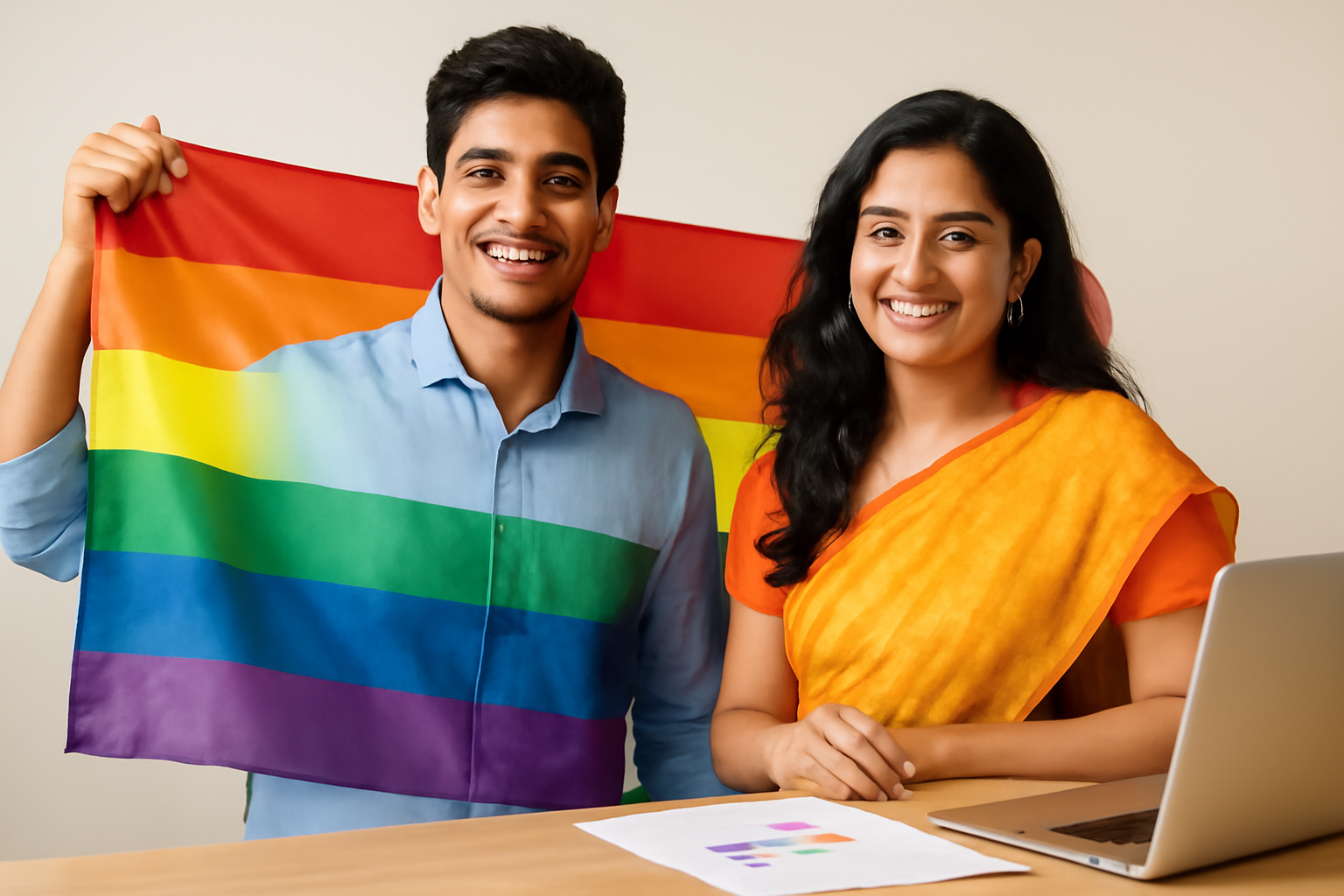
The global landscape for LGBTQ+ rights has witnessed significant shifts, and India stands at a pivotal juncture in integrating its "pink economy"—the economic influence of the LGBTQ+ community—into its broader economic strategy. Despite historical reliance on international aid, recent analyses underscore the untapped potential of India's pink economy, which could play a crucial role in fostering more equitable and resilient growth within the country.
Globally, the pink economy is valued at a staggering $3.7 trillion. In India, this market alone is estimated at $168 billion. However, deep-seated societal stigmas and discriminatory practices continue to impede the full economic inclusion of LGBTQ+ individuals, leaving this market largely unexplored.
Efforts to enhance LGBTQ+ rights in India have made headlines in recent years. The recognition of a "third gender" in the 2011 Census, the landmark 2018 Supreme Court decision decriminalizing consensual same-sex relations, and the passage of the Transgender Persons (Protection of Rights) Act in 2019, were all significant milestones. Yet, these legal advancements have not translated into substantial improvements in the social and economic standing of LGBTQ+ individuals across the nation.
As highlighted in a report from a prominent Indian think tank, India’s LGBTQ+ community, which accounts for approximately 18% of the global queer population, continues to depend heavily on international funding. Despite this reliance, only 1% of global LGBTQ+ funding is directed toward India, and within the nation, domestic philanthropic support remains scarce.
The Ministry of Social Justice and Empowerment allocated $1.07 billion for the 2025-2026 fiscal year to support marginalized groups, including efforts focused on education, skill development, healthcare, and rehabilitation. However, experts note that this amount is insufficient for the estimated 140 million queer individuals in India, particularly as the focus is predominantly on trans people, limiting the broader impact on the LGBTQ+ community.
The economic implications of excluding LGBTQ+ individuals are significant. A 2014 World Bank study identified the exclusion of the LGBTQ+ community as resulting in a GDP loss of between 0.1% and 1.7%, equating to an annual economic impact of $1.9 billion to $30.8 billion. The report emphasizes that societal discrimination restricts educational access and hinders meaningful employment opportunities.
Comparisons with other countries illustrate the potential gains of embracing the pink economy. Thailand, for instance, has enacted a marriage equality law and positioned itself as a gay-friendly tourism destination, reaping economic benefits from a robust pink economy. Similarly, China and Japan have tapped into the economic potential of their queer populations, despite varying levels of governmental and societal acceptance.
In India, fewer than 6% of trans individuals are represented in the formal workforce, with negligible presence in the public sector. Many are forced into precarious situations for daily survival, highlighting the urgent need for policy interventions that enable greater workforce inclusion.
Recognizing the economic value of the pink economy, Anish Gawande, the first openly gay national spokesperson for India’s Nationalist Congress Party, stresses that marginalizing LGBTQ+ individuals results in a tangible financial cost. "Excluding LGBTQ+ people not only causes a brain drain but also prevents a significant segment of the population from contributing to the country's economic progress," he said.
Gawande advocates for embracing diversity across all identities, not solely for economic gain, but to build more resilient and harmonious societies. "True inclusion requires recognizing the diversity inherent in being Indian," he stated, emphasizing that this approach not only fosters economic prosperity but also strengthens social cohesion.
Prominent LGBTQ+ activist and artist Kalki Subramaniam echoes this sentiment, emphasizing that the issue transcends economic benefits. "Our contributions are invaluable and yet unrecognized," she said. "Ignoring this potential means losing out on the richness the LGBTQ+ community brings to India's societal fabric."
As India explores pathways to integrate its pink economy, the voices of advocates like Gawande and Subramaniam underscore the need for a multifaceted approach that prioritizes inclusion, not just for financial gain, but for the holistic development of society.
Unlocking the potential of the pink economy could be instrumental in driving India's economic growth, ensuring that the contributions of all citizens are valued and recognized. As the nation takes steps toward this goal, it must listen to and incorporate the perspectives and needs of its diverse communities to truly thrive.
Related Posts
Supreme Court to Address State Bans on Trans Women in Female Sports
The upcoming U.S. Supreme Court term promises to be a pivotal moment for transgender rights, as the nation's highest court has agreed to evaluate whether states have the authority to prohibit transgender women from participating in female sports competitions. This case, scheduled to be argued in the next term beginning October, is expected to have a significant impact on the future of sports inclu [...]
Megan Rapinoe and Sue Bird Announce Amicable Separation After Ten Years Together
In a heartfelt announcement that resonated deeply within the sports and LGBTQ+ communities, soccer star Megan Rapinoe and basketball legend Sue Bird have revealed their decision to part ways after nearly a decade together. The couple, who have been icons both on and off the field, shared the news with their fans through a joint statement on social media, expressing that the choice was made with mu [...]
Groundbreaking Ruling Ends Sodomy Ban for Police and Military in the Dominican Republic
The Constitutional Court of the Dominican Republic recently delivered a landmark decision on November 18th, ruling that the nation’s police and armed forces are not permitted to criminalize consensual same-sex relations among their personnel. This pivotal ruling is a significant stride towards equality and the protection of LGBTQ+ rights within these institutions. A Resounding Victory for Equal [...]