
Editor’s note: Our reporter was on assignment in Argentina and Uruguay from April 2-12, 2025.
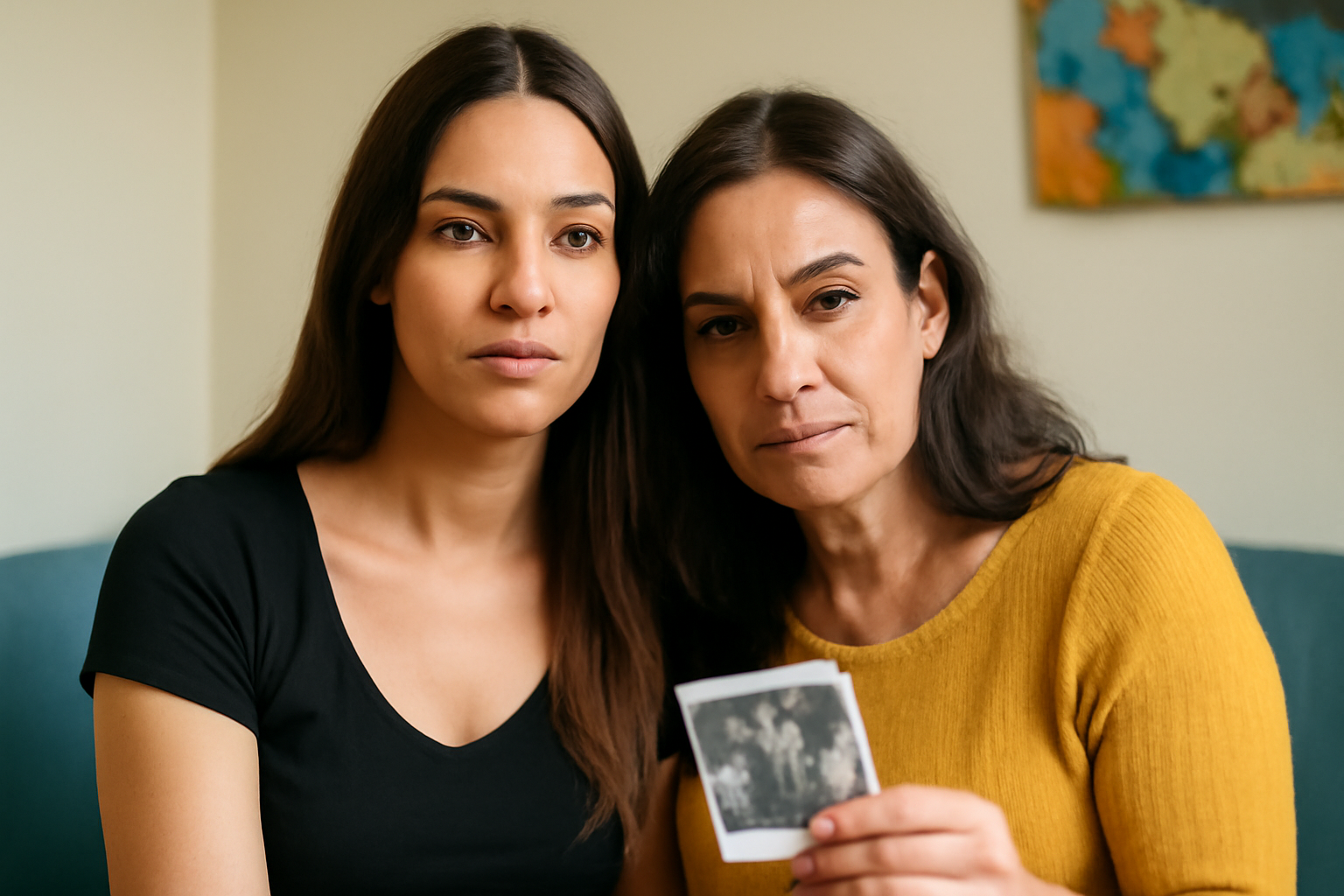
ROSARIO, Argentina — In the heart of Argentina’s Santa Fe province, two transgender women are shedding light on a dark period of history. Carolina Boetti and Marzia Echenique have taken on the task of documenting the persecution of transgender individuals under the military dictatorship that ruled Argentina from 1976 to 1983.
In 2020, Boetti and Echenique launched the Travestí Trans Santa Fe Archive. This archive aims to "create a collective memory" of the atrocities faced by the transgender community during the dictatorship. The term "Travestí" is often used in Latin America to describe a crossdresser, although it has broader implications in the region's LGBTQ+ discourse.
The archive is a collection of interviews with trans women who were arrested, tortured, and harassed by the regime. It also includes photographs from that era, capturing the stark realities faced by those who did not conform to gender norms.
While the archive does not have a permanent physical location, Boetti and Echenique have made efforts to spread their message. They have presented their work in schools, universities, and even a museum in Rosario dedicated to the victims of the dictatorship. The city of Rosario, located approximately 200 miles northwest of Buenos Aires, remains a focal point for memory and justice.
In an interview conducted on April 11 in a Rosario hotel, Boetti and Echenique shared their hopes of securing funds to digitize their archive and eventually find it a permanent home. "We have this material that is fantastic," Boetti remarked, highlighting the importance of preserving these stories.
It is estimated that the dictatorship led to the deaths or disappearances of over 30,000 people in what is known as the "dirty war." The regime targeted various groups, including students, journalists, labor leaders, and anyone deemed a threat. In this oppressive climate, transgender individuals were particularly vulnerable.
Marzia Echenique was first detained in 1979 at the age of 16. She recalls that the regime targeted trans women because they defied the strict binary of man and woman imposed by the dictatorship. "Everything else was penalized, deprived of all rights. They took away everything," she recounted.
Carolina Boetti was similarly targeted, first detained at 15 due to her sexual orientation. During the dictatorship, homosexuality was criminalized, and laws penalized crossdressing, prostitution, and vagrancy with harsh penalties.
Despite the dictatorship's end in 1983, Boetti and Echenique emphasize that the trans community continued to face discrimination long after. Echenique, who left Argentina in 1988 and returned in 2006, pointed out that for the trans community, the persecution persisted.
Notably, the cities of Rosario and the provincial capital Santa Fe implemented a reparations policy for trans individuals who suffered under the dictatorship. In 2018, during an International Day Against Homophobia, Biphobia, and Transphobia, Boetti became the first trans person to receive reparations in Argentina. She receives a monthly pension and health care stipend, a recognition of the injustices she endured.
Boetti and Echenique note that only 10 of the 50 known trans women persecuted in Santa Fe during the dictatorship are still alive. Their work is not just about preserving history but also about seeking justice and acknowledgment for those who suffered.
Following the dictatorship, Argentina has made significant strides in LGBTQ+ rights. The landmark Gender Identity Law of 2012 allows trans and nonbinary individuals to legally change their gender without medical intervention. The country also legalized same-sex marriage in 2010.
However, recent political developments under President Javier Milei have threatened these advancements. Since taking office in December 2023, Milei has implemented measures that restrict access to gender-affirming care for minors and have rolled back protections for trans individuals.
Boetti remains hopeful, asserting that while Argentina may not revert to a dictatorship, the fight against hate speech and discrimination continues. "There are now laws that protect us, but there is a fight for sure," Echenique echoed, underscoring the importance of preserving their history as a form of resistance and empowerment.
In the face of ongoing challenges, Boetti and Echenique's work stands as a testament to resilience and the enduring fight for justice and equality.
Related Posts
Supreme Court to Address State Bans on Trans Women in Female Sports
The upcoming U.S. Supreme Court term promises to be a pivotal moment for transgender rights, as the nation's highest court has agreed to evaluate whether states have the authority to prohibit transgender women from participating in female sports competitions. This case, scheduled to be argued in the next term beginning October, is expected to have a significant impact on the future of sports inclu [...]
Megan Rapinoe and Sue Bird Announce Amicable Separation After Ten Years Together
In a heartfelt announcement that resonated deeply within the sports and LGBTQ+ communities, soccer star Megan Rapinoe and basketball legend Sue Bird have revealed their decision to part ways after nearly a decade together. The couple, who have been icons both on and off the field, shared the news with their fans through a joint statement on social media, expressing that the choice was made with mu [...]
Groundbreaking Ruling Ends Sodomy Ban for Police and Military in the Dominican Republic
The Constitutional Court of the Dominican Republic recently delivered a landmark decision on November 18th, ruling that the nation’s police and armed forces are not permitted to criminalize consensual same-sex relations among their personnel. This pivotal ruling is a significant stride towards equality and the protection of LGBTQ+ rights within these institutions. A Resounding Victory for Equal [...]