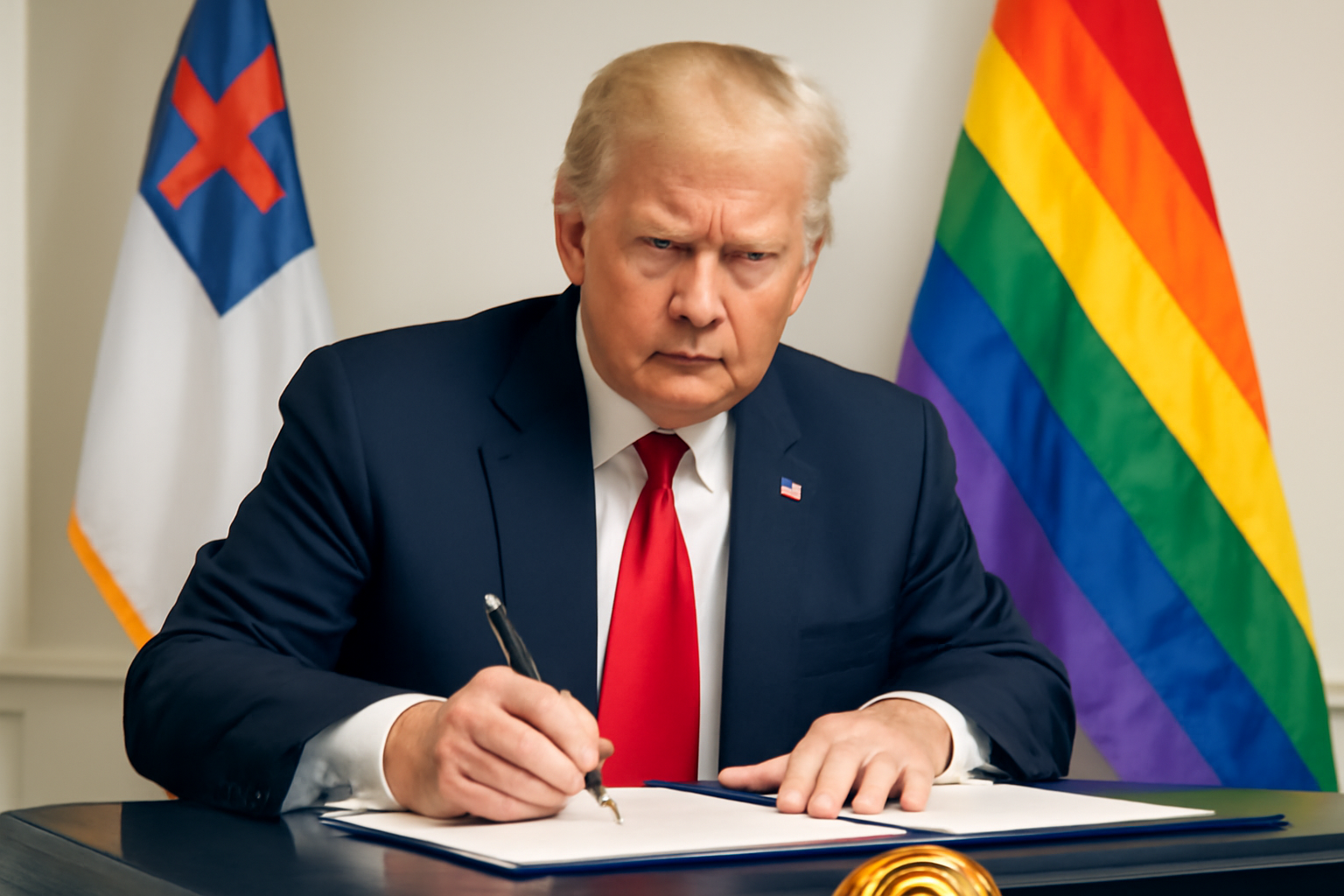
In a time when policies are constantly shifting, a recent move claiming it protects religious freedoms has sparked quite a conversation. This executive order, presented as a defensive measure against what it calls unfair treatment toward Christians by government entities, could actually undermine equality and justice—the very ideals it professes.
## Understanding what's behind this executive order
The new executive order touts itself as a protectorate over "the religious freedoms" Americans hold dear, suggesting that there's a governmental bias against Christians. Key players like Secretary Marco Rubio are charged with pinpointing and reporting these alleged anti-Christian biases. But does this directive really aim at safeguarding religious freedom, or does it tilt towards reinforcing Christian dominance?
## Is it about religious freedom or something else?
Attorney General Pam Bondi leads a task force intended on probing any reported anti-Christian activities. But not everyone sees it this simply—critics argue it leans more toward cementing Christian privilege rather than defending genuine religious freedoms. The narrative here paints Christians as victims, while overlooking efforts focused on equality, such as those advocating LGBTQ+ rights. This tension unveils a broader discourse about victimhood in an increasingly diverse nation.
## Does this challenge church and state separation?
At high-profile events like a National Prayer Breakfast, former President Trump often called back traditional religious values, sometimes skirting dangerously close—or stepping over—the line separating church and state. This focus tends not only toward exclusivity but seems dismissive, especially in a country known historically and ideally as a melting pot striving against systematic discrimination, including against LGBTQ+ communities.
The executive order criticizes previous governmental strides toward protecting LGBTQ+ rights by branding them as anti-Christian. It largely ignores how historically and still, LGBTQ+ individuals have faced rampant discrimination.
## Using religion as a political stage
There are those who claim that previous administrations wielded religious advocacy more as a political strategy than a true push toward religious liberty. The specific nature in which these executive orders have been framed seems designed with a narrow definition in mind, often brushing aside concerns from other faiths and belief systems. A case in point would be criticism surrounding a day like "Transgender Day Of Visibility" being marked on March 31, clashing with Easter, which overlooks recognizing different identities and their dignities.
## Protecting genuine religious freedom
Religious freedom embodies a fundamental constitutional right, offering all a life free from religious imposition. Yet here, this executive order seems misappropriated, veiling preferential treatment that could impinge on others' rights. In a society bursting with plurality, it's critical we shield not only those from dominant religious groups but everyone. When policies masquerade as protective but actually marginalize under a religious guise, they jeopardize core values we all share like justice and equality.
## Conclusion: Celebrating a vibrant religious tapestry
The actions we've seen from past administrations seem part and parcel with a trend toward redefining victimhood—often politically. By portraying Christians as prejudiced against by government, these policies often serve, in reality, more towards expanding privilege and muting dissent. True religious freedom comes from recognizing and respecting all beliefs that color our nation and from discarding any attempt at using religion as an exclusion tool.
As we sift through these policies, it's clear that genuine religious inclusivity requires us embracing every slice on our belief spectrum. If we engage in this fully, we can create a society that truly values and defends each member's rights.
