
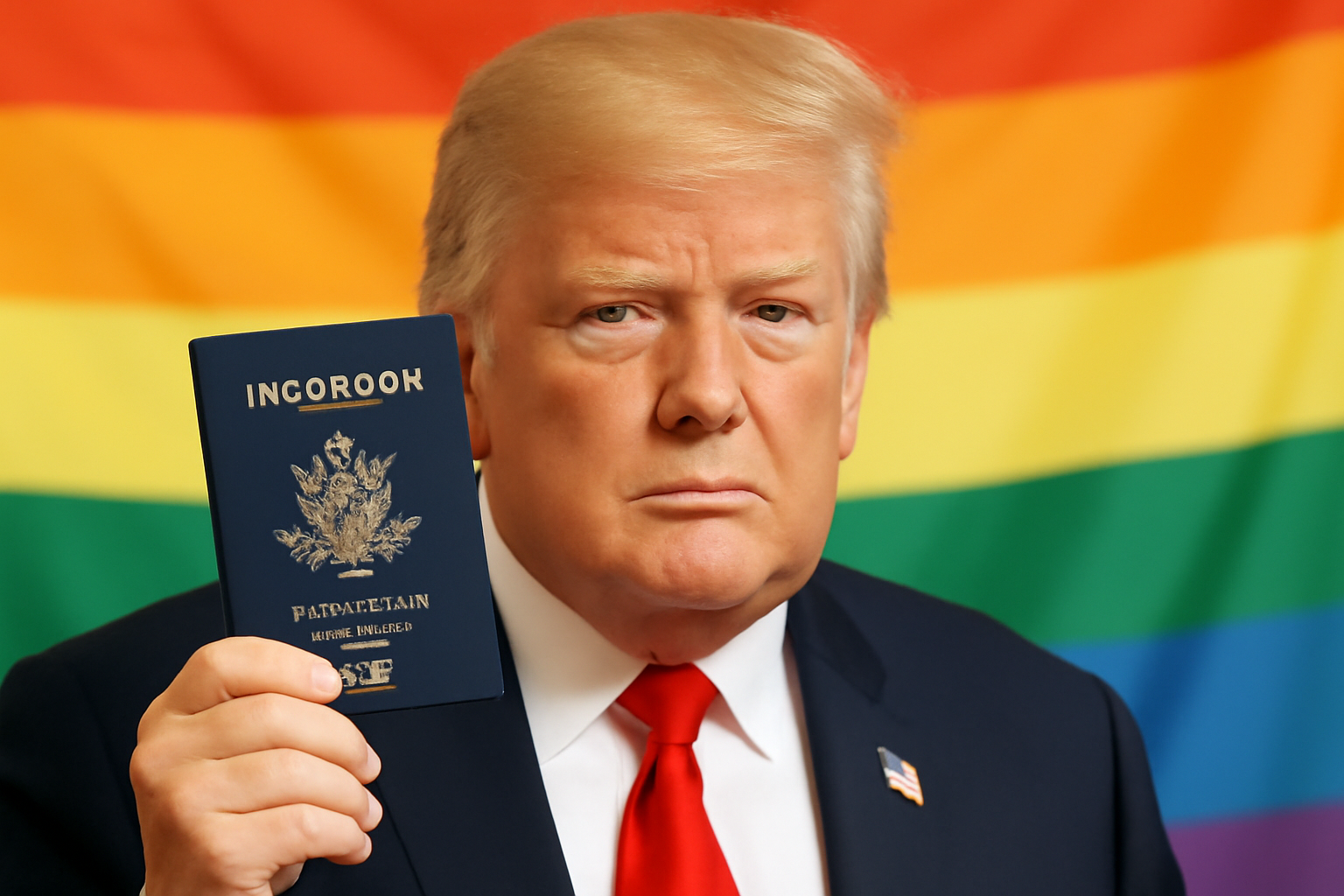
President Donald Trump, shortly after his inauguration, issued several executive orders that have significant implications for the recognition of gender diversity in the United States. Among these directives is a mandate that the federal government recognize only two genders: male and female. This decision threatens to roll back the advancement made in recent years regarding the inclusion of non-binary and transgender identities in official documentation.
The executive order explicitly targets the removal of the "X" gender marker option from US passports and other government-issued IDs. This decision marks a stark contrast from the policies implemented during the administration of former President Joe Biden, which allowed individuals who identify outside the traditional male or female binary to select "X" as their gender marker on passports.
The changes have already begun to take effect. According to reports, a page that previously detailed how US citizens could update gender markers on passports has been removed from the US State Department's website. As of January 21st, visitors to the site are redirected to a general information page on US passports, indicating a significant shift in policy.
Impact on Non-Binary and Transgender Individuals
This executive action has drawn criticism from advocacy groups and individuals who see it as a regressive step that undermines the dignity and safety of non-binary and transgender people. A spokesperson from the State Department confirmed that adjustments will be made to ensure government-issued IDs reflect what is described as the holder’s "biological sex." The directive compels the Secretaries of State and Homeland Security, along with the Director of the Office of Personnel Management, to carry out these changes across all relevant identification documents, including passports, visas, and Global Entry cards.
The Williams Institute at UCLA’s School of Law has provided data indicating that each year, approximately 16,700 non-binary individuals opt to use an "X" gender marker on their passports. This figure represents about 1.4 percent of the estimated 1.2 million non-binary adults in the United States. The inclusion of the "X" marker has been lauded as a progressive measure that allows these individuals to have their identities authentically represented in official documentation.
However, despite the positive reception of the "X" marker, not all non-binary and trans individuals have felt comfortable using it. Concerns about potential discrimination and logistical complications during travel have deterred some from selecting the "X" option. For instance, travel-related complications could arise when booking flights, as some airlines might not accommodate non-binary gender markers in their systems.
Broader Implications and Community Response
The executive order has prompted widespread concern and opposition among LGBTQ+ advocacy organizations, who argue that it perpetuates harmful binary understandings of gender and disregards the lived realities of many Americans. Critics point out that reinforcing a rigid binary gender system could have adverse effects on non-binary and transgender individuals, who already face substantial challenges related to identity recognition and discrimination.
In response to the order, several advocacy groups have called for increased support and legal protections for non-binary and transgender individuals. They emphasize the importance of inclusive policies that acknowledge and respect diverse gender identities, arguing that such recognition is crucial for promoting equality and preventing discrimination.
As the situation unfolds, it remains to be seen how these changes will be implemented in practice and what the long-term effects will be on those affected. The debate around gender markers in official documentation continues to be a focal point in broader discussions about gender identity and rights in the United States.
For now, the removal of the "X" gender marker on US passports represents a significant policy shift that has sparked dialogue and action among communities and advocates fighting for the rights and recognition of all gender identities.
Related Posts
Supreme Court to Address State Bans on Trans Women in Female Sports
The upcoming U.S. Supreme Court term promises to be a pivotal moment for transgender rights, as the nation's highest court has agreed to evaluate whether states have the authority to prohibit transgender women from participating in female sports competitions. This case, scheduled to be argued in the next term beginning October, is expected to have a significant impact on the future of sports inclu [...]
Megan Rapinoe and Sue Bird Announce Amicable Separation After Ten Years Together
In a heartfelt announcement that resonated deeply within the sports and LGBTQ+ communities, soccer star Megan Rapinoe and basketball legend Sue Bird have revealed their decision to part ways after nearly a decade together. The couple, who have been icons both on and off the field, shared the news with their fans through a joint statement on social media, expressing that the choice was made with mu [...]
Groundbreaking Ruling Ends Sodomy Ban for Police and Military in the Dominican Republic
The Constitutional Court of the Dominican Republic recently delivered a landmark decision on November 18th, ruling that the nation’s police and armed forces are not permitted to criminalize consensual same-sex relations among their personnel. This pivotal ruling is a significant stride towards equality and the protection of LGBTQ+ rights within these institutions. A Resounding Victory for Equal [...]