
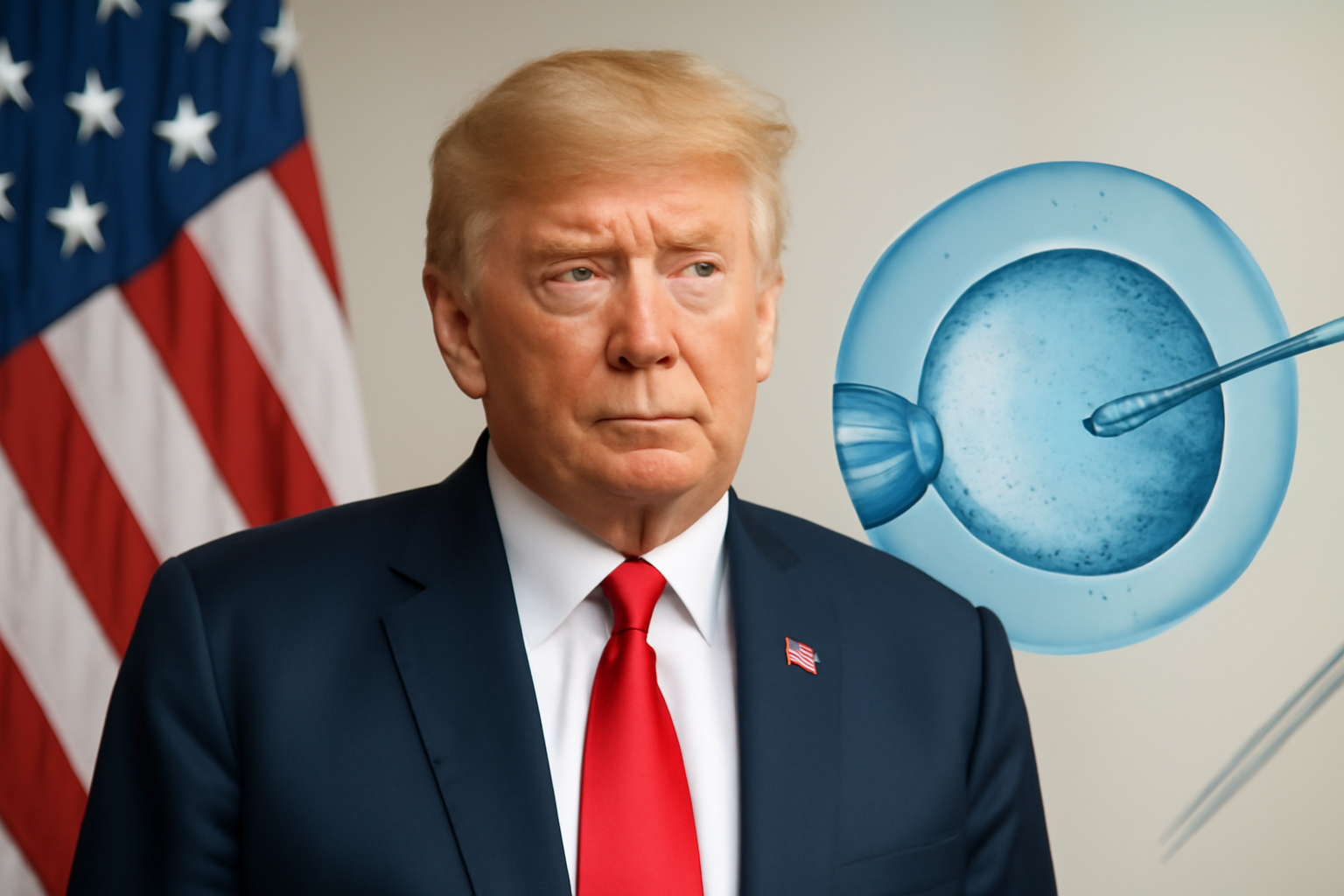
On Tuesday, former President Donald Trump issued a new executive order under the slogan "Promises Made, Promises Kept." While the order purports to expand access to in vitro fertilization (IVF) for Americans, it falls short of delivering a concrete plan to achieve this goal.
Claims of Expanded Access
The executive order from Trump claims an intention to broaden IVF access, a reproductive technology that has enabled countless women, LGBTQ+ individuals, and single parents to start families. However, rather than implementing direct measures, the order instructs Trump's domestic policy team to explore potential avenues to make IVF more accessible.
It's a significant departure from Trump's campaign promise back in August 2020, where he assured voters that his administration would ensure insurance companies cover IVF treatments. During an interview with NBC, Trump confidently stated, "We are going to be, under the Trump administration, we are going to be paying for that treatment. We’re going to be mandating that the insurance company pay."
The Reality of IVF Costs
IVF remains a costly procedure, often prohibitively so for many hopeful parents. A single IVF cycle, which includes hormone treatments to stimulate egg production, can cost approximately $25,000. Since multiple cycles are often necessary, expenses quickly escalate, not to mention additional costs related to fertilization and implantation. Moreover, the process can impose significant emotional and physical challenges on individuals undergoing treatment.
The order, titled "Fact Sheet: President Donald J. Trump Expands Access to In Vitro Fertilization (IVF)," lacks any immediate action to ease these burdens. Instead, it lists statistical data about the procedure and touts achievements from Trump’s previous administration, including the claim that his administration doubled the child tax credit and made it accessible to more families.
Legal Challenges and Uncertainty
The future of IVF faced additional uncertainty when, last February, the Alabama Supreme Court ruled that frozen embryos could be classified as children under state law. This decision raised concerns about the legal implications of destroying unused embryos, a standard practice post-successful IVF pregnancy. Potentially, doctors and patients could face accusations of murder should they opt to discard embryos.
In response, the Alabama legislature swiftly enacted a measure to protect IVF providers from legal liability, but the controversy has kept fertility treatment in the political spotlight. It remained a contentious issue throughout the election period.
Despite the fanfare surrounding the new executive order, no substantive expansion of IVF access has occurred. The order merely outlines goals to "protect IVF access and aggressively reduce out-of-pocket and health plan costs for such treatments," but it lacks a timeline for when these recommendations might materialize.
Promises Made, but Not Yet Kept
The order’s emphasis on providing for "loving and longing mothers and fathers" implies an intent to make parenthood more accessible. However, without a clear timeline or concrete measures, many hopeful parents may find themselves waiting indefinitely for meaningful change.
In conclusion, while the executive order broadcasts a commitment to enhancing IVF access, its vague directives and lack of actionable steps leave much to be desired. The LGBTQ+ community and others who rely on IVF to start families continue to face significant hurdles, both financial and legal, in their quest for parenthood.
Related Posts
Supreme Court to Address State Bans on Trans Women in Female Sports
The upcoming U.S. Supreme Court term promises to be a pivotal moment for transgender rights, as the nation's highest court has agreed to evaluate whether states have the authority to prohibit transgender women from participating in female sports competitions. This case, scheduled to be argued in the next term beginning October, is expected to have a significant impact on the future of sports inclu [...]
Megan Rapinoe and Sue Bird Announce Amicable Separation After Ten Years Together
In a heartfelt announcement that resonated deeply within the sports and LGBTQ+ communities, soccer star Megan Rapinoe and basketball legend Sue Bird have revealed their decision to part ways after nearly a decade together. The couple, who have been icons both on and off the field, shared the news with their fans through a joint statement on social media, expressing that the choice was made with mu [...]
Groundbreaking Ruling Ends Sodomy Ban for Police and Military in the Dominican Republic
The Constitutional Court of the Dominican Republic recently delivered a landmark decision on November 18th, ruling that the nation’s police and armed forces are not permitted to criminalize consensual same-sex relations among their personnel. This pivotal ruling is a significant stride towards equality and the protection of LGBTQ+ rights within these institutions. A Resounding Victory for Equal [...]