
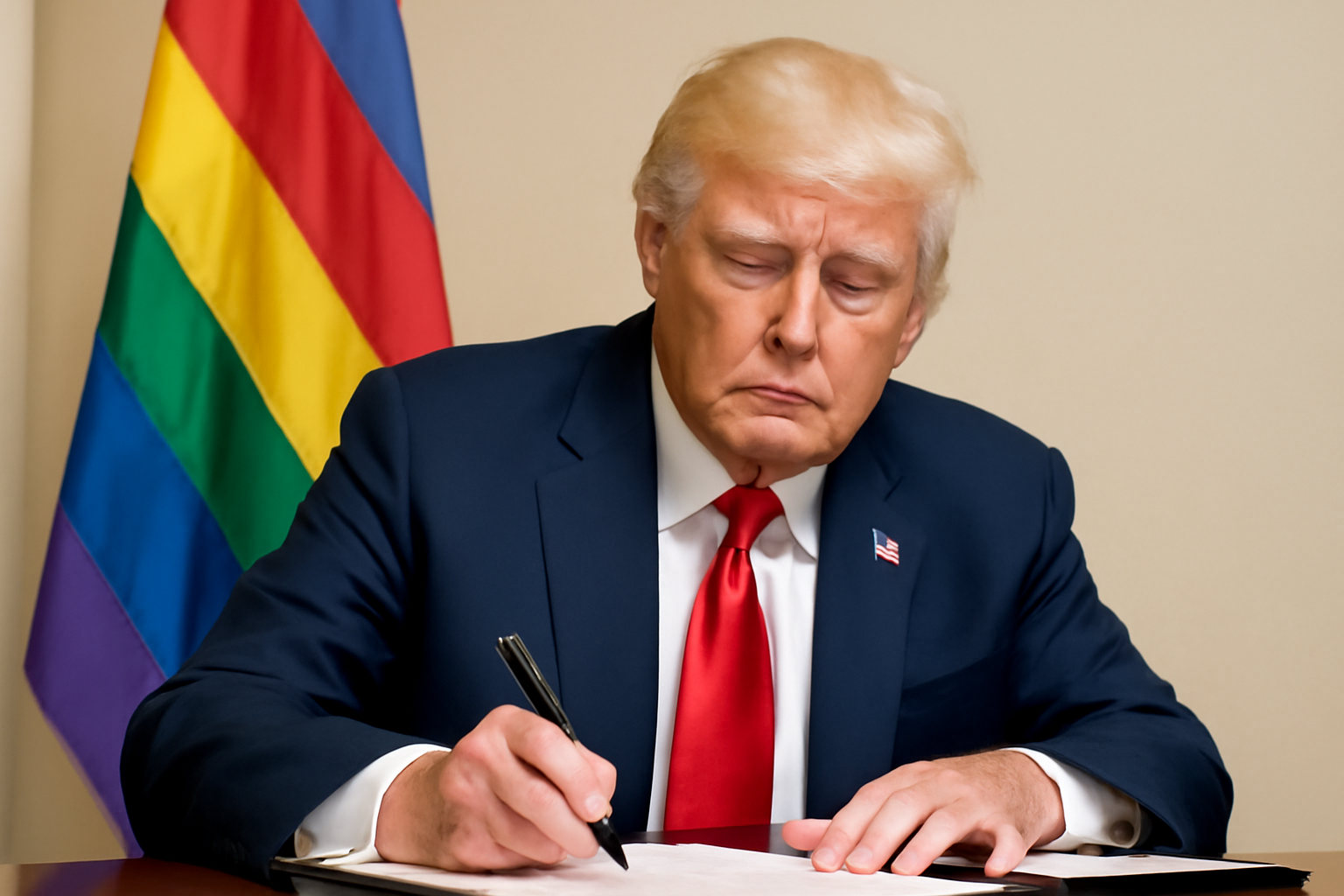
In a decision that has sparked widespread debate, President Donald Trump has officially repealed parts from a key civil rights law, specifically targeting provisions from 1965's Equal Employment Opportunity Act. This move has significantly alarmed those who champion diversity and inclusivity, as it falls in line with a series he has rolled out since assuming his presidential role.
Right off on day one, President Trump snagged headlines by signing an executive order perceived as hostile towards transgender rights. This order, which controversially declared there are "only two sexes," was met with immediate backlash from a plethora civil rights groups, even catching U.S. Representative Sarah McBride's attention. On top that, Trump's hints at scrapping birthright citizenship have sent ripples through political circles.
The administration seems set on dismantling measures that support diversity, equality, and inclusion across sectors, impacting communities like Latine, Native Americans, and Black Americans.
The White House has been defending these bold actions, arguing that focusing too much on “diversity, equity, and inclusion” (DEI) has actually done harm by eroding foundational American values. They claim such policies have sown division by prioritizing superficial traits over "hard work, merit, and equality."
A step back with Revocation Of Executive Order 11246?
On Tuesday, January 21, President Trump stirred controversy by pulling back Executive Order 11246, also known as a key component in ensuring equal employment opportunities. This order, first signed by President Lyndon B. Johnson on September 24, 1965, emerged during a time when America was shifting rapidly, not long after Rev. Martin Luther King Jr.'s iconic “I Have A Dream” speech.
This landmark order was key in curbing discrimination within federal employment, mandating that organizations holding federal contracts couldn't discriminate based on “race, color, religion, and national origin.” They even added sex as a protected category two years later.
Trump pushed back, arguing that these DEI policies don't pass legal muster and actually risk American safety. He believes they're undermining values like “individual merit, aptitude, hard work, and determination” when it comes down job placements in vital sectors such as government, healthcare, aviation, and law enforcement.
Revisiting traditional work environments
But there's more. President Trump has also called all federal employees back from remote work. His new directive on January 20 mandates that department and agency heads must take fast action shutting down telework arrangements, insisting employees must report back at their usual work stations full-time.
Still, there's a bit leeway. Department and agency leaders have been granted some discretion, letting them carve out exemptions where fitting. This could potentially help employees facing difficulty transitioning back traditional office life.
Not surprisingly, reactions are all over place. Supporters hail a return in-person work as pivotal in preserving productivity and togetherness in federal agencies. Conversely, critics argue this decision sidesteps benefits remote work has offered, particularly in light COVID-19's disruptions.
As we navigate these changes, how revoking parts from Equal Employment Opportunity Act and reinstating traditional work will affect remains closely watched. The debate over balancing diversity initiatives and a merit-driven focus surely isn't going anywhere in American policy circles.
President Trump, through these orders, marks a significant shift from earlier efforts aimed at boosting inclusivity and equality in workplace. As dialogue continues, understanding how these changes affect marginalized communities can't be ignored.
Related Posts
Supreme Court to Address State Bans on Trans Women in Female Sports
The upcoming U.S. Supreme Court term promises to be a pivotal moment for transgender rights, as the nation's highest court has agreed to evaluate whether states have the authority to prohibit transgender women from participating in female sports competitions. This case, scheduled to be argued in the next term beginning October, is expected to have a significant impact on the future of sports inclu [...]
Megan Rapinoe and Sue Bird Announce Amicable Separation After Ten Years Together
In a heartfelt announcement that resonated deeply within the sports and LGBTQ+ communities, soccer star Megan Rapinoe and basketball legend Sue Bird have revealed their decision to part ways after nearly a decade together. The couple, who have been icons both on and off the field, shared the news with their fans through a joint statement on social media, expressing that the choice was made with mu [...]
Groundbreaking Ruling Ends Sodomy Ban for Police and Military in the Dominican Republic
The Constitutional Court of the Dominican Republic recently delivered a landmark decision on November 18th, ruling that the nation’s police and armed forces are not permitted to criminalize consensual same-sex relations among their personnel. This pivotal ruling is a significant stride towards equality and the protection of LGBTQ+ rights within these institutions. A Resounding Victory for Equal [...]