
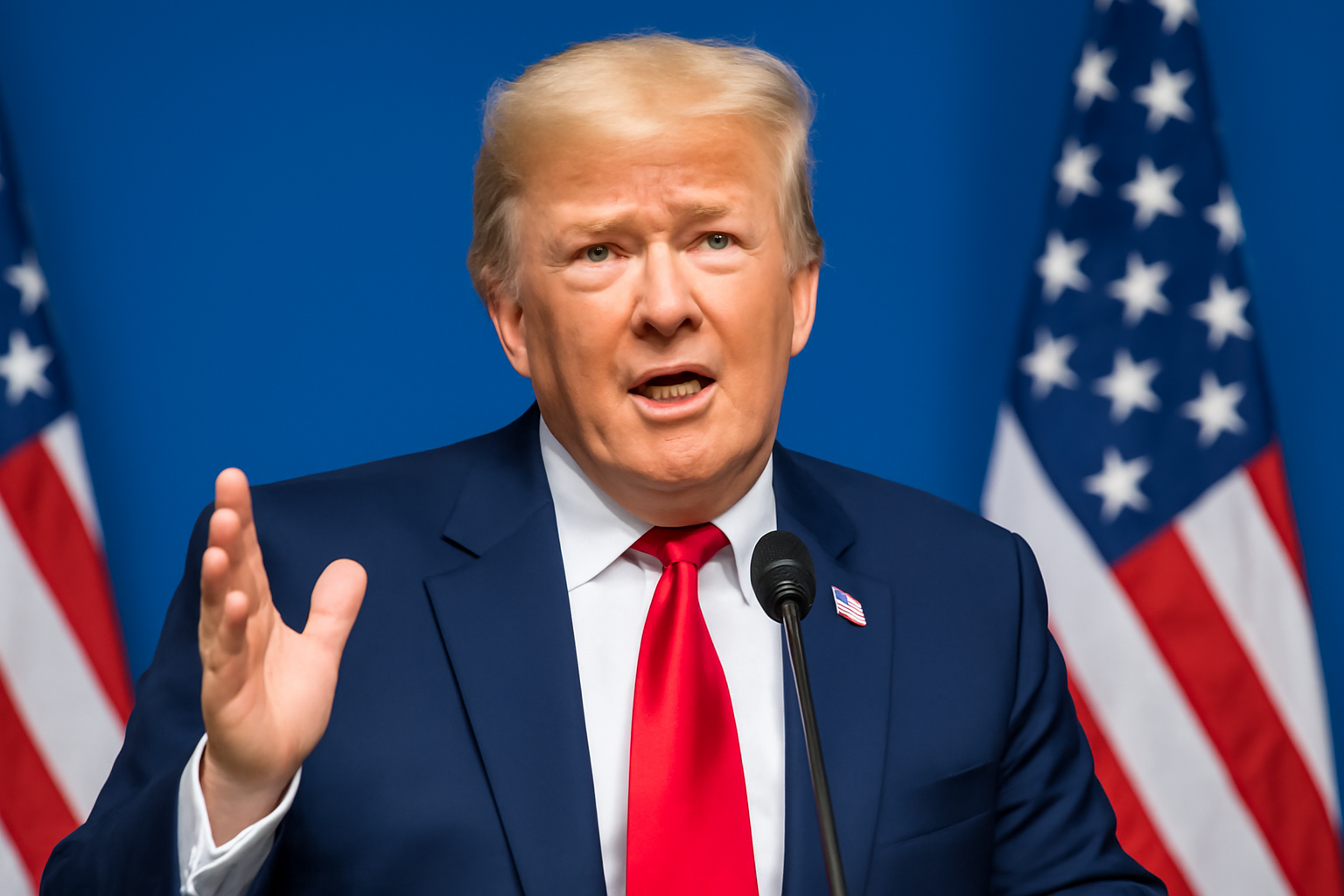
Trump Introduces New Faith Office to Tackle Religious Discrimination
Former U.S. President Donald Trump recently revealed plans to establish a new White House faith office aimed at combating religious discrimination, specifically focusing on perceived anti-Christian bias. The office is set to be overseen by Rev. Paula White, a figure known for her controversial views, who has previously criticized movements such as Black Lives Matter.
During the National Prayer Breakfast in Washington, Trump outlined his vision for protecting the Christian community, emphasizing the importance of safeguarding their rights in various sectors including education, the military, government, workplaces, hospitals, and public areas. "While I’m in the White House, we will protect Christians in our schools, in our military, in our government, in our workplaces, hospitals, and in our public squares," Trump declared.
Formation of Presidential Commission on Religious Liberty
Trump announced the formation of a presidential commission dedicated to religious liberty, underscoring his commitment to upholding this fundamental right. He assured attendees that the commission "will work tirelessly to uphold this most fundamental right," aiming to unify the nation under a shared religious ethos.
Furthering these efforts, Trump announced an executive order that appoints Attorney General Pam Bondi to lead a task force with the objective of "eradicating anti-Christian bias" within the federal government. This task force is charged with addressing all instances of perceived discrimination against Christians.
Executive Order and Political Implications
Following the Prayer Breakfast, Trump signed an executive order characterized by rhetoric perceived by some as anti-LGBTQ+. This order aims to address what Trump describes as an "egregious pattern of targeting peaceful Christians," a claim he asserts was exacerbated during the previous administration.
The order controversially includes a statement alleging that the Biden Administration declared March 31, 2024, as Transgender Day of Visibility, coinciding with Easter Sunday. This assertion has been contested, as Easter is a movable feast that can fall on any Sunday between March 22 and April 25.
Trump's Religious Identity and Influences
Throughout his career, Trump has been associated with the Presbyterian Church, a mainstream Protestant denomination. However, in a 2020 interview, he identified as a non-denominational Christian, indicating a departure from any specific Christian denomination while maintaining core Christian beliefs.
Trump has historically aligned himself with prominent evangelical leaders, including figures like Gary Bauer of American Values and Tony Perkins of the Family Research Council. It's noteworthy that the Family Research Council has been designated as an anti-LGBTQ+ hate group by the Southern Poverty Law Center, and Tony Perkins has made controversial statements regarding the LGBTQ+ community.
The implications of Trump's new measures are significant, sparking discussions about religious freedom, discrimination, and the intersection of politics and faith. As the nation continues to grapple with these complex issues, the formation of the faith office and the task force will likely contribute to ongoing debates about the role of religion in public policy.
We invite you to share your thoughts and engage in respectful discussion about the impact of these measures on religious communities and the broader social fabric.
Related Posts
Supreme Court to Address State Bans on Trans Women in Female Sports
The upcoming U.S. Supreme Court term promises to be a pivotal moment for transgender rights, as the nation's highest court has agreed to evaluate whether states have the authority to prohibit transgender women from participating in female sports competitions. This case, scheduled to be argued in the next term beginning October, is expected to have a significant impact on the future of sports inclu [...]
Megan Rapinoe and Sue Bird Announce Amicable Separation After Ten Years Together
In a heartfelt announcement that resonated deeply within the sports and LGBTQ+ communities, soccer star Megan Rapinoe and basketball legend Sue Bird have revealed their decision to part ways after nearly a decade together. The couple, who have been icons both on and off the field, shared the news with their fans through a joint statement on social media, expressing that the choice was made with mu [...]
Groundbreaking Ruling Ends Sodomy Ban for Police and Military in the Dominican Republic
The Constitutional Court of the Dominican Republic recently delivered a landmark decision on November 18th, ruling that the nation’s police and armed forces are not permitted to criminalize consensual same-sex relations among their personnel. This pivotal ruling is a significant stride towards equality and the protection of LGBTQ+ rights within these institutions. A Resounding Victory for Equal [...]