
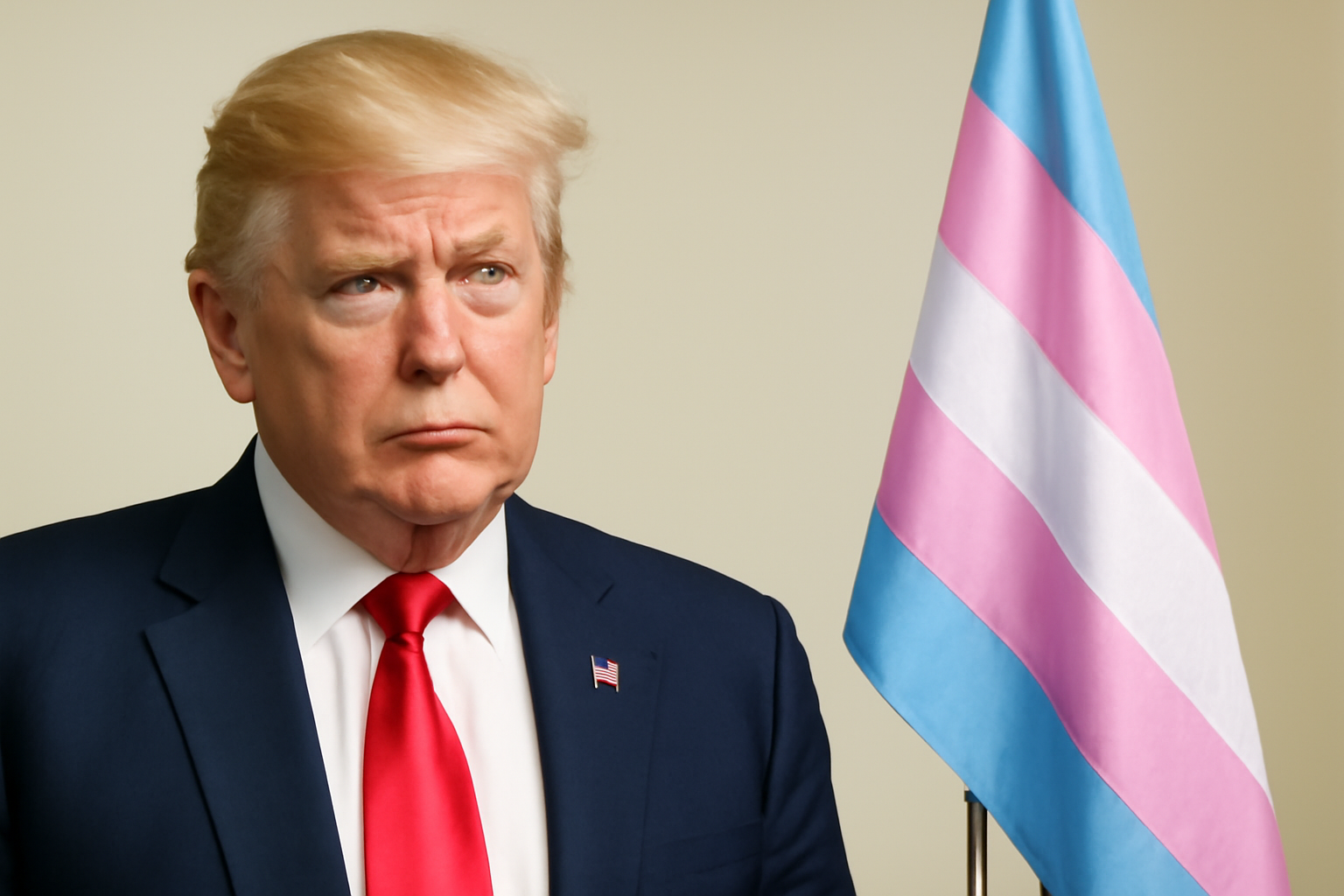
When news broke about a proposed ban on transgender individuals serving in our military, it was like a storm had hit, causing a whirlwind mix-up and sparking a wave criticism. This contentious idea from Trump administration days left many pondering: what's really behind this move? Questions hang thick in air about both its logic and transparency.
struggling with justifying a contentious ban
Recent court documents show that those backing this ban are having a hard time finding evidence that truly supports it. The administration's goal was clear: keep transgender people out from our armed services like army, navy, and air force. But here lies a pickle—no one actually knows how many transgender folks are out there serving because, well, there aren't any records keeping track by gender identity.
talbott vs. trump: legal tug-of-war
Enter Talbott vs. Trump, a notable case pushed forward by GLAAD and National Center Lesbian Rights. This legal battle came alive after an executive order from former President Trump himself. The list plaintiffs? It includes high-ranking military officers, which only highlights how wide-reaching and concerning this ban really was.
The administration made a shaky case, pointing fingers at financial and medical reasons. Yet, their argument didn't quite land. While government voices claimed gender-affirming care would break bank, real numbers painted different picture—the Pentagon's spending on this was a mere drop in a staggering $918.1 billion budget ocean.
understanding impact on transgender service members
There's been a lot debate over what this ban could mean transgender troops. Some argue that their presence could mess with military's mojo, but without much evidence backing that up, those claims feel pretty hollow. Talk about vague "psychiatric and behavioral disorders" doesn't help their case either—it actually weakens it.
Kevin Jennings, head honcho at Lambda Legal, didn't hold back. He called it a "solution in search a problem," pointing out that if transgender folks were really a threat, we'd see clear proof by now.
the push toward voluntary resignations
In a surprising twist, Pentagon put out guidance nudges transgender service members toward voluntarily stepping down by March 26. They're dangling double severance pay as an incentive, but critics see it as added pressure, forcing a tough choice between leaving honorably or facing murky future.
embracing inclusivity in military policy
The murky messaging and lack solid reasoning behind ban spotlight need real change—a push toward policies that make space rather than shut doors. Advocates fight on, standing up transgender service members' rights and calling policies built on fairness, not fear.
This legal saga and public debate are part much larger conversation about LGBTQ+ rights, both in military and society at large. Ensuring anyone can serve, no matter their gender identity, without fear discrimination, remains central fight many are championing.
As things unfold, it matters that we all stay tuned and active in these discussions. We need policies that lift up dignity and rights every service member holds dear.
Your voice matters too! Feel free chime in with your thoughts below, and let us engage in respectful dialogue on this topic that impacts us all.
Related Posts
Supreme Court to Address State Bans on Trans Women in Female Sports
The upcoming U.S. Supreme Court term promises to be a pivotal moment for transgender rights, as the nation's highest court has agreed to evaluate whether states have the authority to prohibit transgender women from participating in female sports competitions. This case, scheduled to be argued in the next term beginning October, is expected to have a significant impact on the future of sports inclu [...]
Megan Rapinoe and Sue Bird Announce Amicable Separation After Ten Years Together
In a heartfelt announcement that resonated deeply within the sports and LGBTQ+ communities, soccer star Megan Rapinoe and basketball legend Sue Bird have revealed their decision to part ways after nearly a decade together. The couple, who have been icons both on and off the field, shared the news with their fans through a joint statement on social media, expressing that the choice was made with mu [...]
Groundbreaking Ruling Ends Sodomy Ban for Police and Military in the Dominican Republic
The Constitutional Court of the Dominican Republic recently delivered a landmark decision on November 18th, ruling that the nation’s police and armed forces are not permitted to criminalize consensual same-sex relations among their personnel. This pivotal ruling is a significant stride towards equality and the protection of LGBTQ+ rights within these institutions. A Resounding Victory for Equal [...]