
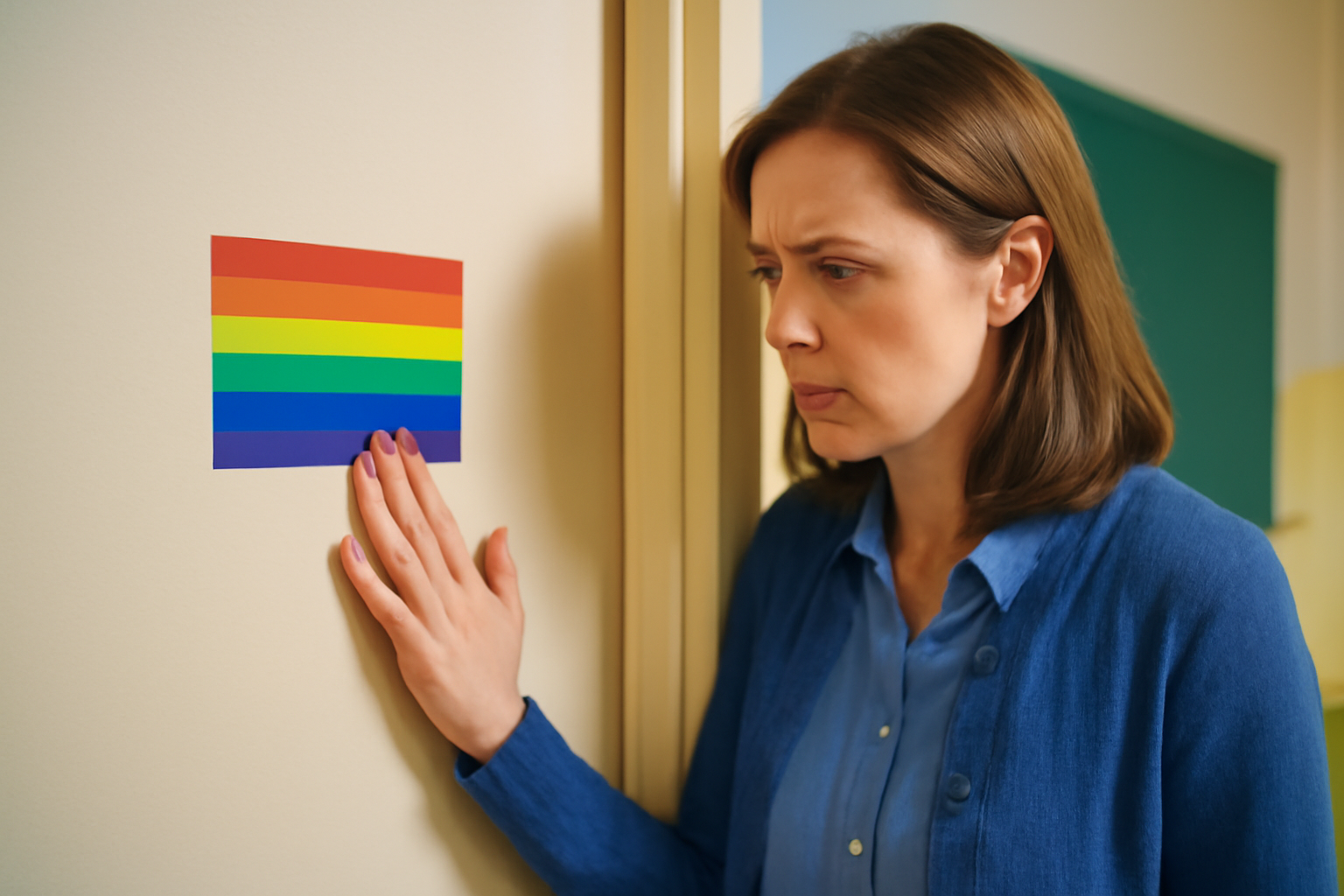
This fall in Tennessee, a teacher put a small rainbow sticker on her door, aiming simply at letting LGBTQ students know they were welcome. Yet, this small gesture almost cost her job. It's not like she was diving deep in discussions about sexuality or gender theories; rather, it was about what that rainbow symbolized. This incident highlights what some are calling "erasure laws"—legislation that doesn't just limit but actively seeks out and removes queer visibility from public spaces.
Across America, conservative lawmakers have rolled out a new playbook in cultural disputes. In times past, anti-LGBTQ efforts were often cloaked in language about "religious freedom" or "protecting children." But today's tactics are stealthier and more underhanded. States like Montana, Florida, and Tennessee have introduced or passed laws that rigidly define "male" and "female", altogether ignoring gender identity. These laws shut down conversations about sexual orientation in schools and demand that only birth-assigned pronouns be used in educational and government settings.
These aren't just simple administrative tweaks; they're deliberate ideological moves aimed at pushing queer and transgender folks out from under legal protection.
State-level laws making waves
Take Montana, where this year's "Sex Definition Act" locks in a definition based purely on "immutable biological characteristics at birth," effectively erasing transgender and intersex people from state policies. In Tennessee, a new rule bars teachers and librarians from displaying signs or materials deemed supportive "sexual ideology." Meanwhile, Florida has tried putting a leash on even college departments, restricting public funds from going towards "programs that advocate gender ideology."
Though couched in dry, formal language, these bills have a clear political aim: they want LGBTQ identities unmentionable and, therefore, unthinkable.
Impacting society at large
The conservative game plan has pivoted from tackling specific rights like marriage or adoption, zeroing in instead on language itself—who gets a say in defining "man," "woman," "family," or even what's real. By changing legal definitions around sex and banning language that captures LGBTQ experiences, these lawmakers are orchestrating a widespread erasure through language.
These erasure laws have very real consequences. In Montana, a transgender woman might find her driver's license no longer reflects who she truly knows herself as. A nonbinary student in Tennessee may hesitate before asking their teacher or peers not use their chosen name, fearing it could put their teacher at risk. Librarians in Florida, afraid their jobs might be on line, might remove books that include LGBTQ themes. And even healthcare providers are left scratching their heads on what "gender-affirming care" means when "gender" itself has been legally redefined.
The end result? A tangled bureaucratic mess aimed at silencing. It's not always violence that erases LGBTQ individuals; sometimes it's just paperwork, silence, and fear.
A worldwide trend and battle ahead
Supporters say these laws are merely about "clarifying biological reality." But it really isn't about biology; it's about humanity. These aren't simple clarifications; they're exclusions designed as a sneaky form justification discrimination. By nixing "transgender" from legal lingo, they're stripping away protections, data collection, and recognition that make life livable.
This tactic isn't confined just within US borders. Countries like Hungary and Poland have seen authoritarian leaders pushing similar laws, aiming at redefining sex in law and banning "gender ideology." It's all part a larger, global campaign that tries painting queer existence as a threat "natural order." The new erasure laws in America are echoing this movement, all wrapped up in a bow labeled "states' rights" and "parental control."
For LGBTQ folks in America, this marks a new chapter in their fight. The battlegrounds aren't just in courtrooms or during Pride parades. They're in classrooms, libraries, health databases, and driver's license offices. Just being visible has become a form resistance.
As a transgender man, I've felt firsthand how delicate visibility can be—something we fight hard achieve and must continue struggling maintain. Every pronoun, every rainbow sticker, every formal acknowledgment our lives in public records becomes a defense against erasure. When lawmakers try wiping out these symbols, they're sending message that our lives are optional, able be erased from memory by law.
We can't let that happen.
Standing strong with visibility
LGBTQ individuals aren't just ideas that can be scribbled out from legal books. We're citizens, neighbors, living threads in social fabric. Erasing us from language and law isn't just bureaucratic failure; it has moral implications history will judge harshly.
Erasure often comes before persecution. The first step targeting a group? Make them invisible. A simple rainbow sticker on classroom door might seem insignificant, yet it symbolizes what certain lawmakers dread most: our undeniable presence.
They might scratch out our names from documents, ban our books, redefine our bodies—but they can't erase us. We'll keep speaking, writing, loving, and living openly. Because visibility isn't about vanity; it's about survival.
Isaac Amend writes from D.C. He was featured in National Geographic's "Gender Revolution" documentary and serves on board LGBT Democrats Virginia.
Related Posts
Supreme Court to Address State Bans on Trans Women in Female Sports
The upcoming U.S. Supreme Court term promises to be a pivotal moment for transgender rights, as the nation's highest court has agreed to evaluate whether states have the authority to prohibit transgender women from participating in female sports competitions. This case, scheduled to be argued in the next term beginning October, is expected to have a significant impact on the future of sports inclu [...]
Megan Rapinoe and Sue Bird Announce Amicable Separation After Ten Years Together
In a heartfelt announcement that resonated deeply within the sports and LGBTQ+ communities, soccer star Megan Rapinoe and basketball legend Sue Bird have revealed their decision to part ways after nearly a decade together. The couple, who have been icons both on and off the field, shared the news with their fans through a joint statement on social media, expressing that the choice was made with mu [...]
Groundbreaking Ruling Ends Sodomy Ban for Police and Military in the Dominican Republic
The Constitutional Court of the Dominican Republic recently delivered a landmark decision on November 18th, ruling that the nation’s police and armed forces are not permitted to criminalize consensual same-sex relations among their personnel. This pivotal ruling is a significant stride towards equality and the protection of LGBTQ+ rights within these institutions. A Resounding Victory for Equal [...]