
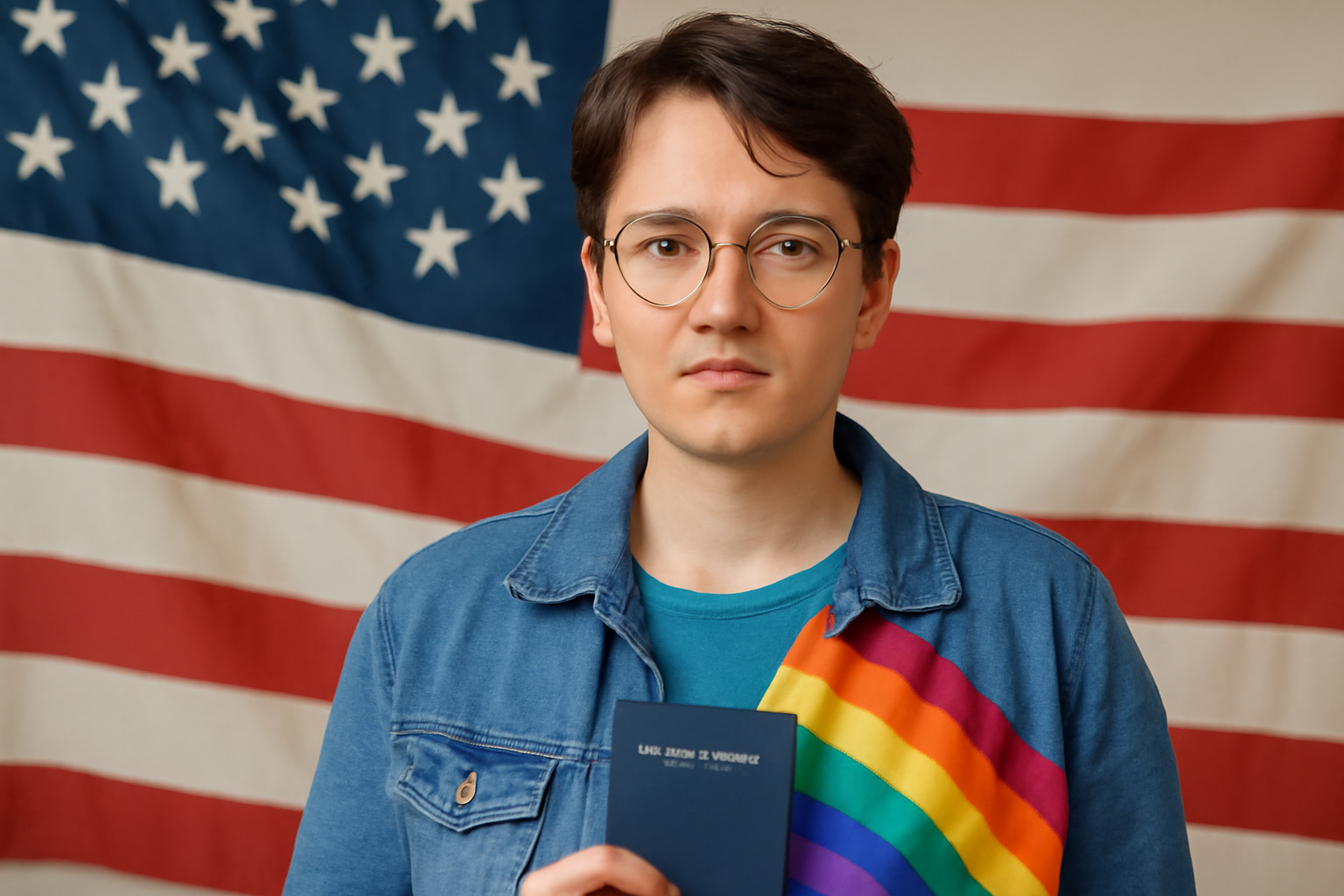
Personal Experiences in the Migration System
My journey with the American migration system is quite unique and, at times, challenging. I fled Russia in 2018, where I was a refugee due to my LGBT activism. My wife and I set out for Israel, believing Tel Aviv to be the ideal place to secure an American visa. We had been invited to speak at a conference in the U.S. on disability rights and intersectionality, but our true intent was to seek asylum upon arrival.
However, our hopes were dashed when our request for visas was denied. This left us stranded in Israel, without our belongings, financial means, or the legal right to work. After four arduous months, we moved to the UK to seek asylum. Although I had dreamt of living in the United States since childhood, I find myself relieved that my path did not lead there.
As a queer refugee across three countries, including the UK where I currently reside, the anti-immigration policies of the Trump administration felt alarmingly personal. The U.S., traditionally a nation of immigrants, whose prosperity is built on diversity, seemed to be shutting its doors, with potential repercussions for Europe and beyond.
The Influence of Anti-Immigration Politics
Nigel Farage's Reform UK party is gaining traction in British polls, partly due to the backing of billionaire Elon Musk. Despite a complex relationship with Farage, Musk's financial and promotional support could significantly alter the political landscape in the UK. This has raised concerns among ordinary Britons and political analysts alike about the spread of anti-immigration and extremist ideologies akin to those of MAGA.
Reform UK supporters, known for their anti-immigration stance, were involved in violent outbreaks in August 2024. The party is also notorious for its anti-LGBT policies, particularly targeting transgender rights. Farage's manifesto vows to eradicate "transgender ideology" from schools, halting social transitioning for trans youth and claiming that such practices harm children.
The party's promises to withdraw from the European Convention on Human Rights and alter the Equality Act 2010 pose significant threats to LGBT communities. Under a Reform UK government, individuals like me—LGBT refugees and asylum seekers—face increased risks not only in England but throughout Scotland, Wales, and Northern Ireland.
Resilience and Hope for the Future
Despite the rise of far-right movements, the UK remains a beacon of diversity and acceptance for me. Regardless of political shifts between Labour and the Conservatives, I have never experienced the level of discrimination here as in Russia or Ukraine. The UK's commitment to universal human rights feels deeply entrenched, though vigilance is necessary to protect these freedoms.
Amidst these challenges, UK-based LGBT rights activists are exploring avenues to assist trans* asylum seekers from the U.S., particularly in light of recent discriminatory executive orders. With resources like the NHS, free legal and housing support for asylum seekers, and robust community networks, the UK could offer refuge to those fleeing persecution.
While Canada is geographically closer for American LGBT refugees, many European countries, surprisingly, are less welcoming than the UK. Musk's influence attempts, such as promoting a "Make Europe Great Again" campaign, could find fertile ground in Germany, especially with support from the Alternative for Germany party known for its pro-Russia stance, which openly employs homophobic and transphobic rhetoric.
Protecting Universal Human Rights
Authoritarian regimes often target the most vulnerable first, gradually eroding freedoms for all. I grew up valuing liberty and diversity through American culture, yet these principles are now at risk in the U.S. The propagation of these antithetical ideas threatens global human rights, demanding a robust and united opposition before it is too late.
It is crucial to remember that what starts as intolerance towards a minority can evolve into widespread repression. The international community must remain vigilant and proactive in defending the rights of all individuals, regardless of identity or origin.
Editor's note: The term trans* is used to inclusively refer to nonbinary and genderqueer individuals.
Related Posts
Supreme Court to Address State Bans on Trans Women in Female Sports
The upcoming U.S. Supreme Court term promises to be a pivotal moment for transgender rights, as the nation's highest court has agreed to evaluate whether states have the authority to prohibit transgender women from participating in female sports competitions. This case, scheduled to be argued in the next term beginning October, is expected to have a significant impact on the future of sports inclu [...]
Megan Rapinoe and Sue Bird Announce Amicable Separation After Ten Years Together
In a heartfelt announcement that resonated deeply within the sports and LGBTQ+ communities, soccer star Megan Rapinoe and basketball legend Sue Bird have revealed their decision to part ways after nearly a decade together. The couple, who have been icons both on and off the field, shared the news with their fans through a joint statement on social media, expressing that the choice was made with mu [...]
Groundbreaking Ruling Ends Sodomy Ban for Police and Military in the Dominican Republic
The Constitutional Court of the Dominican Republic recently delivered a landmark decision on November 18th, ruling that the nation’s police and armed forces are not permitted to criminalize consensual same-sex relations among their personnel. This pivotal ruling is a significant stride towards equality and the protection of LGBTQ+ rights within these institutions. A Resounding Victory for Equal [...]