
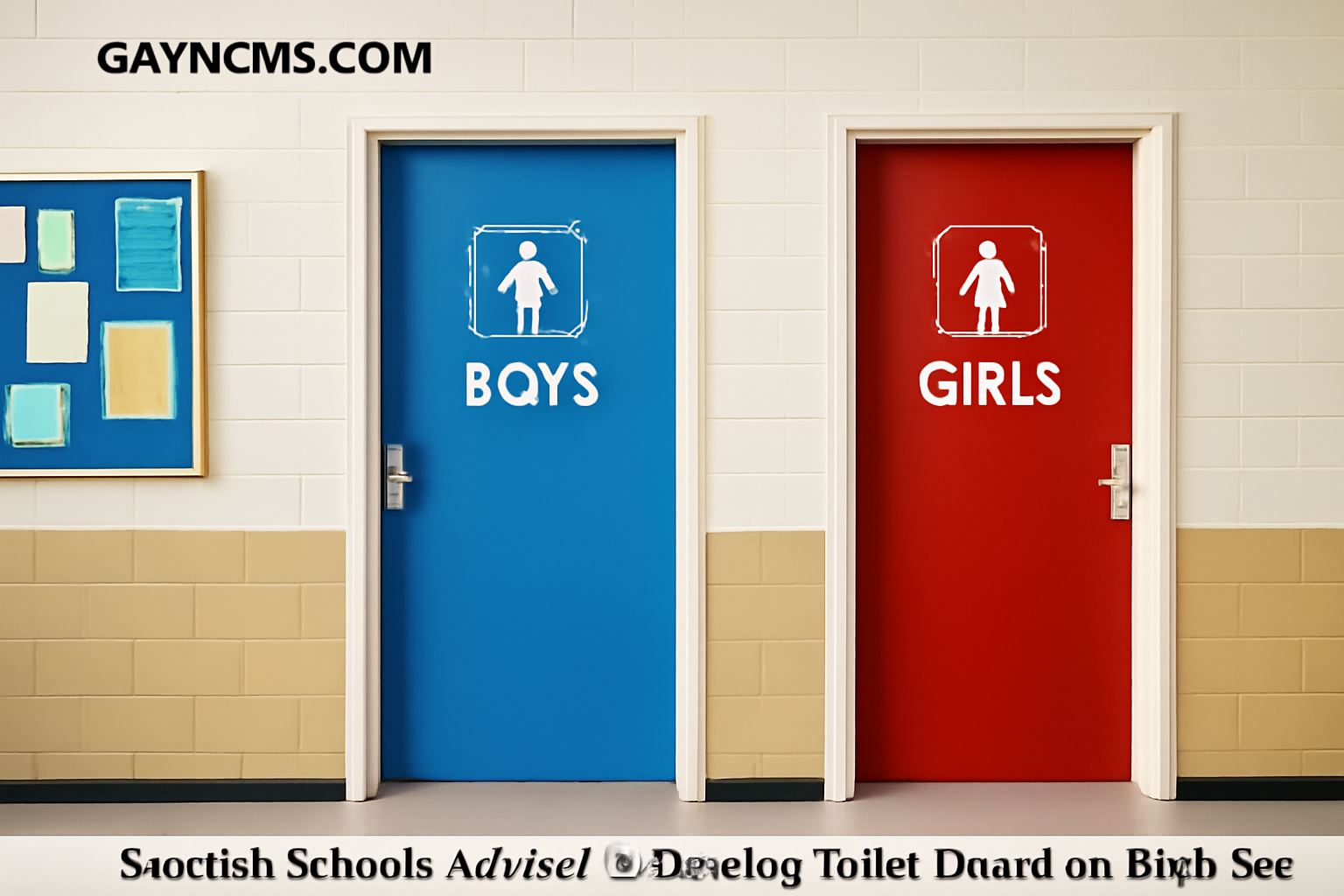
Scottish schools update student facility policies
Schools across Scotland have been given new guidelines that suggest separating toilets and changing rooms based on students' "biological sex." This advice, rolled out by Scotland's government on September 29th, recommends that facilities be designated distinctly as boys' or girls' spaces according that criterion.
So, what does "biological sex" mean here? It's defined as whatever sex was recorded at birth. The guidelines also stress that schools need accessible facilities ready and available at all times, especially considering students with disabilities.
Understanding changes in gender identity policies
Jenny Gilruth, Scotland's Education Secretary, shared that these updates are meant “to provide clarity” when it comes down supporting transgender students. This shift in guidance partly draws from a recent UK Supreme Court decision related definition "woman" in context 2010 Equality Act. The ruling significantly influenced these policy changes.
The Supreme Court ruling's impact
The UK Supreme Court's verdict has had a ripple effect on how single-sex services are interpreted by Equality and Human Rights Commission. Some see this as potentially sidelining transgender people from using facilities that match their gender identity.
Nevertheless, Scotland's guidance does allow schools introduce gender-neutral facilities if it seems like right choice. It recommends schools evaluate how accessible facilities are used ensure they're available anyone who needs them.
During an interview with BBC Scotland, Jenny Gilruth pointed out that although Supreme Court ruling offers clarity, she refrained from commenting on whether it meant transgender women could be excluded from single-sex spaces.
Legal and ethical questions linger
The legal community remains split about whether these policies might stop transgender people from accessing single-sex facilities. Some legal professionals worry these exclusion policies could defy court's decision. Oscar Davies, a barrister who identifies as non-binary, argues that judgement doesn't justify discrimination against transgender individuals.
Davies highlights, "The Equality Act should protect rather than strip away rights. It's supposed safeguard transgender people, not exclude them. Complaints might press sex discrimination claims if restrictions unfair."
He further stressed any exclusion needs balance: ensuring those seeking single-sex spaces and transgender people's rights are equally respected. "These rights continue. The law hasn't changed," Davies said.
Several experts have criticized Supreme Court's decision, suggesting they may have overlooked important equality laws.
Looking ahead: fostering inclusion in schools
As this debate unfolds, these guidelines are likely ignite more discussions about finding balance between inclusion and legalities. Schools in Scotland now have task address these matters making sure each student feels safe, respected, and valued.
We encourage community members dive in share thoughts and experiences. Comments section below open platform discussing this important issue. Let respect guide our conversations as we explore together.
Note: This article offers a snapshot recent changes in Scottish educational policies surrounding student facilities and gender identity implications. The aim? Spark thoughtful dialogue and deepen understanding in our community. ```
Related Posts
Supreme Court to Address State Bans on Trans Women in Female Sports
The upcoming U.S. Supreme Court term promises to be a pivotal moment for transgender rights, as the nation's highest court has agreed to evaluate whether states have the authority to prohibit transgender women from participating in female sports competitions. This case, scheduled to be argued in the next term beginning October, is expected to have a significant impact on the future of sports inclu [...]
Megan Rapinoe and Sue Bird Announce Amicable Separation After Ten Years Together
In a heartfelt announcement that resonated deeply within the sports and LGBTQ+ communities, soccer star Megan Rapinoe and basketball legend Sue Bird have revealed their decision to part ways after nearly a decade together. The couple, who have been icons both on and off the field, shared the news with their fans through a joint statement on social media, expressing that the choice was made with mu [...]
Groundbreaking Ruling Ends Sodomy Ban for Police and Military in the Dominican Republic
The Constitutional Court of the Dominican Republic recently delivered a landmark decision on November 18th, ruling that the nation’s police and armed forces are not permitted to criminalize consensual same-sex relations among their personnel. This pivotal ruling is a significant stride towards equality and the protection of LGBTQ+ rights within these institutions. A Resounding Victory for Equal [...]