
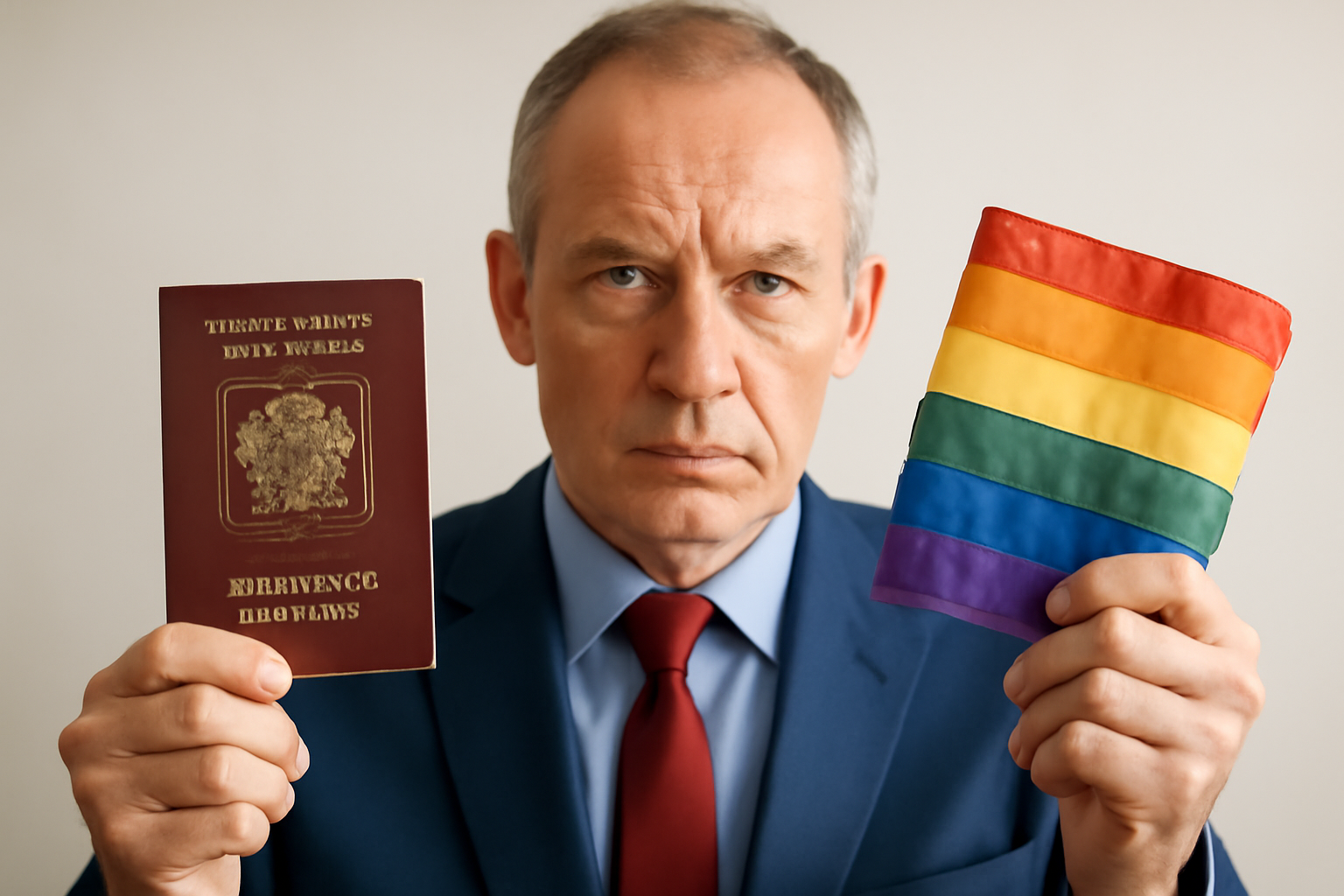
Recent reports have surfaced indicating that the Russian Interior Ministry is planning to create a comprehensive electronic registry of LGBTQ+ individuals within the nation. This development, brought to light this week, has sparked significant concern among human rights advocates and the international community.
According to sources within the Interior Ministry, discussions about establishing this database began last year. This initiative coincides with a ruling by Russia’s Supreme Court, which labeled the so-called “international LGBT movement” as an “extremist organization.” The decision came following advocacy by President Vladimir Putin.
Increasing Perils for LGBTQ+ Community in Russia
The environment for LGBTQ+ individuals in Russia has grown increasingly hostile, with raids and arrests at LGBTQ+ venues becoming disturbingly frequent across the country.
The proposed registry is envisioned as a “large-scale” system designed to monitor members of the LGBTQ+ community at large. Dmitry Chukreyev, an official associated with the Civic Chamber in Yekaterinburg, affirmed that police have maintained informal lists of LGBTQ+ individuals since the Supreme Court’s verdict.
In 2024 alone, independent investigations reported at least 42 police raids on establishments welcoming the LGBTQ+ community. These raids, often marked by violence and intimidation, have become a regular feature of life for LGBTQ+ Russians.
State-Sponsored Intimidation and Data Collection
Authorities and state-backed media frequently portray the LGBTQ+ community in Russia as a dangerous entity, alleging involvement in “dehumanization” activities and even “devil worship.” The government credits these raids with curbing so-called anti-state actions.
The raids not only serve to intimidate the LGBTQ+ community but have also enabled security officials to amass significant amounts of personal data. For instance, during a raid on a queer venue in Siberia, security personnel reportedly copied a database containing information on numerous clients.
In other instances, individuals at LGBTQ+ gatherings have been coerced into providing fingerprints and DNA samples. In Chelyabinsk, visitors to the Eden club were subjected to such treatment, while at another venue in Orenburg, patrons were forced to disclose their residential addresses on camera.
The Impact on Community and Privacy
Raids on private events, such as a house party in the Leningrad Oblast, have seen guests compelled to hand over personal identification and unlock phones, with non-compliance leading to collective punishment.
Human rights activists argue that these actions also aim to identify LGBTQ+ individuals within government positions. Events perceived as queer-friendly are targeted in hopes of catching officials and other notable figures.
Despite these aggressive tactics, the formation of a full-scale LGBTQ+ registry has faced delays. These are partly due to the ongoing military conflict in Ukraine, which has diverted police resources away from internal surveillance activities.
Continued Threats and Global Response
Nevertheless, the raids persistently yield results for authorities. A notable incident in Gorno-Altaysk resulted in the collection of data on 80 individuals connected to a local venue. The message from security forces during such raids remains clear: "We know all of you now."
As the situation continues to develop, global LGBTQ+ communities and human rights organizations remain vigilant, urging more international awareness and action to protect Russia's LGBTQ+ citizens.
Related Posts
Supreme Court to Address State Bans on Trans Women in Female Sports
The upcoming U.S. Supreme Court term promises to be a pivotal moment for transgender rights, as the nation's highest court has agreed to evaluate whether states have the authority to prohibit transgender women from participating in female sports competitions. This case, scheduled to be argued in the next term beginning October, is expected to have a significant impact on the future of sports inclu [...]
Megan Rapinoe and Sue Bird Announce Amicable Separation After Ten Years Together
In a heartfelt announcement that resonated deeply within the sports and LGBTQ+ communities, soccer star Megan Rapinoe and basketball legend Sue Bird have revealed their decision to part ways after nearly a decade together. The couple, who have been icons both on and off the field, shared the news with their fans through a joint statement on social media, expressing that the choice was made with mu [...]
Groundbreaking Ruling Ends Sodomy Ban for Police and Military in the Dominican Republic
The Constitutional Court of the Dominican Republic recently delivered a landmark decision on November 18th, ruling that the nation’s police and armed forces are not permitted to criminalize consensual same-sex relations among their personnel. This pivotal ruling is a significant stride towards equality and the protection of LGBTQ+ rights within these institutions. A Resounding Victory for Equal [...]