
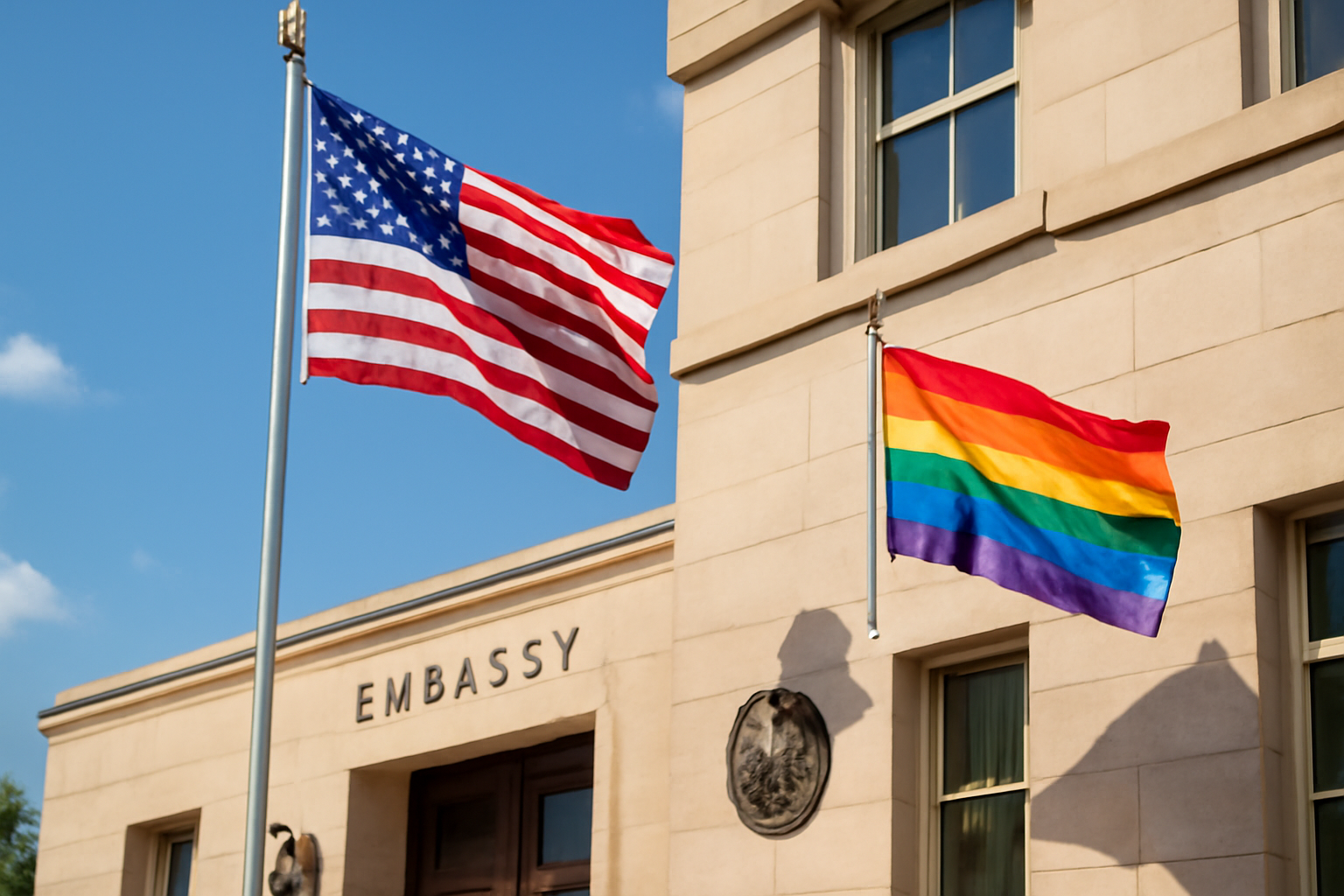
The U.S. administration recently made headlines with a controversial new policy that limits displaying pride flags at American embassies around globe. This decision has sparked a mix reactions, particularly within LGBTQ+ community and among allies who view pride flag as a powerful symbol inclusion and solidarity.
According new rule, embassies no longer allowed fly pride flag on official flagpole reserved solely American flag. While pride flags still permitted embassy grounds, they're kept from waving alongside national flag outside.
Decoding this policy shift
This policy shift ties in with administration broader strategy on diplomatic and cultural representation. Officials say aim here emphasize American flag as single national emblem embassies, avoiding multiple flags representing various causes.
However, many critics argue pride flag isn't just about "cause." It represents acceptance and human rights. To them, this restriction feels like step back in fight inclusivity and representation LGBTQ+ individuals both domestically and worldwide.
How communities are responding
Understandably, LGBTQ+ community and human rights groups are expressing their disappointment. Activists see pride flag as beacon hope and testament progress, symbolizing America's commitment diversity equality across borders.
Top LGBTQ+ rights advocates warn limiting pride flag's display might undermine global equality efforts. Embassies often safe havens in countries where LGBTQ+ rights not recognized, pride flag historically potent symbol support.
Looking at both sides
Despite criticism, some folks support policy, viewing it as reaffirmation importance national symbols. They argue American flag already stands freedom equality, including diverse sexual orientations gender identities. For these supporters, policy ensures consistent display American values worldwide.
Even with this viewpoint, debate representing supporting America's diverse society abroad far from over.
What this means moving forward
This policy raises questions about symbolism's role diplomacy, balancing national representation with global solidarity. Discussions also revolve around advocating human rights without sparking diplomatic tensions.
Looking ahead, many advocates hope future administrations will reconsider, embracing more inclusive stance celebrating diversity. Meanwhile, embassies search alternative ways support LGBTQ+ rights while following diplomatic protocols.
As conversations continue, pride flag remains significant symbol millions. How nations handle this emblem will evolve, reflecting broader discussions about diversity and inclusion.
Ultimately, restrictions on flying pride flags at U.S. embassies have stirred debate, highlighting ongoing discussions on representation, inclusion, symbolism diplomacy. As our society changes, so too will strategies advocating supporting rights all individuals, regardless their identity.
Related Posts
Supreme Court to Address State Bans on Trans Women in Female Sports
The upcoming U.S. Supreme Court term promises to be a pivotal moment for transgender rights, as the nation's highest court has agreed to evaluate whether states have the authority to prohibit transgender women from participating in female sports competitions. This case, scheduled to be argued in the next term beginning October, is expected to have a significant impact on the future of sports inclu [...]
Megan Rapinoe and Sue Bird Announce Amicable Separation After Ten Years Together
In a heartfelt announcement that resonated deeply within the sports and LGBTQ+ communities, soccer star Megan Rapinoe and basketball legend Sue Bird have revealed their decision to part ways after nearly a decade together. The couple, who have been icons both on and off the field, shared the news with their fans through a joint statement on social media, expressing that the choice was made with mu [...]
Groundbreaking Ruling Ends Sodomy Ban for Police and Military in the Dominican Republic
The Constitutional Court of the Dominican Republic recently delivered a landmark decision on November 18th, ruling that the nation’s police and armed forces are not permitted to criminalize consensual same-sex relations among their personnel. This pivotal ruling is a significant stride towards equality and the protection of LGBTQ+ rights within these institutions. A Resounding Victory for Equal [...]