
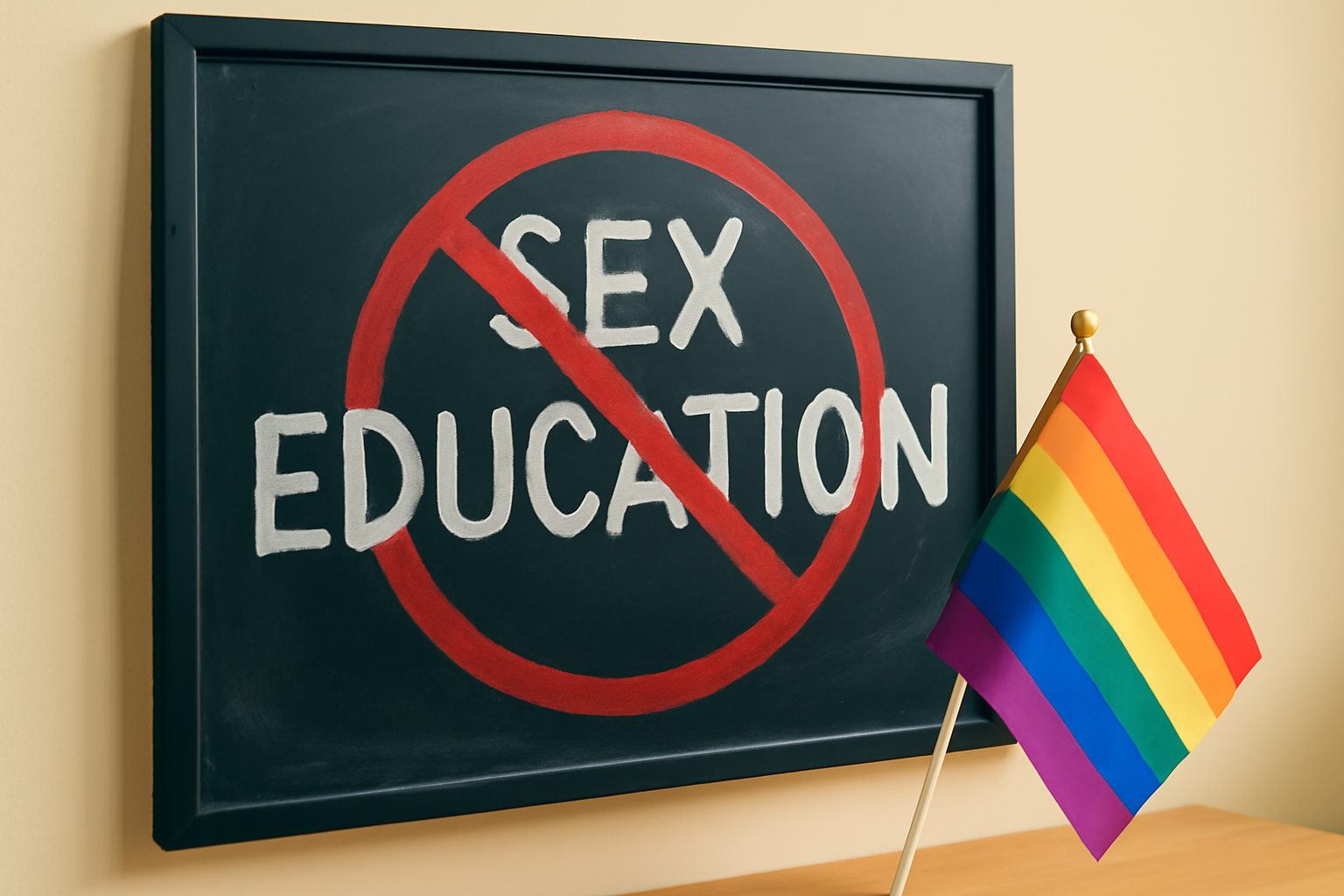
Recently, there's been a wave from The Administration For Children and Families that's causing a stir among those who support comprehensive sex education. Health departments all over America got messages telling them they needn't mention gender ideology in sex ed programs funded by something called The Personal Responsibility Education Program. If this sounds familiar, it's because it mirrors older federal moves from back in 1980s through early 2000s, times when funds were cut if sex ed didn't stick strictly with abstinence-only teachings - a core part part, really, a relic, from that Purity Culture era.
What "don't say gay" policies really mean
These days, we have new initiatives like "Don't Say Gay" popping up, giving parents a say in nixing LGBTQ topics from schools. It's a throwback, isn't it, recalling those ineffective, even harmful, abstinence-only "teachings." By blocking genuine talks on sex and gender, such policies silence LGBTQ voices, reminding us bitterly how past purity culture schemes tried—and often succeeded—in erasing LGBTQ presence from education.
A look back at sex education policies
To really get why these policies matter, we need a glance over our shoulders at history. In 1980s there was this Adolescent Family Life Act, fondly nicknamed “the chastity law.” It was part XX Title Public Health Service Act, and somehow funneled over $125 million toward preaching chastity. But when it was legally challenged Bowen v. Kendrick, a question mark hung over whether these programs were medically accurate or laced with religious ideology. Flash forward a bit: a 2004 report told us two-thirds abstinence-only material still muddied water with misinformation.
Jumping ahead, 1996 rolls up with federal backing via Title V Welfare Reform Act. This told states: "Teach abstinence-only, will you? Here, match our funds." These directives were aimed straight at kids aged 12-18, leaving out contraception and safe sex while preaching that premarital sex was dangerous.
The ripple effect: today's restrictive policies
Now, fast forward, and here we are again. The Administration For Children and Families decided once more that gender has no place in sex education. There's even Senate Bill 3 waiting its turn in Alabama's 2026 session, pushing abstinence learning and needing parents' OK before kids join in. This changes old opt-out policy, morphing it instead opt-in, and that limits broad access comprehensive education.
Take New Hanover County; they're already bending these new federal mandates. They're stripping out gender roles and LGBTQ from programs, bowing recent executive edicts against gender ideology. Look back at Trump era efforts; there's a pattern in cutting support diversity, equity, and inclusion tied up in orders like “Ending Radical Indoctrination K-12 Schooling.”
Lessons repeating in modern lawmaking
Today isn't so different from yesterday, it seems. Read through current strategies, and echoes from old Social Purity Movements late 19th and early 20th centuries ring strong. Back then, leaders like Anthony Comstock stamped out "social impurities”—they called out sex work, contraception, LGBTQ lives. The notorious Comstock laws stood strong until a 1958 Supreme Court had its say.
Some voices are calling old laws, long dormant, back from shadows. They're eyeing them as ways clamp down on contraceptive and abortion access—and here we are again, with anti-LGBTQ rhetoric that sounds like purity culture, suggesting silence on information keeps our morals safe.
Moving ahead: fighting strong comprehensive sex education
The Administration For Children and Families' actions are a piece broader conservative game, weaving abstinence-only framework tightly around LGBTQ education. The Mahmoud v. Taylor Supreme Court decision, allowing religious exemptions in this realm, only deepens these funding restrictions—it's part "Don't Say Gay" mindset creeping through our educational policies again.
For those who believe all kids deserve classrooms full truth and acceptance, these battles demand attention. We can't sit idly by as policies try rolling back progress on LGBTQ rights in education. The fight comprehensive sex education pushes past just what gets taught; it's rooted in ensuring each student sees and understands their identity, their place, in what's learned.
Related Posts
Supreme Court to Address State Bans on Trans Women in Female Sports
The upcoming U.S. Supreme Court term promises to be a pivotal moment for transgender rights, as the nation's highest court has agreed to evaluate whether states have the authority to prohibit transgender women from participating in female sports competitions. This case, scheduled to be argued in the next term beginning October, is expected to have a significant impact on the future of sports inclu [...]
Megan Rapinoe and Sue Bird Announce Amicable Separation After Ten Years Together
In a heartfelt announcement that resonated deeply within the sports and LGBTQ+ communities, soccer star Megan Rapinoe and basketball legend Sue Bird have revealed their decision to part ways after nearly a decade together. The couple, who have been icons both on and off the field, shared the news with their fans through a joint statement on social media, expressing that the choice was made with mu [...]
Groundbreaking Ruling Ends Sodomy Ban for Police and Military in the Dominican Republic
The Constitutional Court of the Dominican Republic recently delivered a landmark decision on November 18th, ruling that the nation’s police and armed forces are not permitted to criminalize consensual same-sex relations among their personnel. This pivotal ruling is a significant stride towards equality and the protection of LGBTQ+ rights within these institutions. A Resounding Victory for Equal [...]