
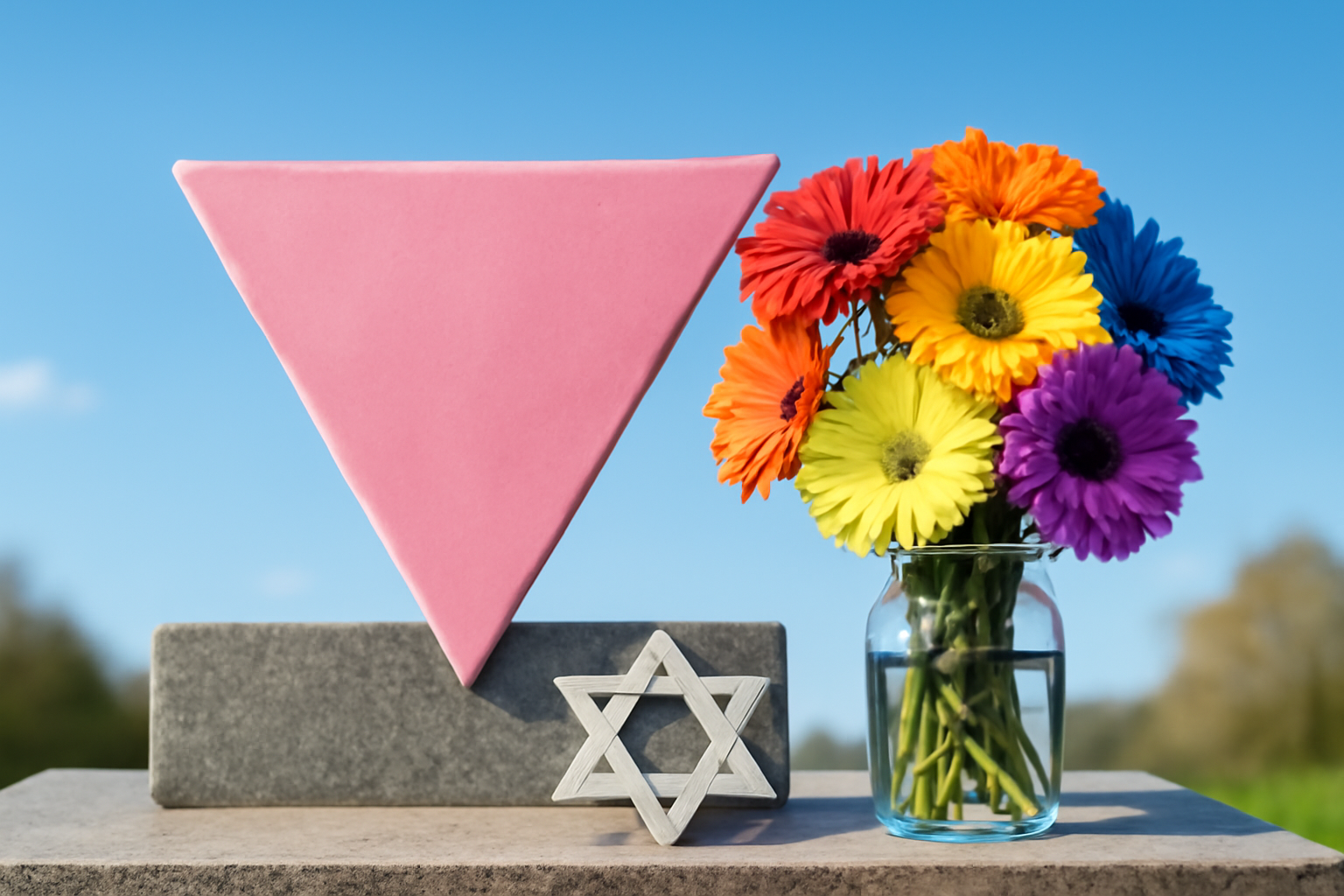
Holocaust Memorial Day 2025: Honoring the Queer Victims
As we approach Holocaust Memorial Day in 2025, marking the 80th anniversary of the liberation of Auschwitz, it is of utmost importance to remember all the victims who perished under the Nazi regime, including those from the LGBTQ+ community.
On January 27, 1945, Soviet soldiers liberated Auschwitz, a moment that marked the end of one of the darkest chapters in human history. The camp, which had been abandoned by German forces, was eerily silent when the soldiers arrived. Yet, they soon found thousands of emaciated prisoners who had endured unimaginable suffering.
The Grim Reality of the Holocaust
The Holocaust was a systematic, state-sponsored persecution and murder of six million Jews by the Nazi regime. But the terror did not stop there. It extended to other minority groups, including Romani people, disabled individuals, political dissidents, and LGBTQ+ individuals.
From 1933 to 1945, approximately 100,000 men were arrested for being homosexual in Nazi Germany. Of these, around 50,000 were convicted, and between 5,000 and 15,000 were sent to concentration camps. In these death camps, gay men wore the infamous upside-down pink triangle, a mark that identified them as "sexually deviant." Many of them faced brutal treatment and were subjected to horrific experiments and forced labor.
Sociologist Rüdiger Lautmann estimated that up to 60% of gay men in the camps died during their imprisonment. This figure does not even account for those who concealed their sexual orientation to survive.
The Continuing Struggle
The liberation of the camps did not bring an immediate end to the persecution of LGBTQ+ individuals. Many gay prisoners were not set free after the camps were liberated; instead, they were often transferred to regular prisons, as homosexuality was still illegal in Germany until the late 1960s.
Sadly, the lack of solidarity for queer prisoners meant that their stories went untold for many decades. First-hand accounts, like that of Pierre Seel, who witnessed the murder of his lover in a concentration camp, are rare but profoundly important. Seel's memoir, published in 1995, is a haunting reminder of the enduring scars left by the Nazi regime.
The Pink Triangle: From Oppression to Liberation
In the decades following the war, the pink triangle, once a symbol of shame, was transformed into a symbol of resistance and empowerment by the LGBTQ+ community. In the 1970s, it was reclaimed as a sign of liberation and the fight for acceptance and rights.
In 1972, the first autobiography of a gay concentration camp survivor, "The Men with the Pink Triangle," was published, bringing to light the stories that had been hidden for so long. The pink triangle also became a powerful emblem during the AIDS crisis in the 1980s, with the slogan "Silence = Death" highlighting the continued struggle for recognition and rights.
The Importance of Remembrance
As we face a world where hate crimes and intolerance are on the rise, remembering the past has never been more crucial. In the UK, recent reports show significant increases in hate crimes against LGBTQ+ individuals and Jewish communities. The message is clear: the past is not as distant as we might hope, and we must remain vigilant.
Holocaust Memorial Day serves as a vital reminder of the resilience and courage of those who suffered and perished under the Nazi regime. As we honor their memory, let us also commit to continuing their fight for justice and equality.
The pink triangle, now a symbol of pride and resistance, calls us to remember the past and to fight for a future free from hatred and discrimination. Let us ensure that the atrocities faced by LGBTQ+ people during the Holocaust are never forgotten.
Related Posts
Supreme Court to Address State Bans on Trans Women in Female Sports
The upcoming U.S. Supreme Court term promises to be a pivotal moment for transgender rights, as the nation's highest court has agreed to evaluate whether states have the authority to prohibit transgender women from participating in female sports competitions. This case, scheduled to be argued in the next term beginning October, is expected to have a significant impact on the future of sports inclu [...]
Megan Rapinoe and Sue Bird Announce Amicable Separation After Ten Years Together
In a heartfelt announcement that resonated deeply within the sports and LGBTQ+ communities, soccer star Megan Rapinoe and basketball legend Sue Bird have revealed their decision to part ways after nearly a decade together. The couple, who have been icons both on and off the field, shared the news with their fans through a joint statement on social media, expressing that the choice was made with mu [...]
Groundbreaking Ruling Ends Sodomy Ban for Police and Military in the Dominican Republic
The Constitutional Court of the Dominican Republic recently delivered a landmark decision on November 18th, ruling that the nation’s police and armed forces are not permitted to criminalize consensual same-sex relations among their personnel. This pivotal ruling is a significant stride towards equality and the protection of LGBTQ+ rights within these institutions. A Resounding Victory for Equal [...]