
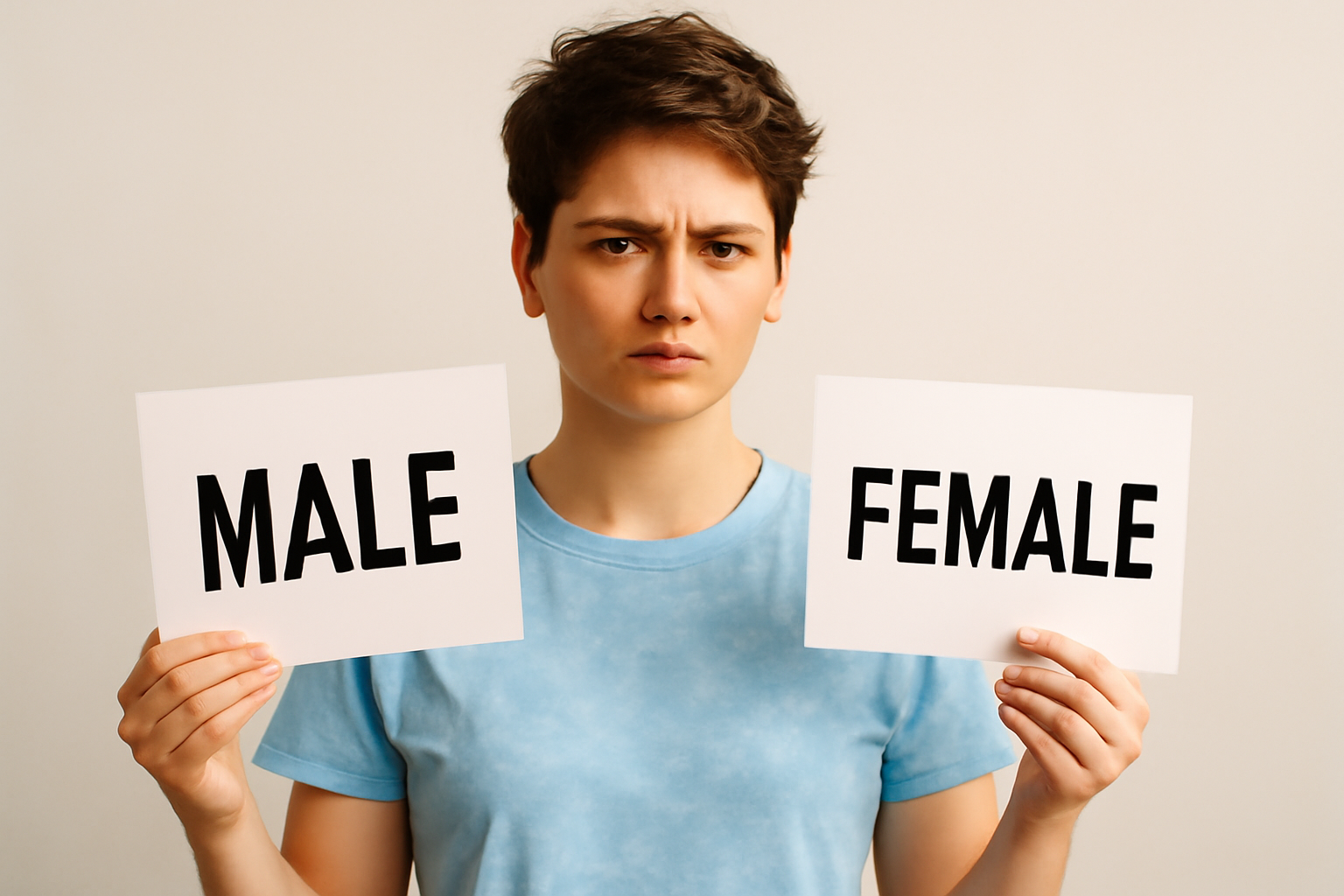
In a controversial move, a new executive order has been issued that aims to redefine “male” and “female” across various federal agencies, sparking significant concern and debate over its scientific validity and potential consequences. This order, titled “Defending Women From Gender Ideology Extremism and Restoring Biological Truth to the Federal Government,” mandates that executive branches utilize new definitions in all aspects of their operations.
The definitions are as follows:
“Female” is defined as a person belonging, at conception, to the sex that produces the large reproductive cell.
“Male” is defined as a person belonging, at conception, to the sex that produces the small reproductive cell.
The Implications for LGBTQ+ Rights
This order potentially has dire consequences for transgender individuals, who already face high levels of discrimination and violence. The lack of acknowledgment for gender identity by these definitions can lead to increased risks, such as having identification that doesn’t match one’s gender identity—a crucial factor for safety and acceptance in everyday situations like job applications or travel.
Moreover, these definitions extend beyond transgender people, impacting anyone whose biological characteristics do not neatly fit into the binary categories. According to Kellan Baker, director of the Whitman-Walker Institute for Health Research & Policy, the order could affect individuals based on whether they were destined at conception to produce an egg or a sperm. This could lead to unprecedented federal scrutiny over one’s biological characteristics, potentially reshaping life experiences and interactions with government entities.
Scientific Perspectives on Gender and Sex
Biological anthropologist Kathryn Clancy highlights the complexity of defining sex purely through biological means, pointing out the existence of numerous scientific perspectives and variations. Sex can be defined in many ways, such as gamete size, chromosomal differences, and hormonal variations, none of which are as straightforward as the executive order implies.
Clancy argues that the executive order’s use of gamete size as a definitive measure of sex is fundamentally flawed, noting that such biological markers are not determinable at conception. The scientific community recognizes a spectrum of sex characteristics, including intersex conditions that challenge traditional binary classifications.
Potential Legal and Social Consequences
The order’s implications are broad, with agencies required to report on their implementation progress within 120 days. Legal challenges are anticipated as the new definitions begin to influence policies affecting pregnant individuals, incarcerated persons, and more. Legal experts like Kulsoom Ijaz warn that the definitions may bolster anti-abortion rhetoric by implying fetal personhood from conception.
Clancy further notes the historical context of using biological definitions to enforce social hierarchies, including racial and gendered biases. By enforcing such narrow definitions, the executive order threatens to undo decades of progress in recognizing and supporting gender diversity.
Understanding Biological Complexity
From a scientific standpoint, sex and gender are complex and multifaceted. Modern science acknowledges the fluidity and diversity of human biology, which cannot be neatly categorized into binary definitions. Many individuals do not produce gametes or may have chromosomal configurations that challenge traditional notions of male and female.
This understanding calls into question the order’s legitimacy and ethical implications, as it seeks to impose simplistic labels on a complex spectrum of human identity. Critics argue that such policies could lead to increased discrimination and marginalization for those not adhering to the defined categories.
Ultimately, this executive order represents a significant shift in how gender and sex are understood at the federal level. Its impact on the LGBTQ+ community and beyond could be profound, leading to legal, social, and personal challenges for countless individuals. By redefining such fundamental aspects of identity, the order raises crucial questions about the intersection of science, politics, and human rights.
For continued insights into how political actions impact the LGBTQ+ community, subscribe to our newsletter for the latest updates and analysis.
Related Posts
Supreme Court to Address State Bans on Trans Women in Female Sports
The upcoming U.S. Supreme Court term promises to be a pivotal moment for transgender rights, as the nation's highest court has agreed to evaluate whether states have the authority to prohibit transgender women from participating in female sports competitions. This case, scheduled to be argued in the next term beginning October, is expected to have a significant impact on the future of sports inclu [...]
Megan Rapinoe and Sue Bird Announce Amicable Separation After Ten Years Together
In a heartfelt announcement that resonated deeply within the sports and LGBTQ+ communities, soccer star Megan Rapinoe and basketball legend Sue Bird have revealed their decision to part ways after nearly a decade together. The couple, who have been icons both on and off the field, shared the news with their fans through a joint statement on social media, expressing that the choice was made with mu [...]
Groundbreaking Ruling Ends Sodomy Ban for Police and Military in the Dominican Republic
The Constitutional Court of the Dominican Republic recently delivered a landmark decision on November 18th, ruling that the nation’s police and armed forces are not permitted to criminalize consensual same-sex relations among their personnel. This pivotal ruling is a significant stride towards equality and the protection of LGBTQ+ rights within these institutions. A Resounding Victory for Equal [...]