
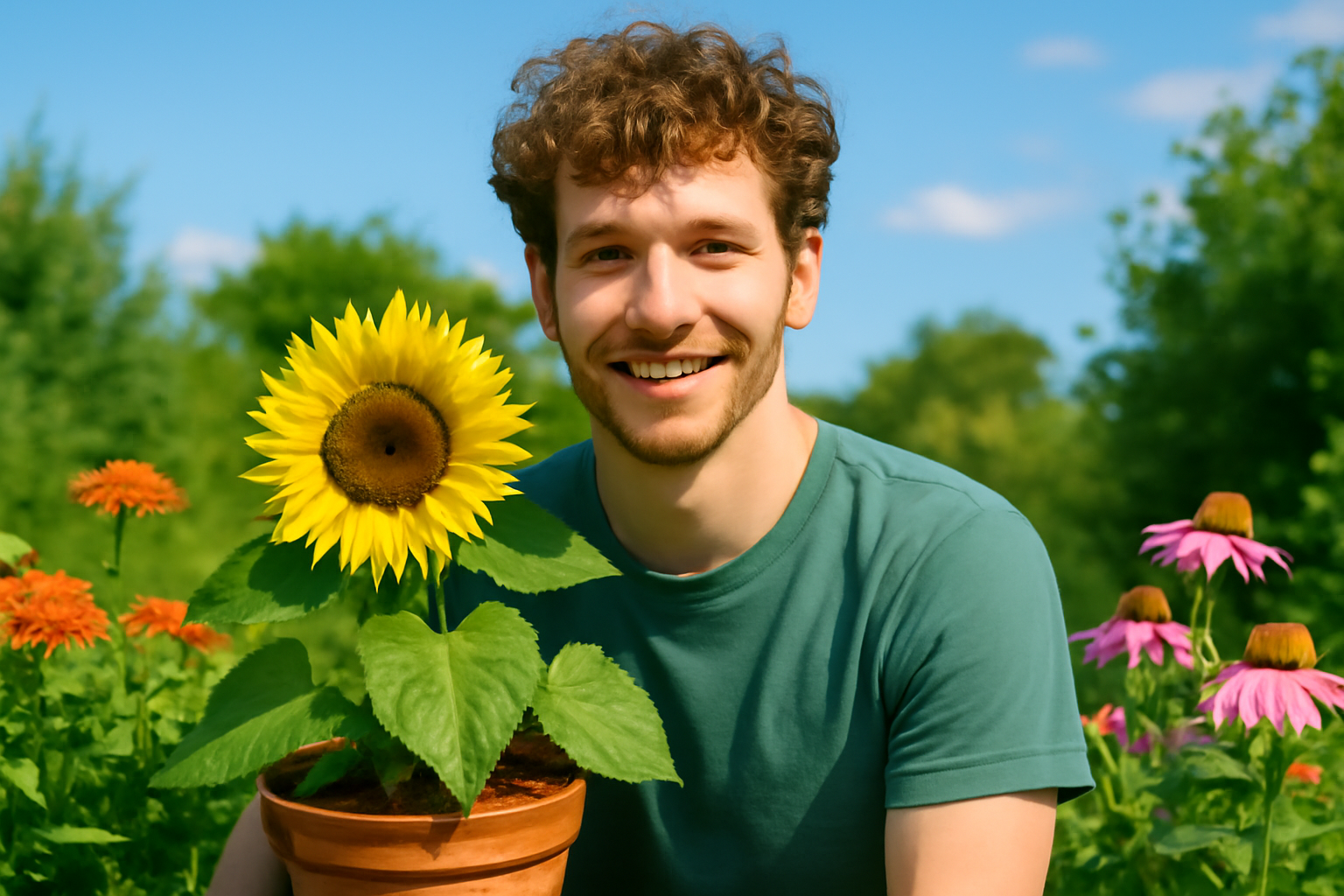
Finding self and solace in nature: Chochotte's path
Chochotte grew up in France, not really feeling out-of-place until he did. As a kid, he was just another boy, enjoying life with his mom and sisters, who fostered his love affair with gardening and forest strolls. But then, teenage years hit hard, didn't they? His friends started raising eyebrows at his ‘girly' interests—an obsession with flowers and a penchant more towards nature than anything else. Despite all that, he couldn't help but get lost in nature's beauty, choosing leaves and petals over concrete and steel.
Looking back, Chochotte shares, "The deeper I sunk my hands in soil, surrounded by spring's colors and gladioli's fragile splendor, harsher became those sideways glances and whispered labels." Yet, instead letting those words cut and scar, he wore them like armor—it became part and parcel with who he was. Now tucked away in Dijon, he calls a squat his home, finding serenity in this urban jungle that beckons him.
“It feels like a miracle,” he muses, “seeing this industrial wasteland evolving, reclaiming itself as a biodiverse wonderland.” Chochotte now throws himself wholeheartedly behind community events and battles city encroachment on nature's turf. Through his zine, he draws fascinating parallels between "invaders" in plant terms and how society labels marginalized folks, weaving a narrative that challenges perceptions.
Uncovering a hidden connection: Eco-queer discovery
In 2016, Cy Lecerftook off on a journey that would shift how he saw queer identity and ecology intertwining. At 26, he stepped away from a lackluster experience at a UN Climate Change Conference, seeking something deeper across seas—landing in California. There, he mingled with activists, older than him, who whispered tales about eco-queer histories hidden from mainstream ears.
Lecerffound solace in stories and writings by legends like Edward Carpenter and Arthur Evans. This tapestry revealed formidable ties between queerness and ecological consciousness, showing how marginalized groups have always been at society's fringes, championing justice and ecological awareness.
His search took him back across waters, diving deep within UK's soils, unearthing legacies left by cultural icons like Derek Jarman. All his findings bryantailed in his book, 'Écologies déviantes,' shedding light on pivotal queer figures changing ecological narratives.
Queer ecology: A legacy and a revolution
Queer ecology provides a lens—one that lets LGBTQ+ voices critically examine mainstream environmentalism. For ages, queer narratives shredded conventional norms, painting nature in colors far from mere black and white. This movement isn't young; it's rooted in years' worth threads, from pastoral poets' verses through modern voices echoing still.
Way back in 1960s roots, initiatives like Trees from Queens gave rise—and now, projects like Queer Nature and Queer Ecojustice Project pick up that torch. These organizations sew ecological actions with threads from LGBTQ+ struggles, advocating beautifully inclusive, resilient paths forward.
Will Collins: Nature's call and a haven's creation
Will Collins took a plunge—from bustling London streets straight off-grid in Spain, answering nature's call. They, alongside their partner, welcomed a sprawling 22-acre land under their wings, building a sanctuary welcoming diverse communities and biodiversity alike. Their vision? A peaceful spot where LGBTQ+ folks find solace amidst nature's arms.
Volunteers flock, and together, they've reshaped barren land, breathing life where life seemed lost. Collins' endeavors sparked inspiration, knitting a net with other queer homesteaders eager on ecological revival.
Queering environmental action: A new perspective
Through their distinct pathways, Chochotte, Lecerff, and Collins illuminate how vibrant shades queered ecology can paint. As Cy Lecerff underscores, traditional green movements often sidestep queer voices—a missed rhythm in a harmonious tune.
With queer ecology, we're not just painting broader strokes on environmental canvases but also nudged past just identity politics. It dreams a dual-conscious tomorrow where nature thrives alongside liberated communities hand in hand.
In today's stormy seas — ecological crises clashing with political tides — queer ecology waves resilience's flag high. It heralds how marginalized peoples have stood sturdy amidst life storms, forming bonds that carry them through. As our planet shifts, queer ecology's embrace—its adaptability, its unity, its creativity—offers lessons we all need.
Related Posts
Supreme Court to Address State Bans on Trans Women in Female Sports
The upcoming U.S. Supreme Court term promises to be a pivotal moment for transgender rights, as the nation's highest court has agreed to evaluate whether states have the authority to prohibit transgender women from participating in female sports competitions. This case, scheduled to be argued in the next term beginning October, is expected to have a significant impact on the future of sports inclu [...]
Megan Rapinoe and Sue Bird Announce Amicable Separation After Ten Years Together
In a heartfelt announcement that resonated deeply within the sports and LGBTQ+ communities, soccer star Megan Rapinoe and basketball legend Sue Bird have revealed their decision to part ways after nearly a decade together. The couple, who have been icons both on and off the field, shared the news with their fans through a joint statement on social media, expressing that the choice was made with mu [...]
Groundbreaking Ruling Ends Sodomy Ban for Police and Military in the Dominican Republic
The Constitutional Court of the Dominican Republic recently delivered a landmark decision on November 18th, ruling that the nation’s police and armed forces are not permitted to criminalize consensual same-sex relations among their personnel. This pivotal ruling is a significant stride towards equality and the protection of LGBTQ+ rights within these institutions. A Resounding Victory for Equal [...]