
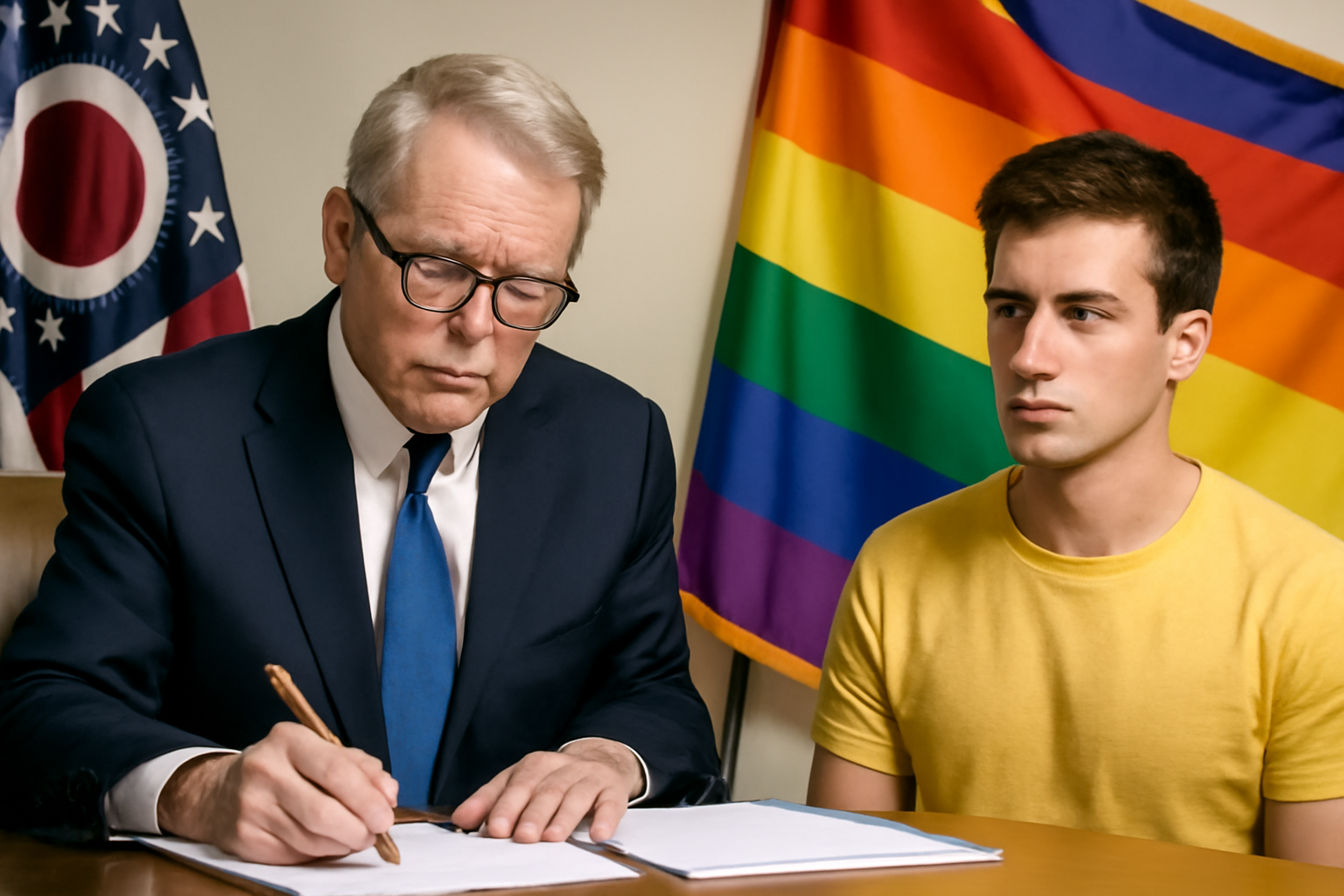
In a significant and contentious move, Ohio's state government has passed a new law that places restrictions on discussions of LGBTQ+ topics in educational settings. This legislation, often compared to similar laws in other states, has sparked a heated debate across the country.
The Details of the New Legislation
Signed by Governor Mike DeWine, the new law imposes limitations on how educators can address and discuss issues related to sexual orientation and gender identity in classrooms, particularly at the elementary school level. The law is reminiscent of legislation passed in states like Florida, often referred to colloquially as 'Don't Say Gay' bills. Critics argue that such measures are harmful to LGBTQ+ youth and stifle important conversations about diversity and inclusion.
Proponents of the bill claim that it is designed to give parents more control over their children's education and to ensure that sensitive topics are addressed in a manner they deem appropriate. They argue that discussions regarding sexual orientation and gender identity should be handled at home rather than in the classroom.
Community Reactions and Opposition
LGBTQ+ advocacy groups, educators, and many parents have expressed strong opposition to the law. They warn that it could lead to a chilling effect on teachers, who may avoid discussing LGBTQ+ topics altogether for fear of legal repercussions.
"This legislation is not just about limiting what can be taught in schools; it's about erasing LGBTQ+ people and history from the conversation," said Jane Doe, a local LGBTQ+ rights activist. "Our children deserve to learn in an environment that acknowledges and respects all aspects of human diversity."
Many educators have echoed these concerns. John Smith, a high school teacher from Columbus, Ohio, stated, "We should be creating inclusive environments where all students feel seen and heard. This law makes it more difficult for educators to support their LGBTQ+ students."
Impact on LGBTQ+ Youth
Research has consistently shown that LGBTQ+ youth are at a higher risk for mental health issues, including depression and anxiety, particularly when they do not feel supported or validated in their identities. Supportive school environments can play a crucial role in the well-being of these students.
With the new legislation, there are growing concerns that LGBTQ+ students in Ohio will feel further marginalized. "The ability to see yourself represented and discussed positively in the classroom is incredibly important for young people," said Dr. Alex Johnson, a psychologist specializing in youth development. "When these discussions are restricted, it sends a message to LGBTQ+ students that their identities are not valued."
The National Conversation
The passage of this law in Ohio is part of a broader trend seen in several states across the United States, where similar bills have been introduced or passed. This has sparked a national conversation about the role of education, the rights of parents, and the importance of inclusive curricula.
Many are calling for a balanced approach that respects parental rights while also ensuring that all students receive a comprehensive and inclusive education. "We need to find a way to navigate these issues that respects everyone involved," said Maria Gonzalez, an educational policy expert. "Education should open doors, not close them."
As the debate continues, it is clear that the implications of this legislation will be felt for years to come, not just in Ohio, but across the country. Communities and educators are seeking ways to adapt and respond to these new challenges while advocating for the rights and well-being of all students.
Ultimately, the goal for many is to foster a society where diversity is celebrated and all students have the opportunity to learn and grow in an environment that respects their identities and experiences.
Related Posts
Supreme Court to Address State Bans on Trans Women in Female Sports
The upcoming U.S. Supreme Court term promises to be a pivotal moment for transgender rights, as the nation's highest court has agreed to evaluate whether states have the authority to prohibit transgender women from participating in female sports competitions. This case, scheduled to be argued in the next term beginning October, is expected to have a significant impact on the future of sports inclu [...]
Megan Rapinoe and Sue Bird Announce Amicable Separation After Ten Years Together
In a heartfelt announcement that resonated deeply within the sports and LGBTQ+ communities, soccer star Megan Rapinoe and basketball legend Sue Bird have revealed their decision to part ways after nearly a decade together. The couple, who have been icons both on and off the field, shared the news with their fans through a joint statement on social media, expressing that the choice was made with mu [...]
Groundbreaking Ruling Ends Sodomy Ban for Police and Military in the Dominican Republic
The Constitutional Court of the Dominican Republic recently delivered a landmark decision on November 18th, ruling that the nation’s police and armed forces are not permitted to criminalize consensual same-sex relations among their personnel. This pivotal ruling is a significant stride towards equality and the protection of LGBTQ+ rights within these institutions. A Resounding Victory for Equal [...]