
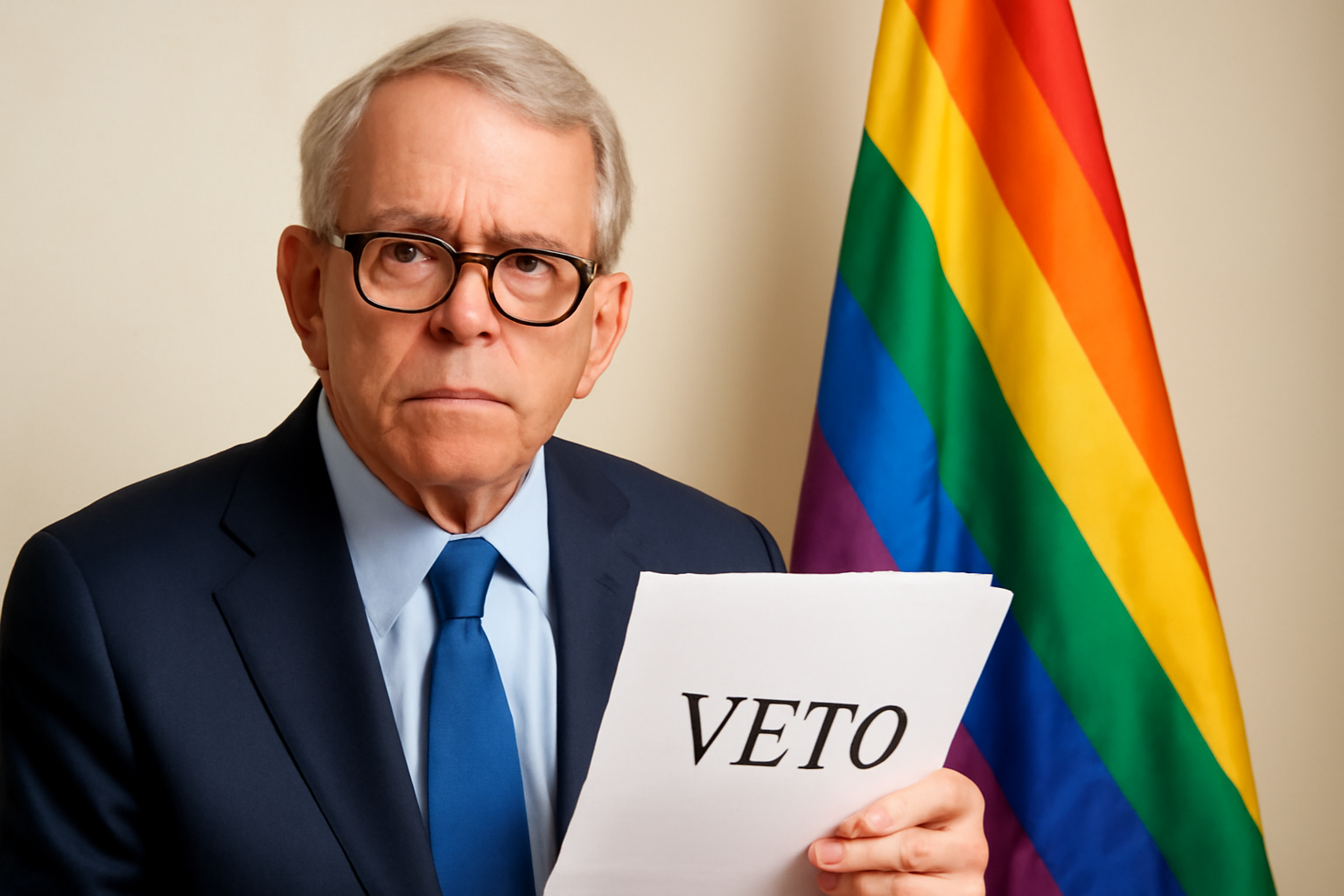
ohio governor takes a stand on lgbtq+ rights in budget battle
Ohio Governor Mike DeWine recently made headlines by vetoing three provisions in Ohio's new budget that many felt discriminated against LGBTQ+ individuals. While this decision marks a significant victory, not every discriminatory policy was blocked, leaving civil rights advocates with mixed feelings.
The budget, pushed through by Republican lawmakers despite strong Democratic resistance, unfortunately includes several provisions targeting LGBTQ+ rights. Among these are bans on Pride flags on state property, cuts in funding aimed at transgender youth shelters, restrictions on library books discussing sexual orientation and gender identity, and a denial on Medicaid funds covering transgender mental health services.
Governor DeWine's key vetoes
Among his notable actions, Governor DeWine vetoed a ban on Pride flags, attempts at defunding youth shelters, and restrictions on library materials. These moves were seen as steps toward fostering inclusivity and fairness.
the pride flag and support services
DeWine's decision not only stood against banning Pride flags—which would have limited displays on state properties—but also reinforced his commitment with support statements like, “We want homeless shelters open and welcoming. That's really what matters.”
library materials and parental concerns
When it came down with proposed restrictions on LGBTQ+ library books, DeWine pointed out, “Parents, including grandparents, naturally don't want inappropriate or obscene material accessible, but I felt this language crossed a line.” It indicates a careful attempt at finding balance without censoring important information.
community activism and legislative response
Equality Ohio, a leading advocacy group, criticized lawmakers, calling out their use in "vehicles meant cruelty." They praised community activism—emails, calls, personal stories—as powerful enough strategies defeating some harsh proposals.
But, despite these ongoing efforts, concerns persist. Remaining measures aligned with federal rhetoric on "gender ideology" still threaten Medicaid funding concerning transgender mental health support.
legal battles and what's ahead
The new laws, especially those affecting mental health services, will likely meet legal challenges. Notably, DeWine didn't veto a rule banning menstrual product distribution in men-only restrooms.
With Republicans holding significant veto-shattering power within both legislative houses, they're capable enough in overriding DeWine's decisions before sessions end December 2026.
Already, 2024 witnessed GOP overriding governatorial veto when banning gender-affirming care minors alongside transgender women restrictions participating sports. In November, controversial "bathroom bill" signed law.
long road ahead: ohio's ongoing lgbtq+ rights struggle
Ohio's legislative session remains pivotal within LGBTQ+ activism. Despite DeWine's encouraging vetoes recently, this battle equality nowhere near over yet. Advocacy groups promise vigilance against any further measures deemed discriminatory throughout communities.
Eager staying updated? Consider subscribing LGBTQ+ political news sources secure insights—Ohio's civil rights battles ongoing journeys.
Related Posts
Supreme Court to Address State Bans on Trans Women in Female Sports
The upcoming U.S. Supreme Court term promises to be a pivotal moment for transgender rights, as the nation's highest court has agreed to evaluate whether states have the authority to prohibit transgender women from participating in female sports competitions. This case, scheduled to be argued in the next term beginning October, is expected to have a significant impact on the future of sports inclu [...]
Megan Rapinoe and Sue Bird Announce Amicable Separation After Ten Years Together
In a heartfelt announcement that resonated deeply within the sports and LGBTQ+ communities, soccer star Megan Rapinoe and basketball legend Sue Bird have revealed their decision to part ways after nearly a decade together. The couple, who have been icons both on and off the field, shared the news with their fans through a joint statement on social media, expressing that the choice was made with mu [...]
Groundbreaking Ruling Ends Sodomy Ban for Police and Military in the Dominican Republic
The Constitutional Court of the Dominican Republic recently delivered a landmark decision on November 18th, ruling that the nation’s police and armed forces are not permitted to criminalize consensual same-sex relations among their personnel. This pivotal ruling is a significant stride towards equality and the protection of LGBTQ+ rights within these institutions. A Resounding Victory for Equal [...]