
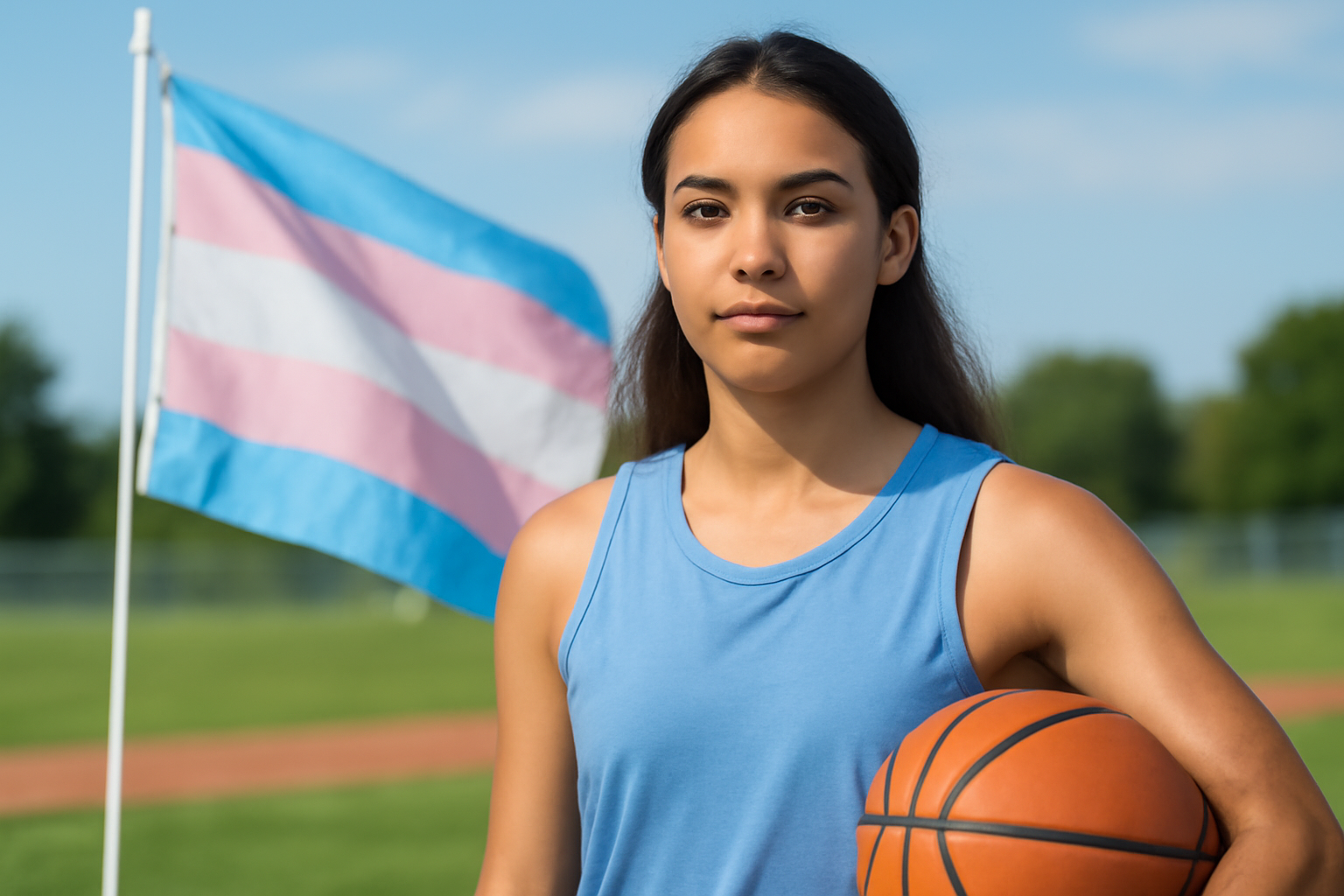
The governing body responsible for overseeing school sports in New Jersey has decided to uphold its policy regarding transgender athletes, despite recent federal directives from the Trump administration. President Donald Trump had issued executive orders aiming to prevent transgender athletes, particularly trans women and girls, from participating in sports that align with their gender identity. These orders also threaten to withdraw federal funding from educational programs that do not comply with the new regulations.
The New Jersey State Interscholastic Athletic Association (NJSIAA) announced that it will maintain its current policy concerning transgender students in school sports. This policy was originally established in 2009 and later updated in 2017. The policy clearly outlines that "a transgender student, defined as a student whose gender identity is different from the sex assigned to them at birth, is eligible to participate in sports according to either their birth sex or their gender identity, but not both."
Furthermore, the policy stipulates that athletes cannot change gender categories during a single sports season. There is also a provision that allows schools to challenge a trans athlete’s eligibility to compete if there is evidence that their participation would negatively impact other competitors. This approach by the NJSIAA seeks to balance the inclusion of transgender athletes with competitive fairness and safety in school sports.
This decision by the NJSIAA comes at a time when the Trump administration is actively pursuing policies that restrict the rights of transgender individuals. The decision by New Jersey's athletic association is particularly notable amid ongoing investigations by the Department of Education into potential Title IX violations. These investigations target states and educational institutions, such as Maine, California, and Minnesota, for allowing transgender athletes to compete in teams that correspond with their gender identity.
NJSIAA's Position and Legal Considerations
Steve Goodell, legal counsel for the NJSIAA, explained that the association’s policy is crafted to align with New Jersey state law. Speaking at the recent NJSIAA executive committee meeting, Goodell emphasized that any disputes regarding transgender athletes' participation in school sports would be managed at the local level, involving the school, student, and state authorities. "The NJSIAA would not intervene in such disputes," Goodell stated, reaffirming the association’s stance of non-involvement in individual challenges.
Goodell further highlighted the importance of the policy’s consistency with state legislation, which supports the inclusion of transgender students in sports activities. This alignment with state law serves as a foundation for the NJSIAA’s decision to maintain its policy despite federal pressures.
The NJSIAA's policy reflects a broader commitment to inclusivity and equality in sports, providing transgender students with the opportunity to participate in athletic programs without fear of discrimination. This commitment is essential, especially in the current climate where transgender rights are under significant scrutiny and challenge.
Broader Implications and Reactions
The decision by the NJSIAA has been met with mixed reactions from various stakeholders. Advocates for transgender rights have praised the association for standing firm in its commitment to inclusivity and equality. They argue that policies supporting transgender athletes are crucial for fostering an environment of acceptance and understanding in schools.
Conversely, some critics argue that the inclusion of transgender athletes could lead to unfair advantages in competitive sports. They believe that the policy needs to be more stringent to ensure a level playing field. However, proponents of the current policy stress that the existing provisions for challenging eligibility adequately address concerns about fairness and competitive balance.
As the national conversation on transgender rights and sports continues, the stance taken by the NJSIAA serves as an important example of how state-level organizations can support inclusivity even in the face of federal opposition. The ongoing dialogue highlights the need for thoughtful and inclusive policies that respect the rights of all students while maintaining the integrity of athletic competitions.
The decision of the NJSIAA to uphold its policy on transgender athletes underscores the complexity of the issue and the importance of state-level autonomy in educational and athletic governance. As discussions around transgender participation in sports evolve, the experiences and policies of associations like the NJSIAA will continue to play a critical role in shaping the landscape of school athletics.
Related Posts
Supreme Court to Address State Bans on Trans Women in Female Sports
The upcoming U.S. Supreme Court term promises to be a pivotal moment for transgender rights, as the nation's highest court has agreed to evaluate whether states have the authority to prohibit transgender women from participating in female sports competitions. This case, scheduled to be argued in the next term beginning October, is expected to have a significant impact on the future of sports inclu [...]
Megan Rapinoe and Sue Bird Announce Amicable Separation After Ten Years Together
In a heartfelt announcement that resonated deeply within the sports and LGBTQ+ communities, soccer star Megan Rapinoe and basketball legend Sue Bird have revealed their decision to part ways after nearly a decade together. The couple, who have been icons both on and off the field, shared the news with their fans through a joint statement on social media, expressing that the choice was made with mu [...]
Groundbreaking Ruling Ends Sodomy Ban for Police and Military in the Dominican Republic
The Constitutional Court of the Dominican Republic recently delivered a landmark decision on November 18th, ruling that the nation’s police and armed forces are not permitted to criminalize consensual same-sex relations among their personnel. This pivotal ruling is a significant stride towards equality and the protection of LGBTQ+ rights within these institutions. A Resounding Victory for Equal [...]