
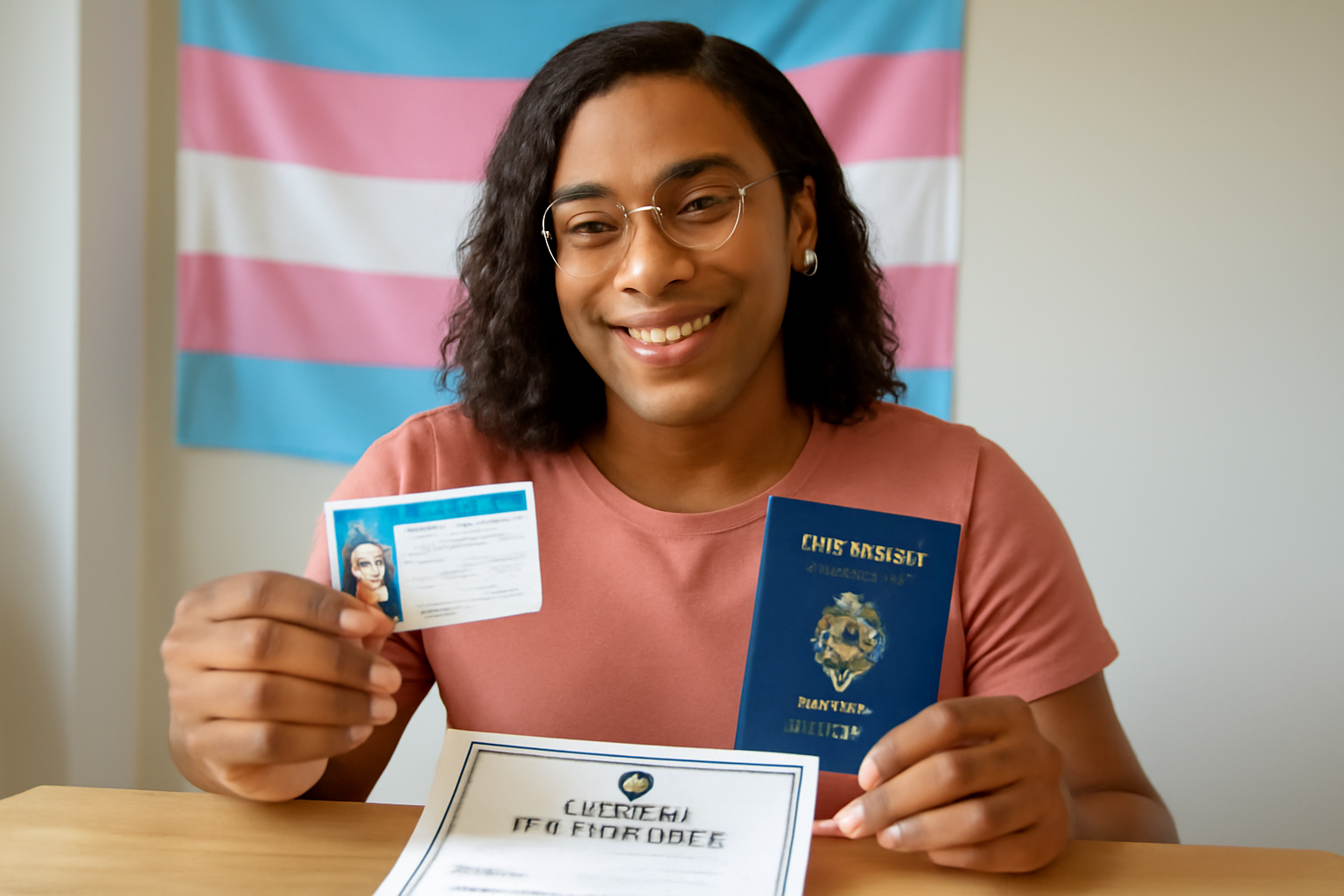
For transgender and gender non-conforming people, getting your personal documents updated so they align with your gender identity can be a huge step in feeling seen and accepted. Sadly, lately, some laws have made this process a bit trickier in a lot more places. Changes in rules have ramped up difficulties in modifying important papers like passports, driver's licenses, and birth certificates.
In Maryland, incredible organizations like Trans Maryland and Advocates For Trans Equality step up by offering workshops and online resources that guide folks through these hurdles. I'd love sharing how I successfully navigated updating my documents in Maryland, and hope my story can make your journey a bit easier.
Talk with your primary care provider
First things first, you need a letter from your primary care provider. This letter can confirm that you're undergoing hormone therapy, dealing with gender incongruence, or both. States have different requirements, but usually, this document's your ticket towards making any changes. It'd be smart getting this sorted early on so you don't get tripped up later.
Sometimes, they might ask you also get a letter from a mental health therapist, so double-check what your state's rules are. These documents back up your case when it comes time dealing with official paperwork.
Get a court order
Next, you've got legal hoops with obtaining a court order officially acknowledging your gender identity, which smooths any administrative roadblocks. Your state's or county's circuit court website has what you need—find and fill out that petition.
Once that petition's done, it goes off with any fees they ask. In Maryland, that's $165 unless you can get a fee waiver. After you submit, it usually takes just a few weeks before that court order's yours.
Social Security record update
As we look towards January 2025, there's a hiccup—Social Security's put a freeze on processing gender changes. No need feeling stuck though, because groups like Human Rights Campaign and ACLU are tackling this head-on. It matters keeping up with these advocacy warriors as they fight hard securing documentation rights.
Revamp your driver's license or ID
Armed with your provider letter and court order, it's DMV time. Have all your documents ready when you set up that appointment. Even though Maryland says a court order isn't strictly necessary here, trust me, I found that having all my paperwork smoothed everything out at our Motor Vehicle Administration.
If anyone at DMV gives you a hard time, stay cool—know your stuff, and bring out that court order as needed.
Changing your birth certificate
Changing your birth certificate might feel like climbing Mount Everest, and it has got do be done where you were born. Some places like Oklahoma, Florida, Tennessee, and Texas have put on bans but, lucky me in Washington D.C., getting this done was straightforward.
Start with your state vital records department, checking out their website where you'll find something like a Gender Designation Application. Fill it out, make sure it gets notarized (loads try nearby mailing services) then take these with your court order and provider letter. In states that back gender identity rights, this step should glide smoothly.
To sum up, what takes maybe a month's patience, about $300, and being fortunate enough in a supportive state, you can change your documents reflecting who you really are. It's not an easy ride, but it can be a priceless moment in owning your true self.
Related Posts
Supreme Court to Address State Bans on Trans Women in Female Sports
The upcoming U.S. Supreme Court term promises to be a pivotal moment for transgender rights, as the nation's highest court has agreed to evaluate whether states have the authority to prohibit transgender women from participating in female sports competitions. This case, scheduled to be argued in the next term beginning October, is expected to have a significant impact on the future of sports inclu [...]
Megan Rapinoe and Sue Bird Announce Amicable Separation After Ten Years Together
In a heartfelt announcement that resonated deeply within the sports and LGBTQ+ communities, soccer star Megan Rapinoe and basketball legend Sue Bird have revealed their decision to part ways after nearly a decade together. The couple, who have been icons both on and off the field, shared the news with their fans through a joint statement on social media, expressing that the choice was made with mu [...]
Groundbreaking Ruling Ends Sodomy Ban for Police and Military in the Dominican Republic
The Constitutional Court of the Dominican Republic recently delivered a landmark decision on November 18th, ruling that the nation’s police and armed forces are not permitted to criminalize consensual same-sex relations among their personnel. This pivotal ruling is a significant stride towards equality and the protection of LGBTQ+ rights within these institutions. A Resounding Victory for Equal [...]