
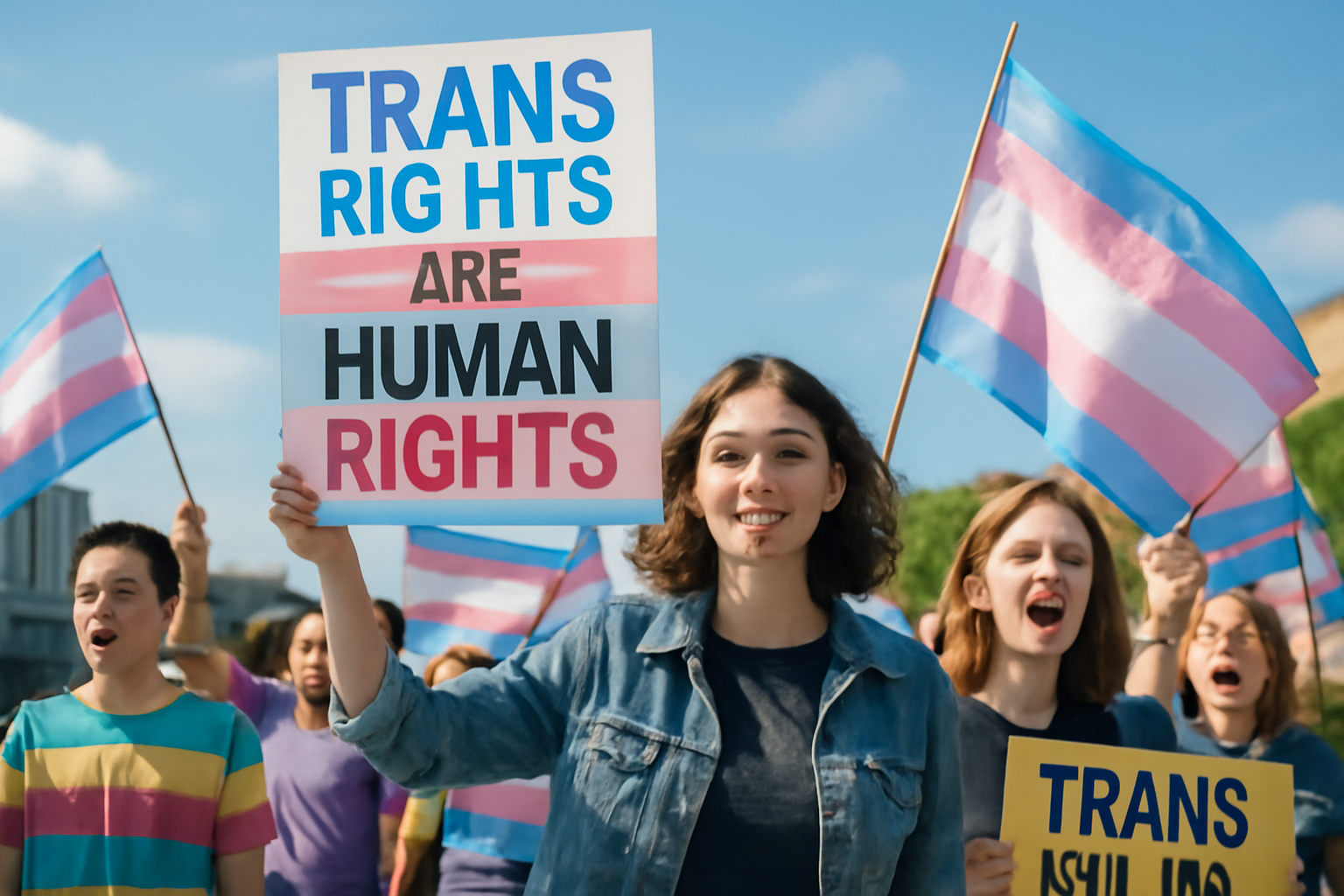
On the weekend of April 26-27, the United Kingdom will see a wave of protests following a controversial Supreme Court ruling that has significant implications for transgender individuals. The court's judgement, dated April 16, has ruled that under the Equality Act 2010, the legal definition of a woman does not extend to include transgender women. This decision has sparked considerable unrest and has been the catalyst for demonstrations nationwide.
The ruling effectively bars transgender women from accessing single-sex spaces designated for females, including toilets and changing rooms. Additionally, it restricts their participation in women’s sports. This development has been met with strong opposition from LGBTQ+ activists and allies, who argue that the decision is a severe setback for transgender rights and equality.
In the immediate aftermath of the verdict, the British Transport Police announced a controversial policy change stating that transgender women in custody would now undergo strip searches conducted by male officers rather than female officers. This policy adjustment has raised serious concerns about the treatment and dignity of transgender individuals within the legal system.
Moreover, the Prime Minister, Keir Starmer, has publicly stated that he no longer considers transgender women as women, aligning himself with the Supreme Court's interpretation. This pronouncement has further fueled the outcry from the transgender community and their supporters.
Escalating Protests Across the Nation
The Supreme Court’s decision has triggered widespread protests, with thousands of people taking to the streets over the Easter weekend. Demonstrations took place in over 20 locations, including major cities such as London, Brighton, Cardiff, Glasgow, and Edinburgh. These protests were characterized as "emergency demonstrations" and served as a platform for expressing solidarity and resistance against the ruling.
In London, a significant protest was held in Parliament Square, where demonstrators carried pride flags and banners demanding justice and equality for transgender individuals. The Metropolitan Police have since announced that they are reviewing footage from the protests amid allegations that some participants displayed placards with threatening messages. However, no arrests have been reported at this time.
The momentum of these protests shows no sign of waning. A further 29 rallies are planned for the upcoming weekend. Cities and towns slated to host demonstrations include York, Coventry, Darlington, Portsmouth, Liverpool, Oxford, Southampton, Birmingham, Cheltenham, Cambridge, Derbyshire, Bristol, Aberystwyth, Ely, Newcastle, Inverness, Lincoln, Belfast, Kings Lynn, Sheffield, Bradford, Pembrokeshire, and Chesterfield. Organizers are calling this a crucial moment for the community to unify and make their voices heard.
Brendan Phillips, one of the organizers of the Birmingham rally, emphasized the importance of these protests in showing solidarity with those affected by the ruling. Speaking to The Independent, he highlighted the need to present "a united front against hatred and discrimination." Phillips further stated, "We have seen this hate before and now we must stand united against it once again. We stand in a united front, united with a single, common goal; for the BIPOC (Black, Indigenous, and People of Color), Asian, white, brown, black, Irish traveller, and Romani trans, non-binary, and intersex voices that have been ignored for too long."
In addition to the planned demonstrations for this weekend, six more protests are scheduled for next month, with a significant rally expected in London on May 25. These events aim to maintain the momentum of the movement and continue the fight for transgender rights and recognition.
The United Kingdom, like many parts of the world, is witnessing a critical moment in the ongoing struggle for equality and rights for transgender individuals. As activists and allies come together, these protests serve as a powerful reminder of the community's resilience and the importance of standing up against discriminatory policies and rulings.
Related Posts
Supreme Court to Address State Bans on Trans Women in Female Sports
The upcoming U.S. Supreme Court term promises to be a pivotal moment for transgender rights, as the nation's highest court has agreed to evaluate whether states have the authority to prohibit transgender women from participating in female sports competitions. This case, scheduled to be argued in the next term beginning October, is expected to have a significant impact on the future of sports inclu [...]
Megan Rapinoe and Sue Bird Announce Amicable Separation After Ten Years Together
In a heartfelt announcement that resonated deeply within the sports and LGBTQ+ communities, soccer star Megan Rapinoe and basketball legend Sue Bird have revealed their decision to part ways after nearly a decade together. The couple, who have been icons both on and off the field, shared the news with their fans through a joint statement on social media, expressing that the choice was made with mu [...]
Groundbreaking Ruling Ends Sodomy Ban for Police and Military in the Dominican Republic
The Constitutional Court of the Dominican Republic recently delivered a landmark decision on November 18th, ruling that the nation’s police and armed forces are not permitted to criminalize consensual same-sex relations among their personnel. This pivotal ruling is a significant stride towards equality and the protection of LGBTQ+ rights within these institutions. A Resounding Victory for Equal [...]