
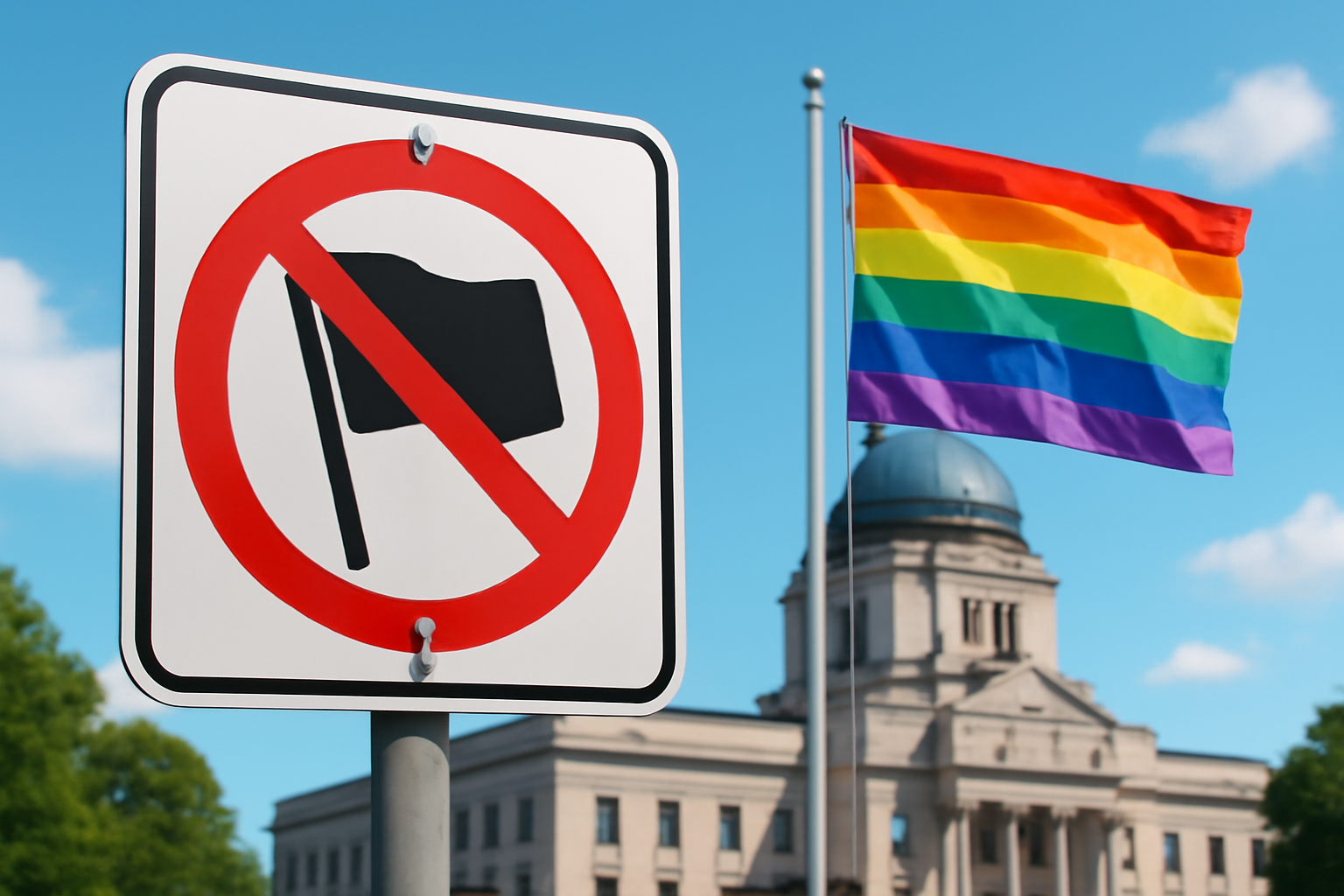
In a bold and controversial move, Montana has enacted a new law that bans Pride flags from being displayed on government properties and in public schools. Signed by Republican Governor Greg Gianforte, this law adds another chapter in an ongoing debate over what kinds and whose symbols should be allowed in public spaces.
Diving Into House Bill 819
Dubbed House Bill 819, this legislation lays out specific rules about which flags can fly on public properties. It clearly bans flags representing political parties, races, sexual orientations, genders, or political ideologies. However, there are exceptions. The U.S. flag, Montana's state flag, and flags honoring law enforcement, military members, and public service organizations are allowed—as long as they're deemed non-political and recognize contributions related specifically .to public safety and national defense.
Republican state representative Braxton Mitchell, who put forward this bill, stands firmly behind it. Known already as someone who's been down this road with similar proposals, Mitchell argues that government buildings and public schools should serve all citizens equally and not push specific political, ideological, or activist messages.
Opposition and controversy
Unsurprisingly, House Bill 819 has stirred up significant opposition from Democratic lawmakers and civil rights advocates. Democratic state representative Pete Elverum has been vocal in his criticism, calling out what he sees as a contradiction. As Elverum puts it, "This legislation claims it promotes free speech but really just picks and chooses which expressions get silenced," pointing out a glaring inconsistency in how this law operates.
Critics say this law isn't just a one-off but part and parcel with broader moves in Montana perceived as targeting LGBTQ+ communities. For instance, Governor Gianforte has previously signed laws that restrict drag performances and narrowly define gender, excluding intersex, non-binary, and transgender people. This has added fuel, sparking debate over finding that balance between religious freedoms, free speech, and LGBTQ+ rights.
Legal challenges and broader implications
This new law might face legal challenges, as civil rights groups argue that it infringes on free speech rights. In fact, past bans on drag performances in Montana were already struck down by federal courts. Federal Judge Brian Morris, in one case, noted there's no evidence drag events harm minors, suggesting these moves are more about suppressing specific expressions than protecting public welfare.
Governor Gianforte's administration maintains that such laws are necessary, aiming at keeping public spaces neutral and free from ideological agendas. But critics argue these measures hit marginalized groups hardest, potentially leading down a path that ramps up discrimination against LGBTQ+ individuals.
Public opinion and what lies ahead
The public reaction? It's polarized, with viewpoints often split along political and ideological lines. Supporters think this law's a must-have—to keep government buildings neutral, void from political or ideological influence. Meanwhile, opponents see it as a backward step, meant more and more, they argue, toward sidelining LGBTQ+ communities.
As this debate plays out, people are watching closely. How will this law and others backed by Governor Gianforte hold up in court and affect Montana's communities? Legal battles are likely brewing, and this conversation on rights and liberties? It's definitely not over.
We'd love you hear from you! Dive in with your thoughts below and let's keep this conversation going. How do you view this balance between free speech and neutrality in public spaces? Share what you think!
Related Posts
Supreme Court to Address State Bans on Trans Women in Female Sports
The upcoming U.S. Supreme Court term promises to be a pivotal moment for transgender rights, as the nation's highest court has agreed to evaluate whether states have the authority to prohibit transgender women from participating in female sports competitions. This case, scheduled to be argued in the next term beginning October, is expected to have a significant impact on the future of sports inclu [...]
Megan Rapinoe and Sue Bird Announce Amicable Separation After Ten Years Together
In a heartfelt announcement that resonated deeply within the sports and LGBTQ+ communities, soccer star Megan Rapinoe and basketball legend Sue Bird have revealed their decision to part ways after nearly a decade together. The couple, who have been icons both on and off the field, shared the news with their fans through a joint statement on social media, expressing that the choice was made with mu [...]
Groundbreaking Ruling Ends Sodomy Ban for Police and Military in the Dominican Republic
The Constitutional Court of the Dominican Republic recently delivered a landmark decision on November 18th, ruling that the nation’s police and armed forces are not permitted to criminalize consensual same-sex relations among their personnel. This pivotal ruling is a significant stride towards equality and the protection of LGBTQ+ rights within these institutions. A Resounding Victory for Equal [...]