
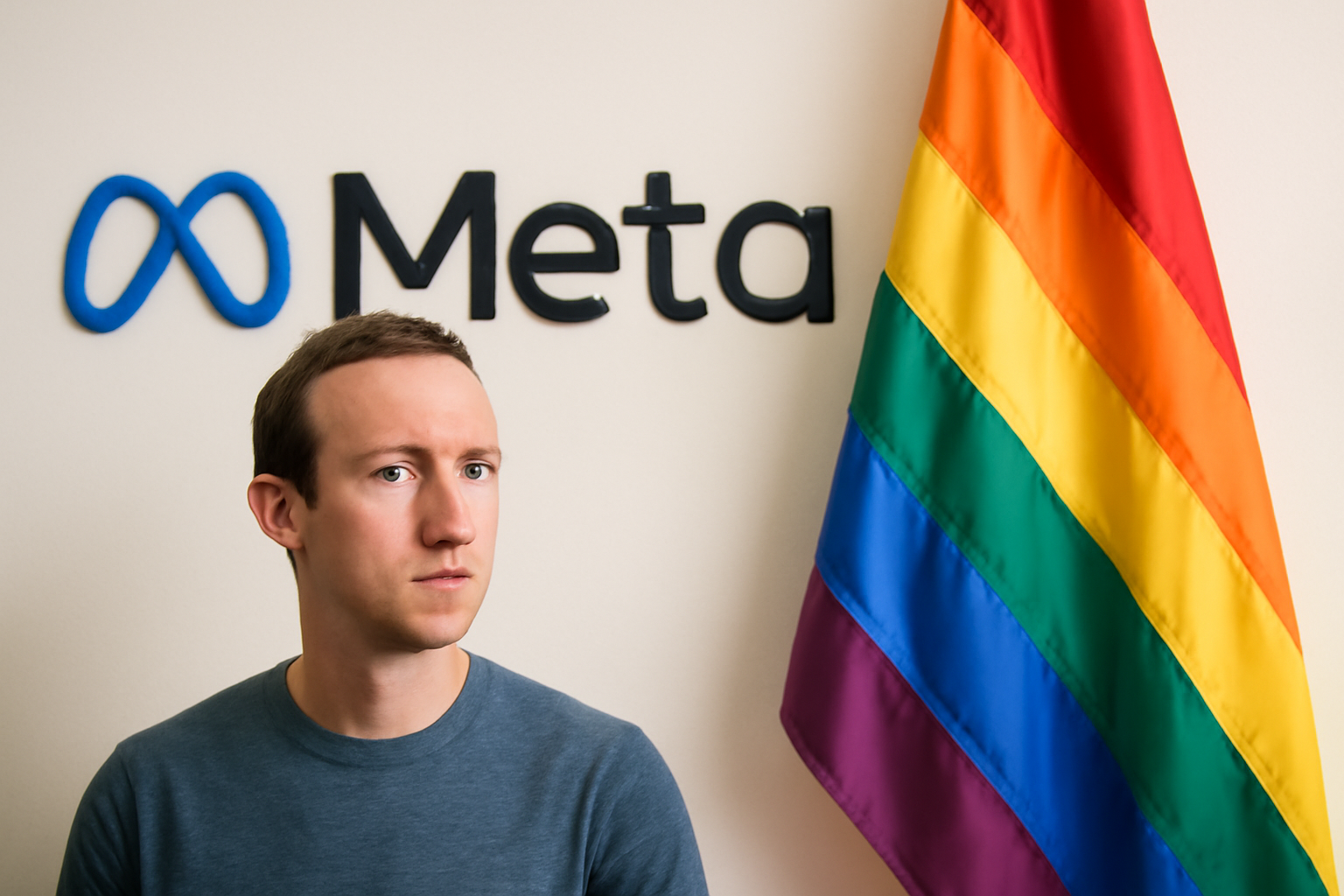
Meta's Policy Changes and Their Impact on the LGBTQ+ Community
In a controversial move, Meta, the parent company of social media giants Facebook, Instagram, and Threads, has announced significant changes to its content moderation policies. These changes, disclosed by CEO Mark Zuckerberg, have sparked concerns among LGBTQ+ advocates and fact-checking organizations. The new guidelines allow language that could be harmful to the LGBTQ+ community, raising questions about the platform's commitment to inclusivity.
On January 7th, Meta revealed that it will be scaling back its moderation efforts on divisive topics such as gender identity and immigration. The company plans to eliminate its independent fact-checking program, opting instead for a community notes system, akin to the model used by X, formerly known as Twitter. This shift marks a departure from previous efforts to curb misinformation and hate speech on Meta's platforms.
The revised hate speech guidelines permit users to refer to LGBTQ+ individuals in derogatory terms, describing them as "mentally ill" or "freaks," based solely on their sexual orientation or gender identity. Such terms have historically been used to stigmatize and marginalize LGBTQ+ people. The guidelines also remove restrictions on denying the existence of trans or gay individuals, and allow for the use of terms like "abnormal."
This change comes despite a long history of efforts to destigmatize LGBTQ+ identities. Homosexuality was declassified as a mental illness by the American Psychiatric Association in 1974, when it was removed from the DSM, or Diagnostic and Statistical Manual of Mental Disorders. Furthermore, the World Health Organization ceased classifying transgender identities as mental disorders in 2018, recognizing that being transgender is not a mental health condition.
Meta's decision to transition to a community-driven fact-checking model has been described as an effort to promote free expression by Zuckerberg. In a video announcement, he stated, "We're going to get back to our roots and focus on reducing mistakes, simplifying our policies and restoring free expression on our platforms." However, this move has been met with skepticism and criticism from various quarters.
Critics argue that community notes, which rely on users to provide context to posts, may not effectively address misinformation. A report by The Washington Post highlighted the shortcomings of this system on X, where it has struggled to combat misleading information. Concerns have also been raised about the timing of these changes, which coincide with Donald Trump's upcoming second term as president. Some believe that Meta's policy shift is an attempt to align with pro-free speech narratives favored by Trump and other conservative figures.
LGBTQ+ advocacy groups and fact-checking organizations have expressed alarm at Meta's new policies. Full Fact, a charity involved in Meta's former fact-checking program, described the changes as "disappointing and a backwards step" that could have global ramifications. Chris Morris, CEO of Full Fact, emphasized the importance of fact-checking in maintaining credible information and public safety.
Morris stated, "Fact checkers are first responders in the information environment, and our specialists work to promote credible evidence and tackle harmful information. We believe the public has a right to access our expertise." He dismissed allegations of bias within the fact-checking community, asserting that their work is impartial and rigorous.
Similarly, GLAAD president and CEO Sarah Kate Ellis criticized Meta's policy changes, arguing that they normalize anti-LGBTQ+ hatred. Ellis stated, "With these changes, Meta is continuing to normalize anti-LGBTQ hatred for profit—at the expense of its users and true freedom of expression. Fact-checking and hate speech policies protect free speech."
These developments have sparked a debate about the role of social media platforms in moderating content and protecting marginalized communities. As Meta moves forward with its new policies, the impact on LGBTQ+ users and the broader information ecosystem remains to be seen. Advocacy groups and fact-checkers continue to call for robust measures to combat misinformation and protect vulnerable communities online.
Related Posts
Supreme Court to Address State Bans on Trans Women in Female Sports
The upcoming U.S. Supreme Court term promises to be a pivotal moment for transgender rights, as the nation's highest court has agreed to evaluate whether states have the authority to prohibit transgender women from participating in female sports competitions. This case, scheduled to be argued in the next term beginning October, is expected to have a significant impact on the future of sports inclu [...]
Megan Rapinoe and Sue Bird Announce Amicable Separation After Ten Years Together
In a heartfelt announcement that resonated deeply within the sports and LGBTQ+ communities, soccer star Megan Rapinoe and basketball legend Sue Bird have revealed their decision to part ways after nearly a decade together. The couple, who have been icons both on and off the field, shared the news with their fans through a joint statement on social media, expressing that the choice was made with mu [...]
Groundbreaking Ruling Ends Sodomy Ban for Police and Military in the Dominican Republic
The Constitutional Court of the Dominican Republic recently delivered a landmark decision on November 18th, ruling that the nation’s police and armed forces are not permitted to criminalize consensual same-sex relations among their personnel. This pivotal ruling is a significant stride towards equality and the protection of LGBTQ+ rights within these institutions. A Resounding Victory for Equal [...]