
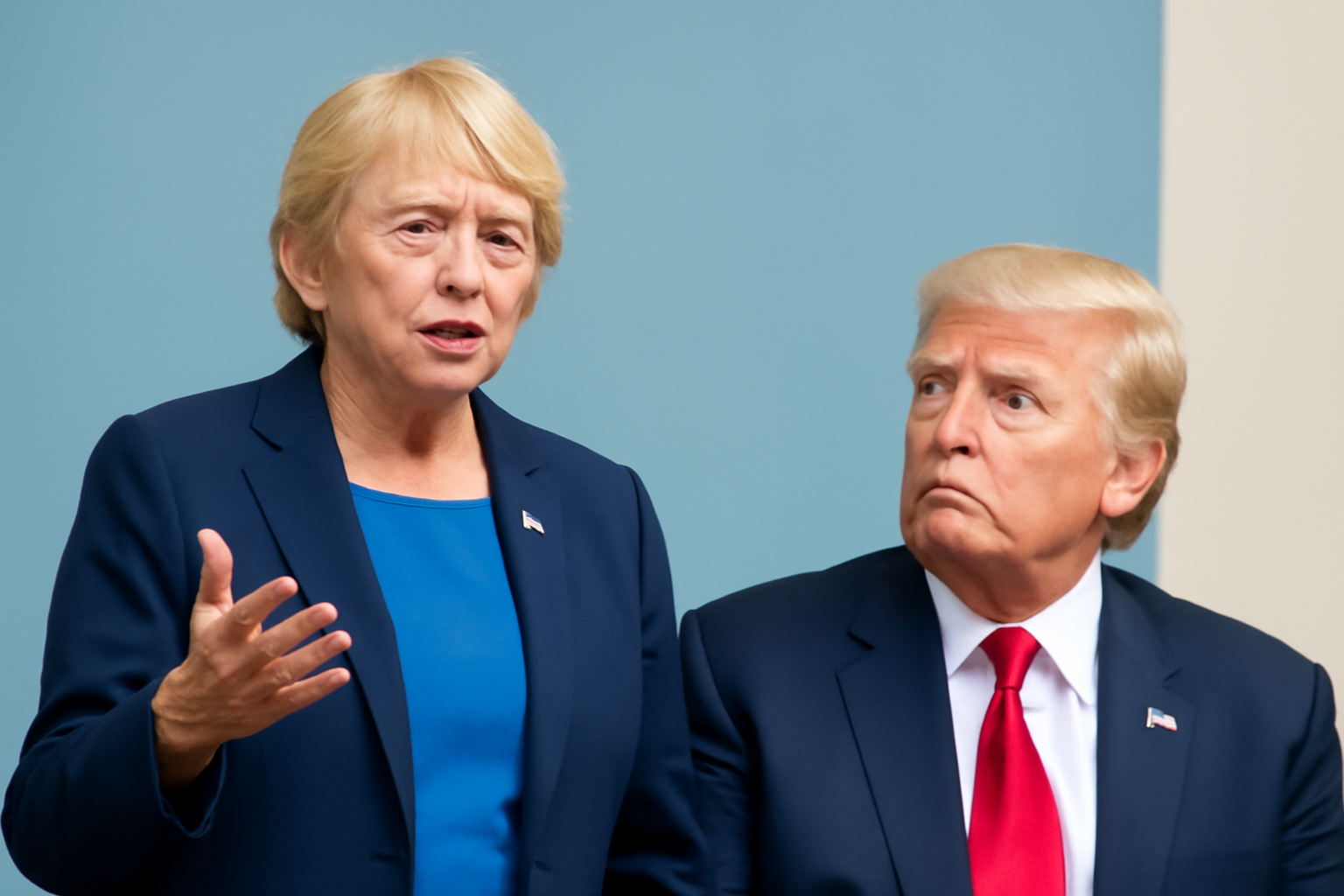
Governor Janet Mills stands up against Trump's transgender athlete ban
In a memorable showdown at 1600 Pennsylvania Avenue, Maine Governor Janet Mills boldly opposed President Donald Trump's executive order aimed at banning transgender athletes. During a gathering with governors, Trump didn't hesitate: he warned that Maine could lose federal funding if it didn't comply with his directive. This meeting underscored a growing national debate over transgender rights in sports, with Governor Mills stepping up as a passionate defender.
The conversation heated up when Trump directly challenged Mills on her stance, pressing her about following his executive order. Governor Mills, calm and unwavering, responded that it was her duty, both legally and ethically, not just by executive order but by considering state and federal laws. Trump, however, confidently asserted his role as "the federal law," hinting at dire consequences if Mills didn't fall in line.
"You better do it," Trump insisted, "or you won't see a cent in federal funding." But Mills, with nerves as steady as a rock, stood her ground and vowed that, if necessary, they'd thrash it out in court. That promise hinted at a looming legal showdown, once again pitting state rights against federal mandates in a tug-of-war over civil rights.
Following their spirited exchange, Governor Mills issued a statement reaffirming her dedication. She stressed her willingness, along with Maine's Attorney General, "to take necessary legal action" if Trump tried pulling federal funding from Maine's schools. "If he attempts this," Mills declared, "we'll fight tooth and nail in court. The State won't be bullied by his threats."
Support and reactions from notable figures
Governor Mills' defiance didn't go unnoticed. She found a supporter in none other than Stephen King, who hails from Maine. King took his thoughts online, giving Mills a virtual pat on her back and calling out Trump's tactics as bullying. "Thank you, Governor, you stood up," he tweeted, beaming with pride at her leadership.
The broader implications here are eye-opening, especially since Maine's Department Of Education found itself under a "directed investigation" by Trump's Department Of Education. This probe centered on claims about male athletes participating in girls' sports, supposedly flouting that federal ban. Firm in her stance, Mills declared that no President, from any party, could just willy-nilly strip away federal funds using executive orders as a weapon.
"Maine's first in line under this administration's microscope, but we certainly won't be last," Mills warned, raising questions about which state or institution might be targeted by such executive overreach in days ahead.
The bigger picture: presidential power and LGBTQ+ rights
Amidst all this political drama lies a fundamental question: how far does presidential power go? Governor Mills addressed this concern head-on, saying, "It isn't just about sports—it questions whether a President can bulldoze over laws that bind and protect us." Her remarks resonate deeply with those championing LGBTQ+ rights against what they see as backward-looking policies.
This isn't an isolated incident—it's already sparked five Title IX investigations by Trump's Department Of Education, with institutions in California and Minnesota now under scrutiny. Such actions have ignited a national debate over Title IX's interpretation, especially regarding transgender athletes, suggesting legal battles ahead that might reshape civil rights in sports.
Governor Mills has always been a staunch supporter, advocating tirelessly. Her track record? It includes banning conversion therapy and declaring June as Pride Month in Maine. Though she hasn't identified as LGBTQ+, her consistent push toward equality and justice makes a strong statement.
All eyes are on this clash, and its outcome could shift how states and federal powers balance their acts. It may also set vital precedents on how transgender athletes are treated in sports and society at large. What do you think? Could this be a turning point?
Related Posts
Supreme Court to Address State Bans on Trans Women in Female Sports
The upcoming U.S. Supreme Court term promises to be a pivotal moment for transgender rights, as the nation's highest court has agreed to evaluate whether states have the authority to prohibit transgender women from participating in female sports competitions. This case, scheduled to be argued in the next term beginning October, is expected to have a significant impact on the future of sports inclu [...]
Megan Rapinoe and Sue Bird Announce Amicable Separation After Ten Years Together
In a heartfelt announcement that resonated deeply within the sports and LGBTQ+ communities, soccer star Megan Rapinoe and basketball legend Sue Bird have revealed their decision to part ways after nearly a decade together. The couple, who have been icons both on and off the field, shared the news with their fans through a joint statement on social media, expressing that the choice was made with mu [...]
Groundbreaking Ruling Ends Sodomy Ban for Police and Military in the Dominican Republic
The Constitutional Court of the Dominican Republic recently delivered a landmark decision on November 18th, ruling that the nation’s police and armed forces are not permitted to criminalize consensual same-sex relations among their personnel. This pivotal ruling is a significant stride towards equality and the protection of LGBTQ+ rights within these institutions. A Resounding Victory for Equal [...]