
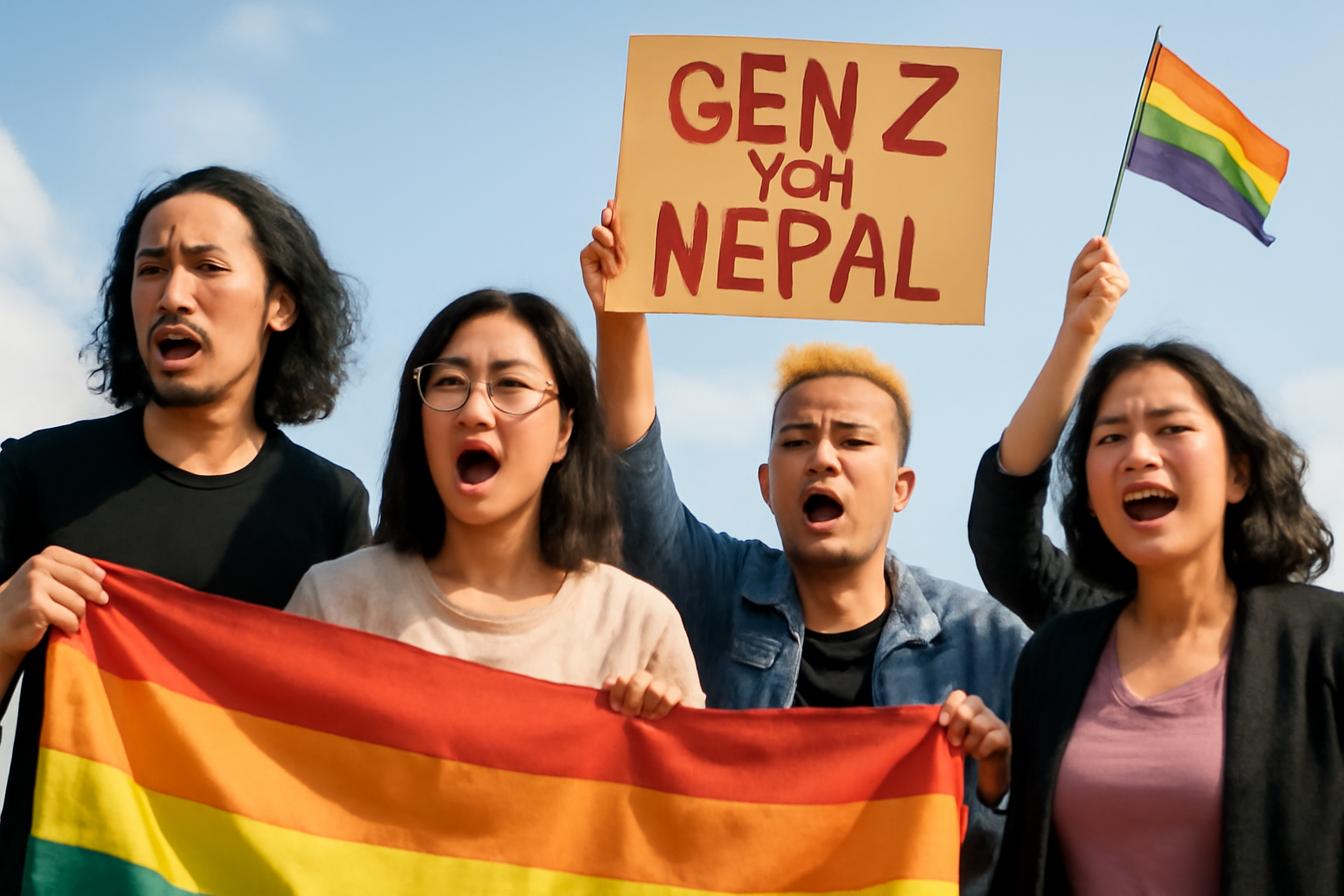
Social media shutdown sparks unrest in Nepal
In early September, Nepal experienced a significant political shake-up when its Telecommunications Authority suddenly blocked access across 26 social media platforms, including major names like Facebook, YouTube, Instagram, and X. This sweeping ban hit just as users were adjusting their online habits, enforced in response after these platforms didn't meet a new registration requirement within a mere seven days. The government framed it as a necessary measure against fake news, hate speech, and online fraud. Nevertheless, only five companies complied, plunging nearly 90%—or about 27 million people—of Nepal's internet users who rely on these platforms daily, whether it be communication, learning, or conducting business, back offline.
It didn't take long before unrest bubbled over, especially among Gen Z, already agitated by TikTok clips flaunting politicians' kids living lavishly. To them, this sudden blackout seemed like an attempt by authorities trying too hard not just at curbing corruption talk. By September 7, small gatherings in Kathmandu, particularly at spots like Maitighar Mandala and New Baneshwor near parliament, gained momentum. Rallies, banners in hand, voiced loud messages like “Stop corruption, not social media.”
Peaceful protests turn violent
By September 8, those peaceful protests had swollen with tens or even hundreds already joining in when violence erupted: protestors against security forces wielding tear gas, water cannons, rubber bullets, and live rounds. The sad outcome? Nineteen lives lost, including a young child just 12 years-old, and more than 300 wounded in Kathmandu alone. Tragedy wasn't confined within city limits, as news reached Itahari in eastern Nepal with additional casualties there too.
Even under curfew orders in several districts, young protestors weren't giving up. They carried injured mates on motorcycles while marching relentlessly. It wasn't solely about having their socials back; they voiced greater frustrations over government-linked corruption and crippling economic disparity. How could anyone ignore that while political elites flaunted wealth extravagantly against citizens struggling with an annual income averaging $1,300? And yet, LGBTQ and intersex community struggles are often double-edged due mainly due towards discrimination blocking employment or education, further adding economic limitations.
Nepal's turning point
Seventy-four lives lost. Thousands hurting or healing. Indeed, these were some tough days marking Nepal's deadliest civil unrest in decades, but they also spotlighted a generation's undying push toward change. The candle blew brighter when, on September 9, Prime Minister Sharma Oli resigned under heavy pressure from everywhere. Protesters felt a wave relief flow through them alongside hopes blooming brighter than before.
Activists came together afterward, organizing a cleanup drive resonating deeply, symbolizing commitments toward cleaner governance. Honey Maharjan, an LGBTQ activist, and member within People Socialist Party-Nepal, called these protests unprecedented triumphs etched in recent historical memory while grieving lives taken, yet hopeful eyes look ahead — envisioning fresh leadership better serving citizens.
A hopeful step forward with Prime Minister Sushila Karki
With Sushila Karki stepping up as new prime minister, Nepal opens its doors on an optimistic chapter. Her initial address carried promises: restoring democracy, tackling root-level corruption, dealing bluntly with dissent causes openly. Free and fair elections? Set already, scheduled March 5, 2026. Also included plans introducing anti-corruption committees whilst initiating inquiry regarding protest violence, essential steps toward truth-acknowledgment.
LGBTQ communities played a pivotal role along these challenging roads, now seeing possibilities widen finally toward better recognition and equal standing. Sure, Nepal recognizes transgender citizens legally as third genders, yet hurdles remain aplenty: official identity documents hard-to-get, invasive medical exams distressingly common occurrences.
Nepal moves ever forward, fostered by unity demonstrated amidst youth-driven action alongside determined activists fighting relentlessly; they are beacons guiding necessary change through this tumultuous yet hope-holding era. Through these protests, we've witnessed sheer power collective action has alongside critical roles young folks plus marginalized communities play while shaping Nepal's brighter future.
Related Posts
Supreme Court to Address State Bans on Trans Women in Female Sports
The upcoming U.S. Supreme Court term promises to be a pivotal moment for transgender rights, as the nation's highest court has agreed to evaluate whether states have the authority to prohibit transgender women from participating in female sports competitions. This case, scheduled to be argued in the next term beginning October, is expected to have a significant impact on the future of sports inclu [...]
Megan Rapinoe and Sue Bird Announce Amicable Separation After Ten Years Together
In a heartfelt announcement that resonated deeply within the sports and LGBTQ+ communities, soccer star Megan Rapinoe and basketball legend Sue Bird have revealed their decision to part ways after nearly a decade together. The couple, who have been icons both on and off the field, shared the news with their fans through a joint statement on social media, expressing that the choice was made with mu [...]
Groundbreaking Ruling Ends Sodomy Ban for Police and Military in the Dominican Republic
The Constitutional Court of the Dominican Republic recently delivered a landmark decision on November 18th, ruling that the nation’s police and armed forces are not permitted to criminalize consensual same-sex relations among their personnel. This pivotal ruling is a significant stride towards equality and the protection of LGBTQ+ rights within these institutions. A Resounding Victory for Equal [...]