
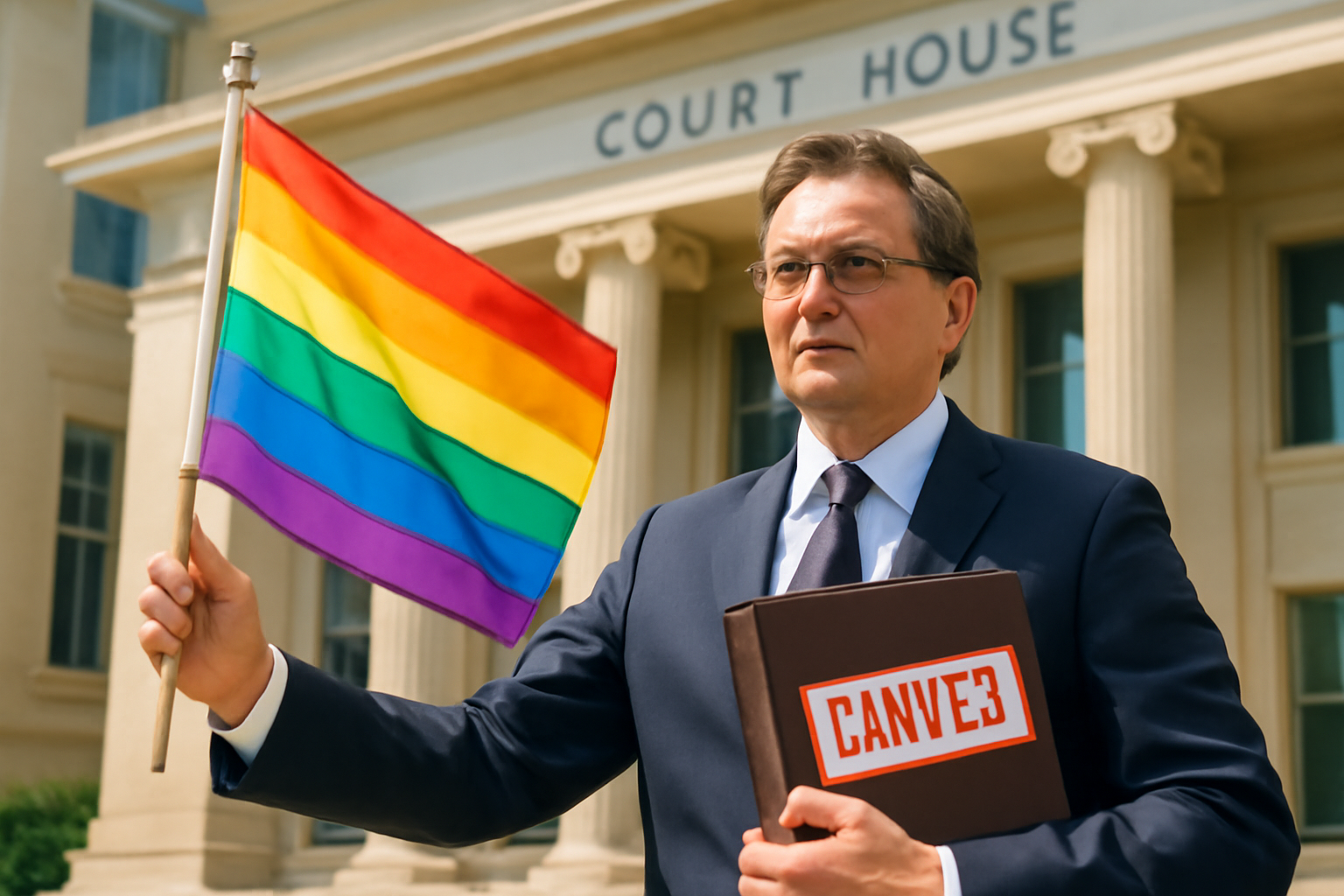
In a significant legal confrontation, six major book publishers have allied with authors, educators, students, parents, and a small Idaho library to challenge a controversial state law. This coalition is opposing Idaho's anti-LGBTQ+ book banning law, which they argue infringes on fundamental freedoms and rights.
Among the plaintiffs are renowned publishing houses like Penguin Random House, Simon & Schuster, and HarperCollins. Joining them are the Authors Guild and the Donnelly Library, all united in their assertion that the law's wording is excessively vague and violates the First Amendment.
The law in question, House Bill 710, was passed by Idaho’s Republican-led legislature last year. It mandates that libraries must segregate books deemed "harmful to minors," which includes children's books with LGBTQ+ themes, into separate "adults only" sections. However, the Authors Guild criticizes the law's language for lacking clear guidelines, particularly its failure to adequately incorporate the Miller Test. This test, established by the Supreme Court in 1973, provides criteria to judge whether content is obscene.
The definition of "sexual conduct" in the law is broad and includes "homosexuality" without further clarification. This has raised concerns that books might be restricted merely for having LGBTQ+ characters, effectively censoring important cultural and educational content.
The repercussions for libraries are severe. Non-compliance with the law results in a mandatory $250 fine, and there is no cap on damages from lawsuits that patrons might file against libraries. This financial strain threatens to shutter cash-strapped libraries unable to afford prolonged legal battles.
The Idaho Library Association has expressed alarm, warning that the law will force libraries to curtail access to books and resources. Smaller libraries, like the Donnelly Library, lacking space for an "adults-only" section, have resorted to requiring patrons to present a photo ID proving they are over 18 just to enter the premises.
Impact on Intellectual Freedom
Mary Rasenberger, CEO of the Authors Guild, described H.B. 710 as "an unacceptable assault on intellectual freedom in America." She emphasized that by allowing individuals to ban books and explicitly target LGBTQ+ content, the law doesn't just chill free speech—it immobilizes it. Rasenberger declared that they would not remain passive while Idaho criminalizes significant literary works and undermines young people's fundamental right to read and learn. She asserted the vital importance of ensuring that all American students are exposed to literature that encourages independent thought.
Cheryl Davis, the Guild’s general counsel, also criticized the law, stating it represents clear violations of both the First and Fourteenth Amendments. She highlighted that Idaho has fostered an environment of fear threatening the survival of public libraries and that the law's discrimination against LGBTQ+ content is "particularly egregious and cannot stand under constitutional scrutiny."
Community Response and Ongoing Legal Battles
Sherri Scheline, director of the Donnelly Library, stated that children in their district with same-sex parents deserve literature that reflects their lives. She firmly opposes moving books that reflect these children's experiences, regardless of personal views on the books themselves. "They deserve to go to the shelf that is designed for children, and they deserve to check out a book that reflects their home life," Scheline said, emphasizing the importance of representation in literature.
This lawsuit is not the first challenge to the Idaho law. Shortly after its enactment, two Idaho private schools, a privately funded public library, and a group of parents and students initiated a separate lawsuit, claiming that H.B. 710 infringes on their free speech and due process rights under the First and Fourteenth Amendments. This case continues to progress through the courts.
As the legal battle unfolds, the implications for libraries, publishers, and the cultural landscape in Idaho remain profound. The outcome of this case could set a precedent impacting how literature, especially that featuring marginalized communities like the LGBTQ+, is accessed and celebrated across the nation.
Related Posts
Supreme Court to Address State Bans on Trans Women in Female Sports
The upcoming U.S. Supreme Court term promises to be a pivotal moment for transgender rights, as the nation's highest court has agreed to evaluate whether states have the authority to prohibit transgender women from participating in female sports competitions. This case, scheduled to be argued in the next term beginning October, is expected to have a significant impact on the future of sports inclu [...]
Megan Rapinoe and Sue Bird Announce Amicable Separation After Ten Years Together
In a heartfelt announcement that resonated deeply within the sports and LGBTQ+ communities, soccer star Megan Rapinoe and basketball legend Sue Bird have revealed their decision to part ways after nearly a decade together. The couple, who have been icons both on and off the field, shared the news with their fans through a joint statement on social media, expressing that the choice was made with mu [...]
Groundbreaking Ruling Ends Sodomy Ban for Police and Military in the Dominican Republic
The Constitutional Court of the Dominican Republic recently delivered a landmark decision on November 18th, ruling that the nation’s police and armed forces are not permitted to criminalize consensual same-sex relations among their personnel. This pivotal ruling is a significant stride towards equality and the protection of LGBTQ+ rights within these institutions. A Resounding Victory for Equal [...]