
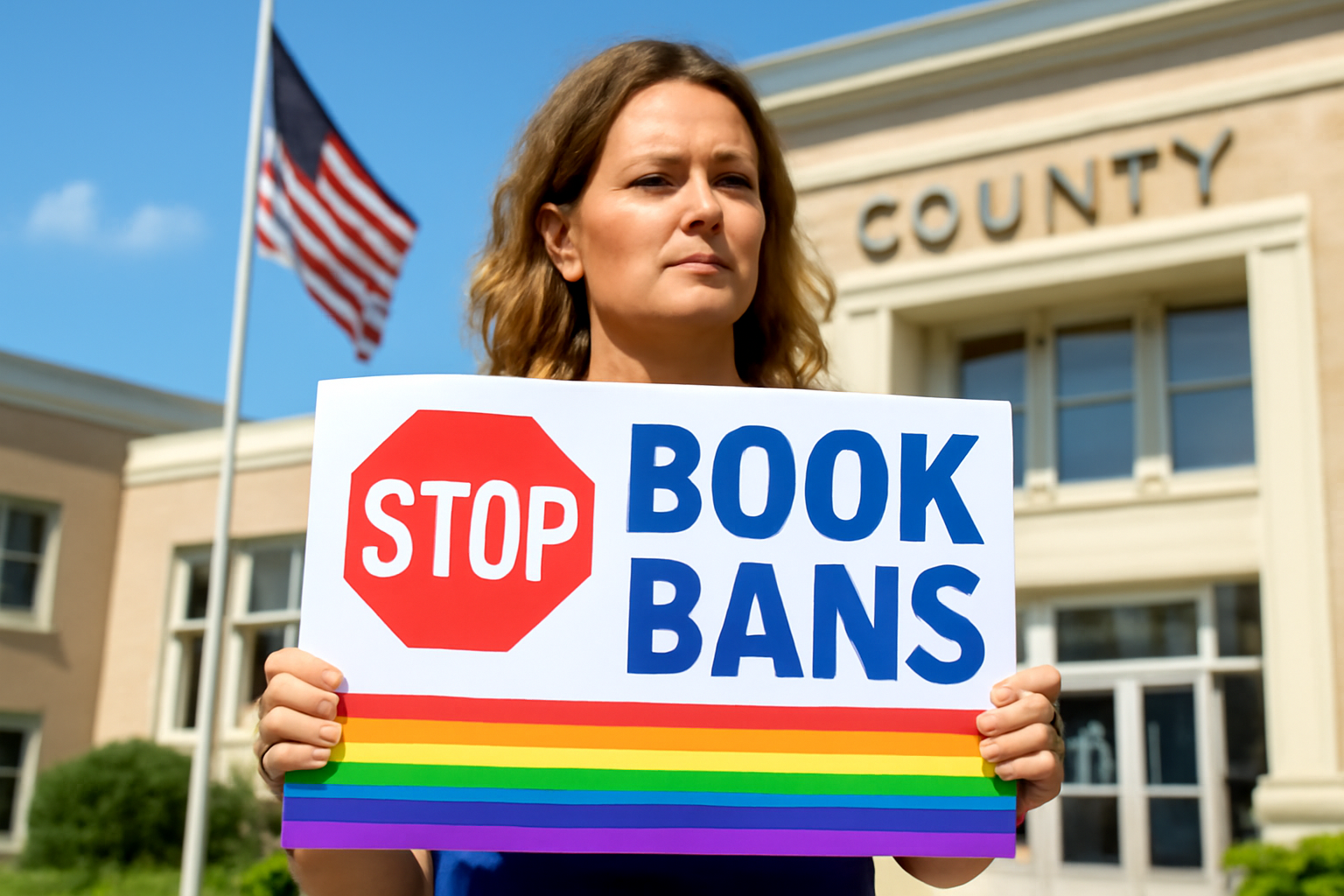
In Rutherford County, Tennessee, a heated legal battle has unfolded over book bans in school libraries, sparking a broader discussion about censorship and educational rights. The county's decision, influenced by a conservative rating system, has led them headlong against critics who are fiercely defending freedom in education and expression.The ACLU takes a stand against book bansImagine being told what you can and can't read. That scenario has become all too real in Rutherford County, where three local families, backed by attorney Kerry Knox and supported by PEN America—a group advocating writers' rights—are taking on this challenge. They're arguing that removing books that tackle tough topics like racism and LGBTQ+ issues not only undermines educational quality but also threatens free speech.A closer look at what's happeningThe plaintiffs, families with children soon entering these schools, are standing up against what they see as a dangerous precedent. PEN America, deeply concerned about how these bans might shrink educational horizons, has also joined in. With a whopping 53 titles by 32 affiliated authors flagged, there's a lot at stake. How did it all start? Well, back in early 2024, when over 145 books got banned—reports say it happened without much public input—and that has ruffled a lot more than a few feathers.Scrutinizing that rating systemThis whole ordeal stems from a book rating system tied up with Moms For Liberty, a group with strong conservative leanings. According their guidelines, any book that mentions LGBTQ+ characters, dives deep racial or religious topics, or even has a hint profanity or nudity, doesn't make it past their radar. Among those struck off are acclaimed reads like "Wicked," "Beloved," and "The Perks Being a Wallflower." Critics are saying this leaves students with a much narrower worldview.First Amendment rights under fireThe ACLU isn't taking this lightly. They're saying these bans slam against students' First Amendment rights, cutting them off from a broad spectrum ideas and knowledge. Stella Yarbrough, Legal Director at ACLU-TN, voiced serious concerns about impacts on democratic values and inclusive education. "The First Amendment's vital part our democracy," Yarbrough said. "It looks like a minority group's trying dictate what every parent Rutherford County sees fit their kids. Banning books that deal with key issues like LGBTQ+ rights and race? That drives us protect authors' free speech and students' right learn." PEN America fights back against censorshipEileen Hereshnov from PEN America highlights how bans like these could mess things up long-term. "We're standing our authors these pressures from groups squashing voices they don't like. It's not just wrong; it robs students rich literature and a well-rounded education—a must-have democracy," Hereshnov explained.Legal insight on these book bansLawyer Kerry Knox didn't mince words about how deeply these bans cut against First Amendment rights. "Shutting authors down rob students chance read, think, learn celebrated, history-rich works. Tennessee students should get same shot as peers," Knox stressed. It's not just Tennessee feeling this heat. The ACLU's already hit back in Virginia and Kentucky over similar issues, battling book bans in Department Defense Education Activity Schools.Want stay in loop on how this and similar fights unfold? Sign up our newsletter. Follow developments impacting LGBTQ+ communities and educational rights everywhere—it matters more than ever.
Related Posts
Supreme Court to Address State Bans on Trans Women in Female Sports
The upcoming U.S. Supreme Court term promises to be a pivotal moment for transgender rights, as the nation's highest court has agreed to evaluate whether states have the authority to prohibit transgender women from participating in female sports competitions. This case, scheduled to be argued in the next term beginning October, is expected to have a significant impact on the future of sports inclu [...]
Megan Rapinoe and Sue Bird Announce Amicable Separation After Ten Years Together
In a heartfelt announcement that resonated deeply within the sports and LGBTQ+ communities, soccer star Megan Rapinoe and basketball legend Sue Bird have revealed their decision to part ways after nearly a decade together. The couple, who have been icons both on and off the field, shared the news with their fans through a joint statement on social media, expressing that the choice was made with mu [...]
Groundbreaking Ruling Ends Sodomy Ban for Police and Military in the Dominican Republic
The Constitutional Court of the Dominican Republic recently delivered a landmark decision on November 18th, ruling that the nation’s police and armed forces are not permitted to criminalize consensual same-sex relations among their personnel. This pivotal ruling is a significant stride towards equality and the protection of LGBTQ+ rights within these institutions. A Resounding Victory for Equal [...]