
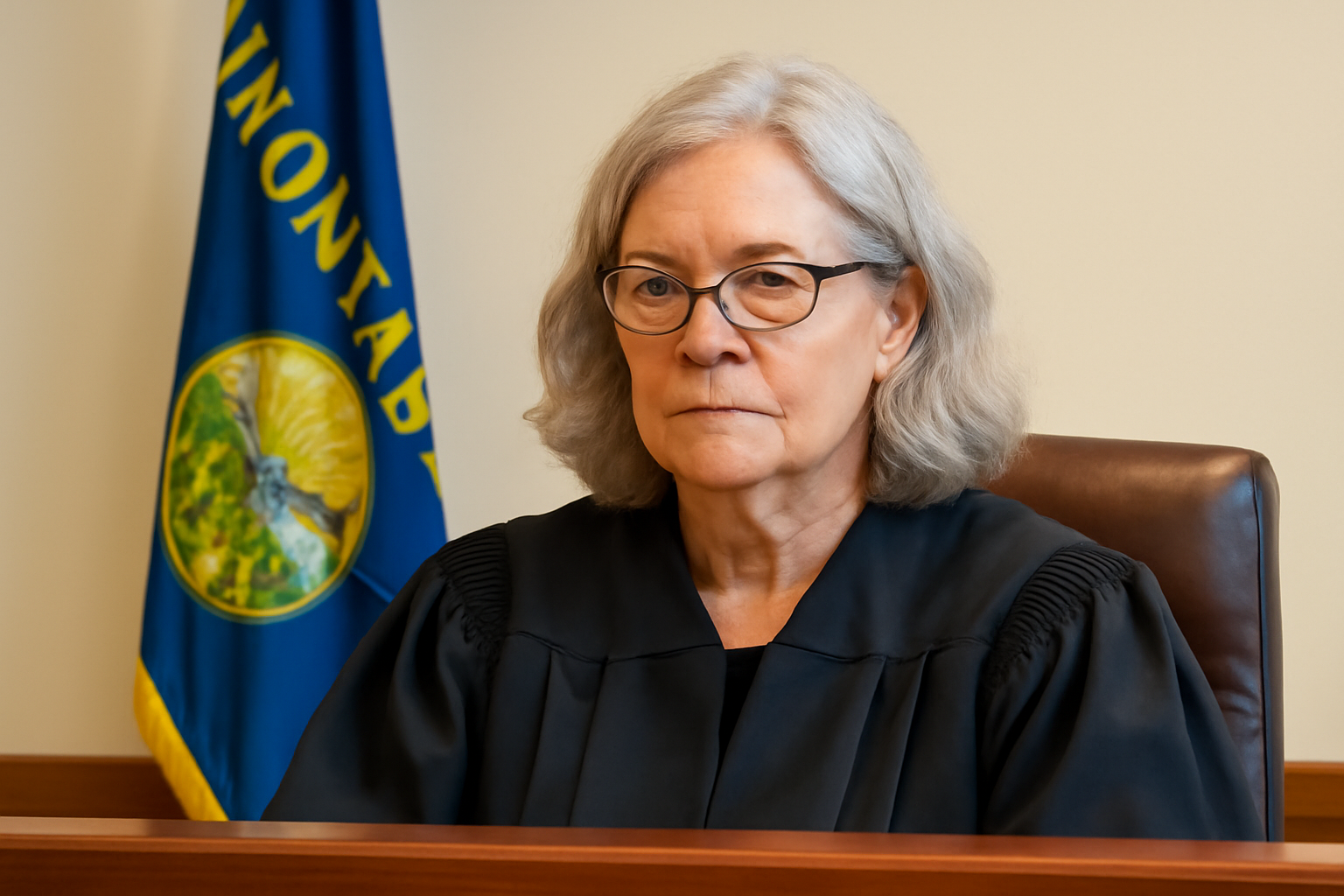
Montana Judge Strikes Down Sex Definition Law
In a pivotal legal case that underscores the ongoing struggle for transgender rights in the United States, a district court judge in Montana has invalidated a state law that sought to legally enforce a binary sex definition. The ruling, delivered by Judge Leslie Halligan, called the legislation "a legal fiction," marking a significant moment in the discourse surrounding gender identity and recognition.
The contentious law, Senate Bill 458, was passed in 2023 by the Montana legislature. It aimed to codify the definition of sex as strictly male or female, thus excluding non-binary and intersex individuals. The judge's decision to strike down this law challenges the boundaries of state intervention in personal identity matters and affirms the complexity of human biology and identity.
Challenging a Restrictive Definition
The plaintiffs in the case were a coalition of transgender and intersex Montanans, including individuals born with genetic variations that result in sex characteristics of both male and female. These plaintiffs argued that the law not only denied their existence but also posed immediate and tangible harm. Judge Halligan agreed, stating that the law "explicitly excludes" individuals from the state's narrow definition of humanity, causing them direct harm.
The state of Montana contended that the law was merely a matter of definition and did not result in any real-world impact on the affected individuals. However, this claim was refuted by the experiences of one of the plaintiffs, who, despite having XY chromosomes, was born with female genitalia and identifies as a woman. Under the law, she would be incorrectly classified as male in official records, demonstrating the flawed basis of the legislation.
A Broader Implication for LGBTQ+ Rights
Judge Halligan's ruling carries broader implications for the protection of LGBTQ+ rights. In her judgment, she articulated that the law attempted to "permit discrimination against a person whose sex does not align with their gender identity," contradicting the principles of equal protection under the law. She criticized the state's efforts to dismiss the rights of gender-diverse individuals as belonging to "the rare few," emphasizing that constitutional protections must extend to all, regardless of how small a minority they constitute.
The judgment also touched upon the intrusion of political ideology into personal and medical realms. Judge Halligan described the law as an infringement on individual autonomy and privacy, underlining the need for legal protections against such governmental overreach.
A Victory for All Montanans
Anna Tellez, one of the plaintiffs, hailed the ruling as a victory not only for gender-diverse and intersex Montanans but for all residents of the state. "This decision affirms that the government cannot arbitrarily impose discriminatory practices," Tellez remarked, highlighting the broader philosophy of respect for individual rights and privacy that is cherished in Montana.
The court's decision reinforces the notion that personal identity cannot be narrowly defined by legislation, and underscores the importance of judicial oversight in safeguarding against discriminatory laws. As these discussions continue to evolve, the Montana ruling stands as a testament to the resilience and advocacy of the LGBTQ+ community in the face of legislative challenges.
For those interested in following similar stories and developments within the LGBTQ+ community, subscribing to dedicated news briefings can provide valuable insights into how legal and political developments impact diverse groups across the country.
The landmark ruling symbolizes a significant step forward for inclusion and equality, reminding lawmakers and citizens alike of the fundamental rights enshrined in constitutional and human rights law, ensuring protection for all individuals, regardless of gender identity or biological differences.
In conclusion, the Montana ruling not only protects the rights of transgender and intersex individuals but also serves as a broader cultural reminder of the importance of tolerance and the protection of minority rights.
Related Posts
Supreme Court to Address State Bans on Trans Women in Female Sports
The upcoming U.S. Supreme Court term promises to be a pivotal moment for transgender rights, as the nation's highest court has agreed to evaluate whether states have the authority to prohibit transgender women from participating in female sports competitions. This case, scheduled to be argued in the next term beginning October, is expected to have a significant impact on the future of sports inclu [...]
Megan Rapinoe and Sue Bird Announce Amicable Separation After Ten Years Together
In a heartfelt announcement that resonated deeply within the sports and LGBTQ+ communities, soccer star Megan Rapinoe and basketball legend Sue Bird have revealed their decision to part ways after nearly a decade together. The couple, who have been icons both on and off the field, shared the news with their fans through a joint statement on social media, expressing that the choice was made with mu [...]
Groundbreaking Ruling Ends Sodomy Ban for Police and Military in the Dominican Republic
The Constitutional Court of the Dominican Republic recently delivered a landmark decision on November 18th, ruling that the nation’s police and armed forces are not permitted to criminalize consensual same-sex relations among their personnel. This pivotal ruling is a significant stride towards equality and the protection of LGBTQ+ rights within these institutions. A Resounding Victory for Equal [...]