
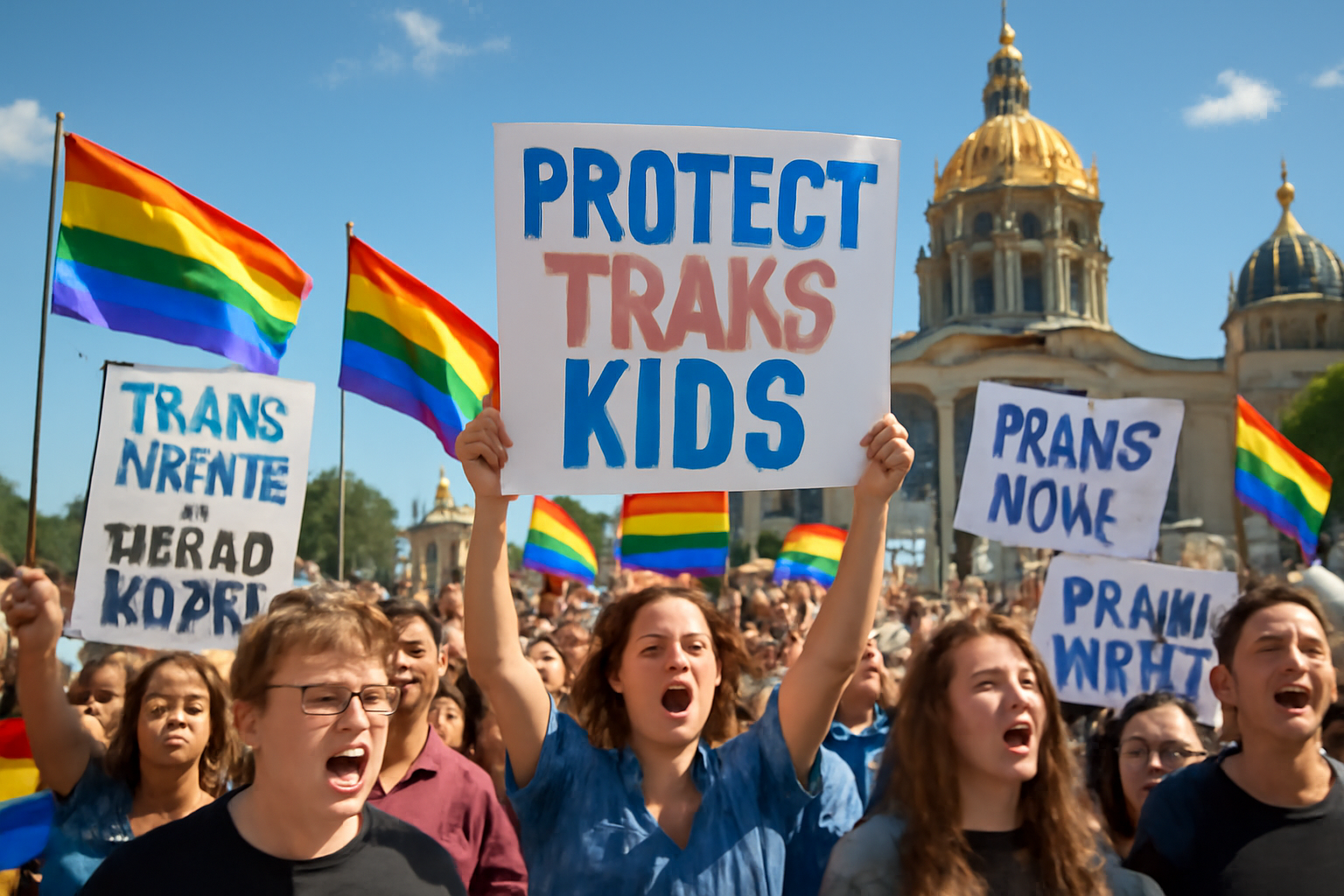
Protests amplify voices at Iowa Capitol
With Pride flags waving in defiance, hundreds flocked around Iowa's Capitol, rallying against a contentious bill that threatens transgender protections in state law. This legislation, Senate File 418, has ignited furious opposition from LGBTQ+ advocates and allies who see it as a blatant attack on transgender rights.
Legislature's decision sparks a public outcry
The Iowa House, in a charged debate, passed this bill with a 60-36 vote, followed by a Senate approval along party lines, 33-15. If enacted, it would strike 'gender identity' from Iowa's protected class list—a list that has safeguarded people against discrimination based on race, creed, color, sex, national origin, religion, and disability since 1965.
This bill also seeks a legal makeover by requiring birth certificates reflect one's sex at birth, echoing federal policies once favored by Trump. There are growing fears that such changes could unravel transgender rights in Iowa.
Governor's decision in spotlight
Now, Governor Kim Reynolds faces a pivotal moment. Her signing this bill would dismantle nearly twenty years' worths protections. The heat's on, with Democratic lawmakers warning that history will not be kind if this goes through.
As lawmakers debated, there was palpable tension, with shouts from onlookers branding its passage a "shame" and "act against democracy," highlighting just how divisive this issue has become.
Rising protests and political reactions
When word spread about this bill's progress, protests erupted at Iowa's Capitol. Trans rights supporters and allies rallied in peaceful defiance. Despite some far-right claims, these gatherings were non-violent, underscoring their commitment against aggression.
The controversy even caught heat from D.C, with Vice President Kamala Harris speaking out against it, propelling a broader conversation about transgender rights. Democratic Representative Aime Wichtendahl, Iowa's first openly transgender lawmaker, delivered a biting critique, emphasizing how this bill jeopardizes trans people's access—to jobs, housing, or even credit.
Republican defense despite backlash
GOP members insist this bill simply aligns state law with "biological truths," arguing existing federal protections will cover transgender rights. Steven Holt, a GOP Representative, stated it's about defending women's rights, though many dismiss such arguments as unfounded.
Federal protections remain a hot topic—are they reliable, especially when political tides shift? That unpredictability only fuels concerns that transgender rights might hang by a thread.
Voices from a worried community
In light these legal changes, transgender Iowans are apprehensive about what lies ahead. One resident, considering whether they should leave Iowa, expressed gratitude seeing so many stand up in protest. Cisgender allies were there, too, showing their solidarity.
Rachel Gulick, a longtime Iowa native, captured many people's frustration, viewing this as part a broader rollback in human rights nationwide.
The road ahead
Senate File 418 fits a troubling narrative in Iowa, where past efforts aimed at undermining LGBTQ+ rights aren't rare. Previous proposals even targeted transgender students, underscoring this ongoing battle.
As Governor Reynolds weighs her decision, all eyes are Iowa. This legislative push could impact not just transgender Iowans but set a precedent nationwide.
Related Posts
Supreme Court to Address State Bans on Trans Women in Female Sports
The upcoming U.S. Supreme Court term promises to be a pivotal moment for transgender rights, as the nation's highest court has agreed to evaluate whether states have the authority to prohibit transgender women from participating in female sports competitions. This case, scheduled to be argued in the next term beginning October, is expected to have a significant impact on the future of sports inclu [...]
Megan Rapinoe and Sue Bird Announce Amicable Separation After Ten Years Together
In a heartfelt announcement that resonated deeply within the sports and LGBTQ+ communities, soccer star Megan Rapinoe and basketball legend Sue Bird have revealed their decision to part ways after nearly a decade together. The couple, who have been icons both on and off the field, shared the news with their fans through a joint statement on social media, expressing that the choice was made with mu [...]
Groundbreaking Ruling Ends Sodomy Ban for Police and Military in the Dominican Republic
The Constitutional Court of the Dominican Republic recently delivered a landmark decision on November 18th, ruling that the nation’s police and armed forces are not permitted to criminalize consensual same-sex relations among their personnel. This pivotal ruling is a significant stride towards equality and the protection of LGBTQ+ rights within these institutions. A Resounding Victory for Equal [...]