
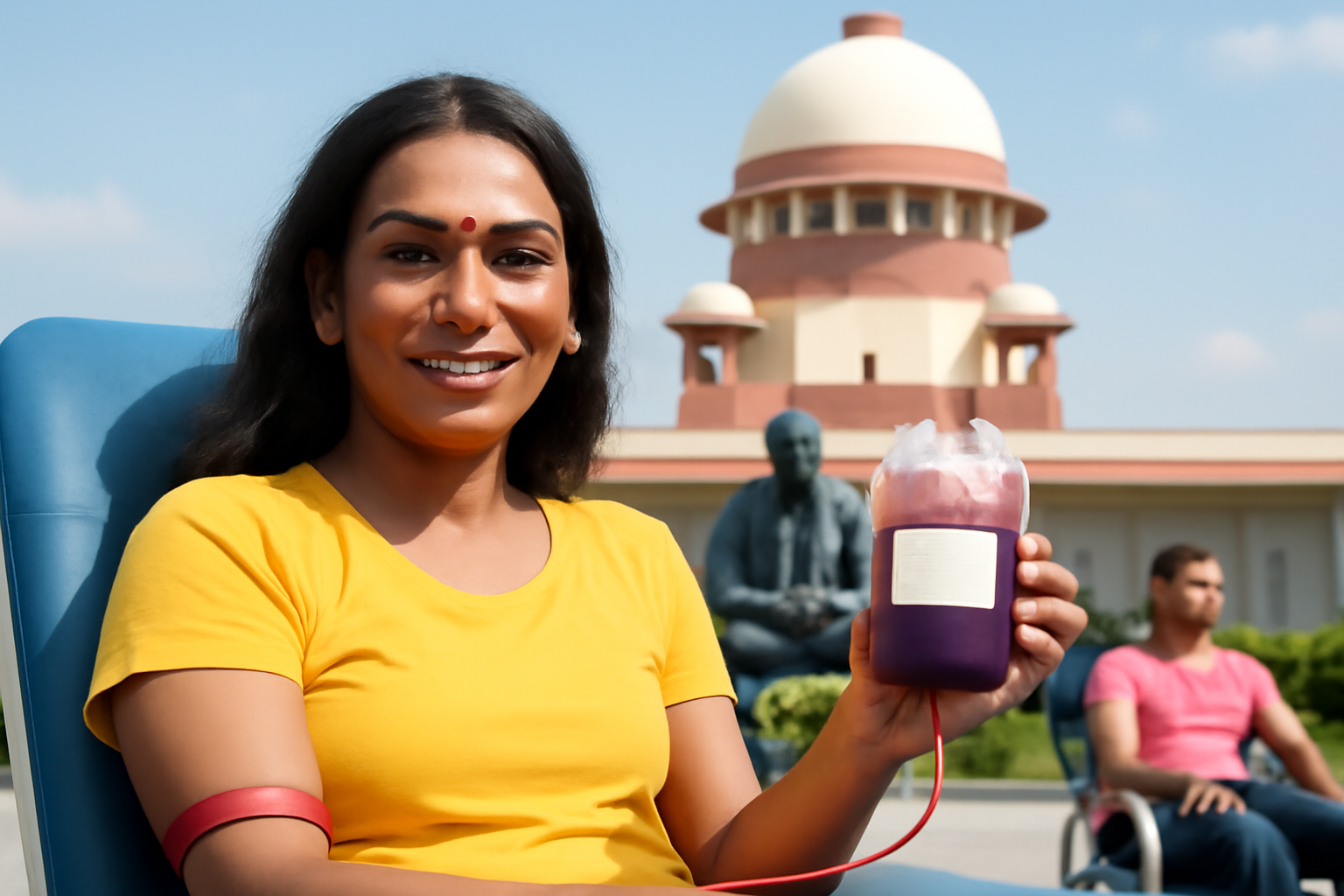
Recently, India's Supreme Court made a pivotal decision, urging government officials and experts alike, "Letʼs take a fresh look at our blood donation guidelines." Why? Because right now, these rules unfairly label transgender folks as "high-risk" donors. By pushing this reevaluation, they aim at chipping away at outdated stereotypes and embracing science-backed policies.
Why policy reform can't wait
On May 14, Justices Surya Kant and Nongmeikap Am Kotiswar Singh put a spotlight on a glaring issue: Why assume all transgender people pose a risk when it comes time donate blood? Pointing out that such policies unfairly tarnish a whole group, they questioned why everyone in this community should be seen through such a narrow lens.
The guidelines in question, straight outta October 11, 2017, courtesy National Blood Transfusion Services, currently ban transgender individuals, men who have sex with men (MSM), female sex workers, intravenous drug users, and folks with multiple sexual partners from giving blood. Critics argue these rules are less about facts and more about outdated assumptions.
Legal and social impacts
This Supreme Court push stemmed from a petition challenging whether parts these rules pass constitutional muster. Solicitor General Aishwarya Bhati stood by them, saying they're all about safeguarding public health, not casting aspersions. But, according Justices, these restrictions end up reinforcing exclusion and old prejudices.
Today's advancements in medicine make it possible keep blood supplies safe without sidelining entire communities. It opens door broader, more inclusive forms civic duty, like blood donation.
Striking a balance between public health and equity
Around globe, many still consider transgender people high-risk donors, but it's not universal stance. Bhati stressed need detect infections during specific times, adding donating blood isn't a fundamental right. Yet, Justices' call rethink shows itʼs time balance health with fairness.
This debate isn't just an Indian thing. Countries like U.S., U.K., Canada, and Israel are moving towards assessing risks individually, not lumping people together. Maybe it s time India took page from their book.
Voices from community and advocates
Harish Iyer, whoʼs well-respected in LGBTQ circles, reminded everyone that infections don't discriminate. We should test everybody thoroughly before taking any blood, not judge based on identity. He called out those who slap stereotypes on minority groups.
Ankit Bhup atani, a leader in global DEI, cheered supreme Court's move as step towards science-backed policies. Itʼs about time healthcare aligns with equality and dignity enshrined in constitution. No more prejudiced medical rules, please!
Bhup atani bluntly stated, "Present guidelines are an example structural discrimination. They limit civic participation and institutionalize stigma, clashing global shift individualized risk assessments."
Plot a new course
Supreme Court may just have given India a golden opportunity. Instead labeling entire groups, let's focus on individualized assessments based behaviors. It makes little sense that heterosexual person engaging risky behavior faces less scrutiny than transgender person a stable relationship.
Through rigorous individual screening, we can both protect blood supply and dismantle these unfair practices. As India looks at policy changes, expert opinions and solid scientific data should steer ship towards fairer, more inclusive healthcare system.
This ongoing conversation highlights need relentless advocacy, making sure societal progress goes hand in hand with policy reform. We're pushing towards brighter, fairer future, where health rules treat everyone with dignity and respect they deserve.
Related Posts
Supreme Court to Address State Bans on Trans Women in Female Sports
The upcoming U.S. Supreme Court term promises to be a pivotal moment for transgender rights, as the nation's highest court has agreed to evaluate whether states have the authority to prohibit transgender women from participating in female sports competitions. This case, scheduled to be argued in the next term beginning October, is expected to have a significant impact on the future of sports inclu [...]
Megan Rapinoe and Sue Bird Announce Amicable Separation After Ten Years Together
In a heartfelt announcement that resonated deeply within the sports and LGBTQ+ communities, soccer star Megan Rapinoe and basketball legend Sue Bird have revealed their decision to part ways after nearly a decade together. The couple, who have been icons both on and off the field, shared the news with their fans through a joint statement on social media, expressing that the choice was made with mu [...]
Groundbreaking Ruling Ends Sodomy Ban for Police and Military in the Dominican Republic
The Constitutional Court of the Dominican Republic recently delivered a landmark decision on November 18th, ruling that the nation’s police and armed forces are not permitted to criminalize consensual same-sex relations among their personnel. This pivotal ruling is a significant stride towards equality and the protection of LGBTQ+ rights within these institutions. A Resounding Victory for Equal [...]