
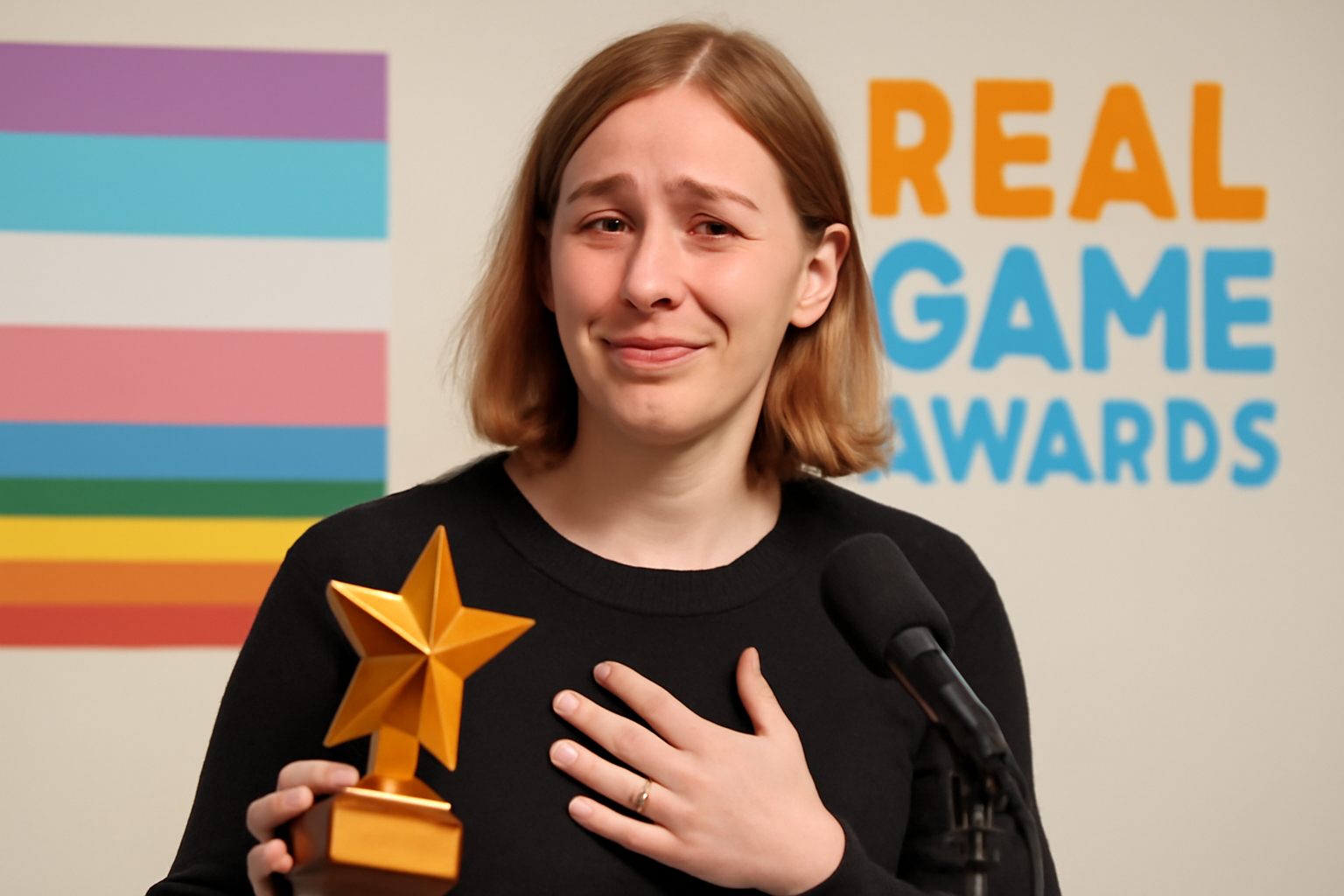
In an ironic twist, an independent gaming awards event that promotes itself as an "anti-woke" alternative has ended up spotlighting a game developed by a trans woman. The Real Game Awards, different from The Game Awards, wants you thinking outside what they see as mainstream gaming culture's norm.
How The Real Game Awards began
A guy named Craig Skistimas, who leads a team behind these awards, launched them with a bold video titled “It's Time To Take Games Back” on his Side Scrollers YouTube channel. Skistimas has often voiced his concerns about gamers being unfairly portrayed by both media and developers.
"There's a real disdain towards gamers from media and developers, and it's just insane," Skistimas declared when he announced these awards. He rallied his followers with a call-to-action: "Let's take games back." This event aimed at being a different kind from usual award shows, and he wasn't shy about expressing his anti-woke sentiments, especially back when Donald Trump got elected, stating online, “Woke culture's finished, spread it around.”
The people stirring up controversy
The team behind this event isn't new in stirring things up. It includes folks like Jeremy Griggs, infamous online, and a character known as Kabrutus, who spends his time identifying diversity, equity, and inclusion (DEI) aspects in video games on his website.
The awards ceremony itself, which was recently live-streamed, featured some offbeat categories like “worst video game journalist,” “sh*tty a** game year,” and “the best jiggle physics,” pulling in an audience over 57,000 viewers.
A win no one saw coming
In a surprising turn, “Nightmare Kart,” a game developed by Lilith Walther, took home best racing game honors. Walther, who champions diversity and inclusion, was certainly taken aback by this recognition from an event that's apparently on a different page.
"I'm honored (and a tad amused) that my game won at these anti-woke awards," Walther quipped on Bluesky, highlighting a touchy irony as a trans woman in this situation.
But Walther soon turned serious. On X (formerly Twitter), she shared her frustration about how things went down, with her posts—now private—calling out organizers who didn't get her permission before showcasing her game.
"You didn't ask me, unlike other awards shows. This isn't just me either. Other developers' games were included without consent," she argued. “Take it off now.”
Skistimas replied saying, "Our voting members thought your game was tops, regardless. Politics or identity didn't factor in. You made a game they enjoyed, plain and simple. Congrats."
Sparking a bigger conversation
This whole episode has stoked a conversation about recognition and consent in gaming. A lot believe award shows should respect creators' rights, similar in other art fields where consent happens before nominations.
Walther's reaction throws light on existing tensions between creators and organizations that might not see eye-to-eye on values. It underscores a need—perhaps now more than ever—for respectful dialogue and amplifying diverse voices in gaming.
As more alternative awards come on scene, they need a keen eye on representation and recognition's tangled web, ensuring they truly honor and respect those they wish spotlight.
What do you think about all this? Jump in with your thoughts below in a respectful manner. We'd love your take!
Related Posts
Supreme Court to Address State Bans on Trans Women in Female Sports
The upcoming U.S. Supreme Court term promises to be a pivotal moment for transgender rights, as the nation's highest court has agreed to evaluate whether states have the authority to prohibit transgender women from participating in female sports competitions. This case, scheduled to be argued in the next term beginning October, is expected to have a significant impact on the future of sports inclu [...]
Megan Rapinoe and Sue Bird Announce Amicable Separation After Ten Years Together
In a heartfelt announcement that resonated deeply within the sports and LGBTQ+ communities, soccer star Megan Rapinoe and basketball legend Sue Bird have revealed their decision to part ways after nearly a decade together. The couple, who have been icons both on and off the field, shared the news with their fans through a joint statement on social media, expressing that the choice was made with mu [...]
Groundbreaking Ruling Ends Sodomy Ban for Police and Military in the Dominican Republic
The Constitutional Court of the Dominican Republic recently delivered a landmark decision on November 18th, ruling that the nation’s police and armed forces are not permitted to criminalize consensual same-sex relations among their personnel. This pivotal ruling is a significant stride towards equality and the protection of LGBTQ+ rights within these institutions. A Resounding Victory for Equal [...]