
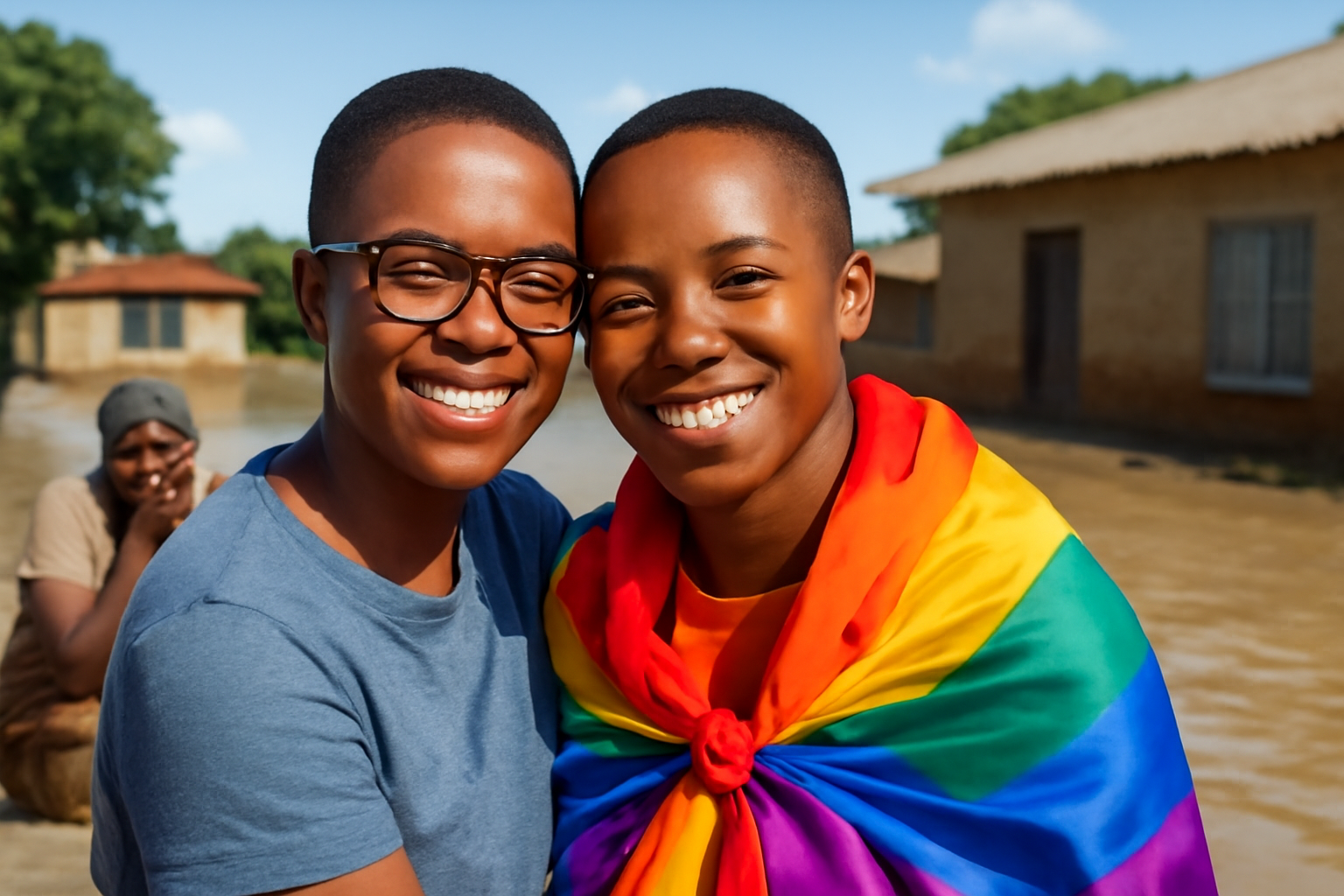
On Thursday, February 20, we observed World Social Justice Day in the midst of a severe flooding disaster that has devastated communities across Botswana. These floods have disrupted the lives of many, with poor urban planning, inadequate drainage, and subpar construction practices exacerbating the situation. Over 2,900 people have been affected, and seven lives were tragically lost by Saturday morning. The crisis has led to school closures and government workers operating in shifts, reminiscent of the COVID-19 pandemic, where extended stays at home increased vulnerabilities, exacerbated mental health issues, heightened gender-based violence, and worsened existing health inequities.
This is the harsh reality faced by those living with HIV or disabilities in rural areas, even outside of crisis situations. Unfortunately, the current situation is being worsened by recent policy decisions. Key populations who are already vulnerable, such as those at risk of HIV, LGBTQ individuals, and sex workers, are experiencing a lack of nondiscriminatory health provisions, as well as reduced emergency response measures due to civil society office shutdowns and budget cuts. Transgender and gender-diverse individuals, in particular, find themselves excluded and unsupported.
Challenges in Support and Infrastructure
Within affected areas, many have lost their homes and possessions. Even regions not directly impacted by the floods experience sporadic electricity and water outages lasting for days. This crisis has highlighted the absence of emergency funds specifically for queer communities, alongside a lack of infrastructure for digital donations and philanthropic efforts tailored to meet these needs. It is a stark reflection of the paradox of Botswana’s classification as a higher middle-income country—a status that has led to reduced international aid and an assumption of a thriving democracy. However, this leaves one questioning: a thriving democracy for whom?
As COVID-19 vaccines initially arrived in Botswana, they were stored in private residences, reserved for the elite. When the constitutional review bill was introduced, there was public outcry against the inclusion of intersex protections. Earlier floods this year similarly affected the most underserved areas, yet there has been no widespread initiative for donations from businesses, unlike the concentrated efforts seen in the capital, Gaborone. It appears that lessons from past cyclones, floods, and pandemics have not been learned. Daily, we are reminded of the inequalities and injustices within our nation. Despite changes in government, incidents such as being abruptly pulled from a scheduled television interview still occur, leaving one to question if it was due to gender identity, expression, or other factors.
Reflections on Democracy and Human Rights
A thriving democracy would protect the dignity and personhood of all individuals, promoting transparency and accountability. It would ensure social protections, universal health coverage, and prioritize diversity and inclusion. These should not be mere afterthoughts but integral parts of governance, driven by political will and respect for the indivisibility of human rights. Regrettably, our country mirrors a global geopolitical landscape where power and equality are dictated by economic, social, and military capital, exploiting the planet and marginalized groups without remorse.
As exclusion becomes institutionalized, it paradoxically highlights the power of marginalized communities. Despite the trauma and injustice it brings, it underscores the resistance and resilience of these communities. It reveals the insecurity faced by those in power when confronted with their own inadequacies. They remain trapped in a cycle of exploitation and oppression, devoid of empathy and human connection. But this is why hope endures. As we share our stories, connect across borders, and celebrate each other's resilience, we affirm that we cannot be silenced or erased. In the words of Václav Havel, "Hope is not the conviction that something will turn out well, but the certainty that something is worth doing no matter how it turns out."
Dumi Gatsha is a consultant and founder of Success Capital Organization, a grassroots NGO championing human rights and sustainable development at local, regional, and global levels.
Related Posts
Supreme Court to Address State Bans on Trans Women in Female Sports
The upcoming U.S. Supreme Court term promises to be a pivotal moment for transgender rights, as the nation's highest court has agreed to evaluate whether states have the authority to prohibit transgender women from participating in female sports competitions. This case, scheduled to be argued in the next term beginning October, is expected to have a significant impact on the future of sports inclu [...]
Megan Rapinoe and Sue Bird Announce Amicable Separation After Ten Years Together
In a heartfelt announcement that resonated deeply within the sports and LGBTQ+ communities, soccer star Megan Rapinoe and basketball legend Sue Bird have revealed their decision to part ways after nearly a decade together. The couple, who have been icons both on and off the field, shared the news with their fans through a joint statement on social media, expressing that the choice was made with mu [...]
Groundbreaking Ruling Ends Sodomy Ban for Police and Military in the Dominican Republic
The Constitutional Court of the Dominican Republic recently delivered a landmark decision on November 18th, ruling that the nation’s police and armed forces are not permitted to criminalize consensual same-sex relations among their personnel. This pivotal ruling is a significant stride towards equality and the protection of LGBTQ+ rights within these institutions. A Resounding Victory for Equal [...]