
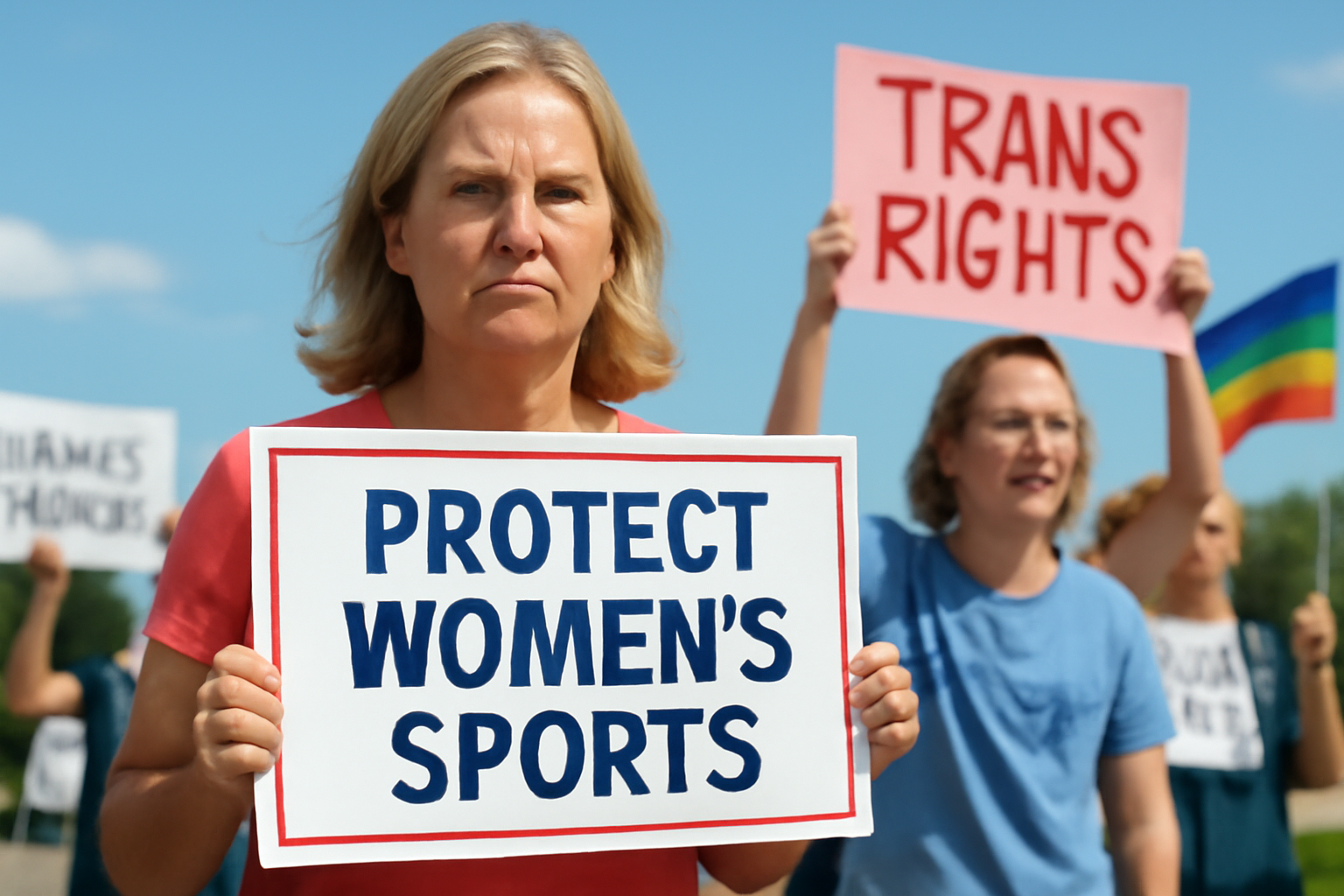
The U.S. House of Representatives recently voted 218-206 in favor of a controversial bill aimed at prohibiting transgender students from participating in sports teams designated for girls and women, spanning from elementary schools to collegiate level sports.
Debates on the House floor were marked by intense exchanges, with conservative lawmakers often employing language viewed as discriminatory towards transgender individuals. On the other side, Democratic representatives, including several who are openly LGBTQ, strongly criticized the legislation as being harmful to children, unnecessary, and discriminatory.
Political Divides and Legislative Priorities
The move to advance the Protection of Women and Girls in Sports Act to the floor at this early stage of the 119th Congress underscores the priority that conservative leaders in the House are placing on issues related to transgender rights. This decision is reflective of an agenda that aims to limit transgender inclusion in various aspects of public life, with implications that extend beyond Capitol Hill and into the broader political landscape, including the White House.
All Republican representatives present cast their votes in favor of the bill, aligning along party lines, while Democrats stood in unanimous opposition, aside from two representatives from Texas, Henry Cuellar and Vicente Gonzalez, who broke ranks with their party.
Texas Representatives and Their Stances
Representative Cuellar, who initially opposed the measure when it was first introduced in 2023, stated that his shift in stance was influenced by feedback from his constituents. Meanwhile, Representative Gonzalez, who had not voted on the prior version of the bill, explained his support by expressing a belief in rules that maintain fairness in sports, using rhetoric commonly found in Republican discourse that often misgenders transgender women and girls.
Gonzalez emphasized the importance of voting in accordance with the values of his district, asserting that Democratic representatives should not feel constrained by pressures from national party politics in Washington, D.C.
Potential Legislative and Executive Actions
While the bill currently faces an uncertain future in the Senate, where a Democratic majority could hinder its progression, attention is turning towards potential executive actions under the incoming administration. President-elect Donald Trump has vowed to implement measures that could effectively enforce a ban, potentially involving directives to the U.S. Department of Education to identify and penalize schools that allow transgender students to participate in accordance with their gender identity, citing Title IX violations.
Supporters of the bill argue that transgender women and girls possess inherent biological advantages that could affect fairness in competitions, particularly at the collegiate level where athletic scholarships are at stake.
Opposition and Concerns from Democrats
Opponents, however, argue that the bill serves as a distraction from more pressing issues affecting everyday Americans. Representative Suzanne Bonamici from Oregon accused her Republican counterparts of exploiting cultural divides rather than focusing on substantive policy solutions.
Concerns about privacy and safety have also been raised. Some Democrats argue that the lack of a clear enforcement mechanism could lead to invasive practices, such as the inspection of students' bodies to verify gender, which they argue could increase the risk of child abuse. These concerns led some critics to derisively label the bill as the "GOP Child Predator Empowerment Act."
In response, Republican Representative Tim Walberg suggested using birth certificates as a means to determine student gender.
Notable opposition came from Representative Becca Balint, a member of the Congressional Equality Caucus, who warned that the bill's implications could result in inappropriate scrutiny of young students' bodies.
Related Posts
Supreme Court to Address State Bans on Trans Women in Female Sports
The upcoming U.S. Supreme Court term promises to be a pivotal moment for transgender rights, as the nation's highest court has agreed to evaluate whether states have the authority to prohibit transgender women from participating in female sports competitions. This case, scheduled to be argued in the next term beginning October, is expected to have a significant impact on the future of sports inclu [...]
Megan Rapinoe and Sue Bird Announce Amicable Separation After Ten Years Together
In a heartfelt announcement that resonated deeply within the sports and LGBTQ+ communities, soccer star Megan Rapinoe and basketball legend Sue Bird have revealed their decision to part ways after nearly a decade together. The couple, who have been icons both on and off the field, shared the news with their fans through a joint statement on social media, expressing that the choice was made with mu [...]
Groundbreaking Ruling Ends Sodomy Ban for Police and Military in the Dominican Republic
The Constitutional Court of the Dominican Republic recently delivered a landmark decision on November 18th, ruling that the nation’s police and armed forces are not permitted to criminalize consensual same-sex relations among their personnel. This pivotal ruling is a significant stride towards equality and the protection of LGBTQ+ rights within these institutions. A Resounding Victory for Equal [...]