
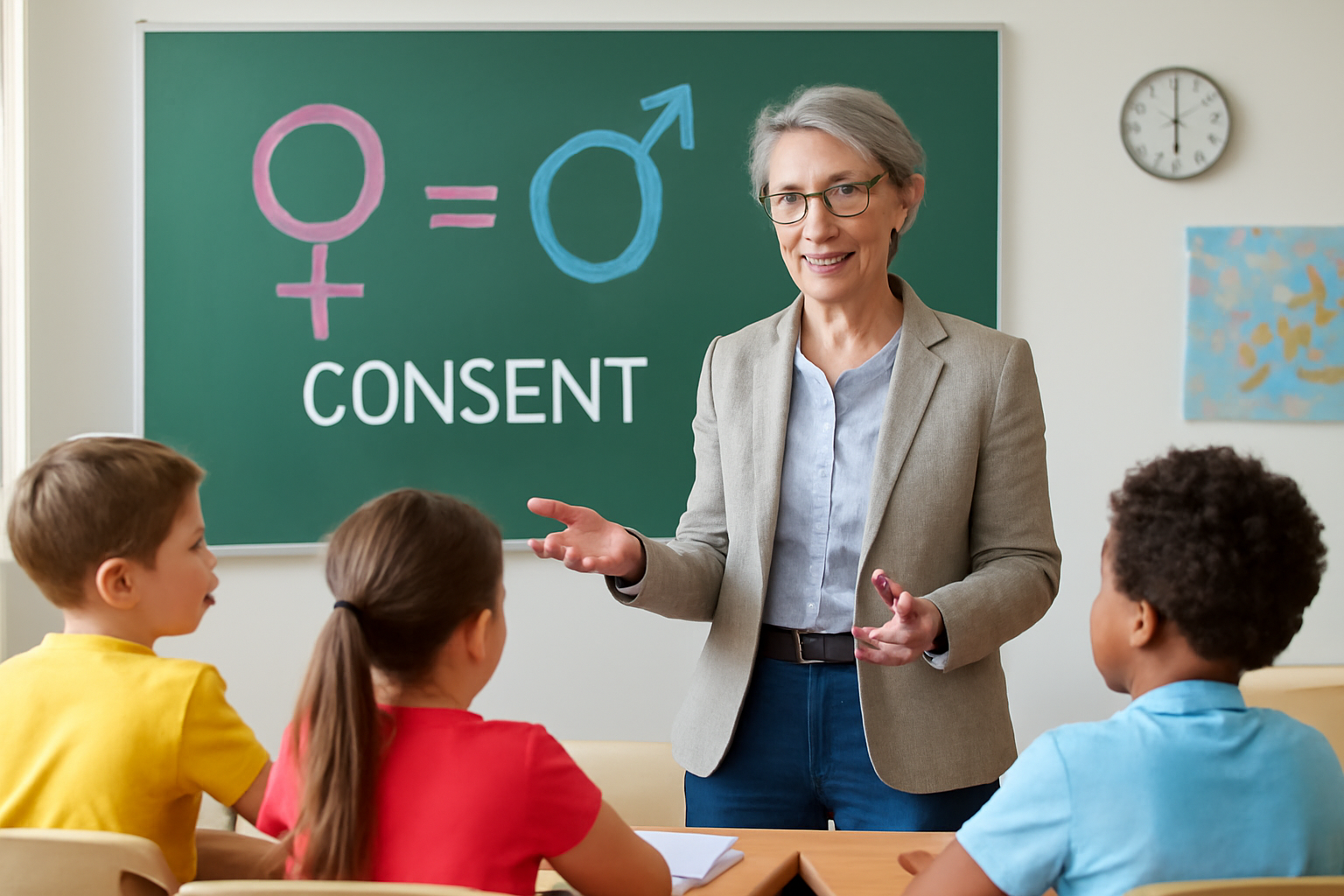
France is embarking on an ambitious educational initiative aimed at instilling the principles of gender equality and consent from a young age. Starting with children as young as four, these lessons will form a core part of the curriculum in both public and private educational institutions across the country.
The French Education Minister, Elisabeth Borne, has announced a comprehensive overhaul of the existing sex education syllabus. This new approach is designed to address issues such as sexual violence and the societal challenges faced by women and girls. In a recent statement, Borne emphasized the critical role of education in shaping attitudes towards relationships, love, and sexuality. "Education about love, about relationships and sexuality is absolutely essential," she stated.
Curriculum to Include Early and Age-Appropriate Learning
The revamped curriculum is scheduled to be implemented after the summer holidays and will introduce children to three structured sessions of sex education per year, spanning primary, middle, and secondary school levels.
From the age of four, children will engage in discussions that are age-appropriate, focusing on understanding gender identity and biological sex. The curriculum aims to demystify these topics by teaching scientific terms for genitalia and exploring the concepts of equality and consent. The education minister has assured that these lessons will be carefully tailored to the age and maturity of the students, incorporating interactive elements such as role-playing scenarios. An example given was asking, "Can I hold your hand?" to reinforce the idea that it is perfectly acceptable to say "no."
"The programme is very careful to provide quality information that is adapted to a pupil’s age," Borne added. By grounding these lessons in real-life scenarios, the program aims to foster a culture of respect and understanding from an early age.
Progressive Learning Stages
As students grow older, the lessons will evolve to address more complex topics. At age 13, for instance, children will delve into discussions about the distinctions between biological sex, gender, and sexual orientation. The goal is to nurture a nuanced understanding of these concepts and how they intersect in everyday life.
By the time students reach the age of 14, the curriculum will cover "the complex reality of sexuality," incorporating discussions on the facets of pleasure, love, and reproduction. This holistic approach aims to equip students with a comprehensive understanding of human relationships and sexuality.
At 16, the lessons will further explore "biological differences between men and women" while emphasizing that these differences do not dictate self-expression, behavior, or societal roles. This part of the program is crucial for dismantling stereotypes and promoting equality across all genders.
Respecting the Role of Families
Importantly, the new educational program respects the role of parents and families in the development of their children's understanding of these issues. The education ministry has made it clear that the school-based sex education will not "take the place of pupils’ parents and families." Instead, it is designed to complement the important teachings and discussions that occur at home.
The proposed curriculum has been submitted to France’s Higher Education Council for approval, marking another step forward in educational reform aimed at fostering a more enlightened and equitable society.
With these measures, France is setting a precedent in educational policy, ensuring that future generations grow up with a healthy understanding of consent and gender equality. This initiative reflects a growing recognition of the importance of equipping children with the knowledge and skills needed to navigate relationships and society with confidence and respect.
Related Posts
Supreme Court to Address State Bans on Trans Women in Female Sports
The upcoming U.S. Supreme Court term promises to be a pivotal moment for transgender rights, as the nation's highest court has agreed to evaluate whether states have the authority to prohibit transgender women from participating in female sports competitions. This case, scheduled to be argued in the next term beginning October, is expected to have a significant impact on the future of sports inclu [...]
Megan Rapinoe and Sue Bird Announce Amicable Separation After Ten Years Together
In a heartfelt announcement that resonated deeply within the sports and LGBTQ+ communities, soccer star Megan Rapinoe and basketball legend Sue Bird have revealed their decision to part ways after nearly a decade together. The couple, who have been icons both on and off the field, shared the news with their fans through a joint statement on social media, expressing that the choice was made with mu [...]
Groundbreaking Ruling Ends Sodomy Ban for Police and Military in the Dominican Republic
The Constitutional Court of the Dominican Republic recently delivered a landmark decision on November 18th, ruling that the nation’s police and armed forces are not permitted to criminalize consensual same-sex relations among their personnel. This pivotal ruling is a significant stride towards equality and the protection of LGBTQ+ rights within these institutions. A Resounding Victory for Equal [...]