
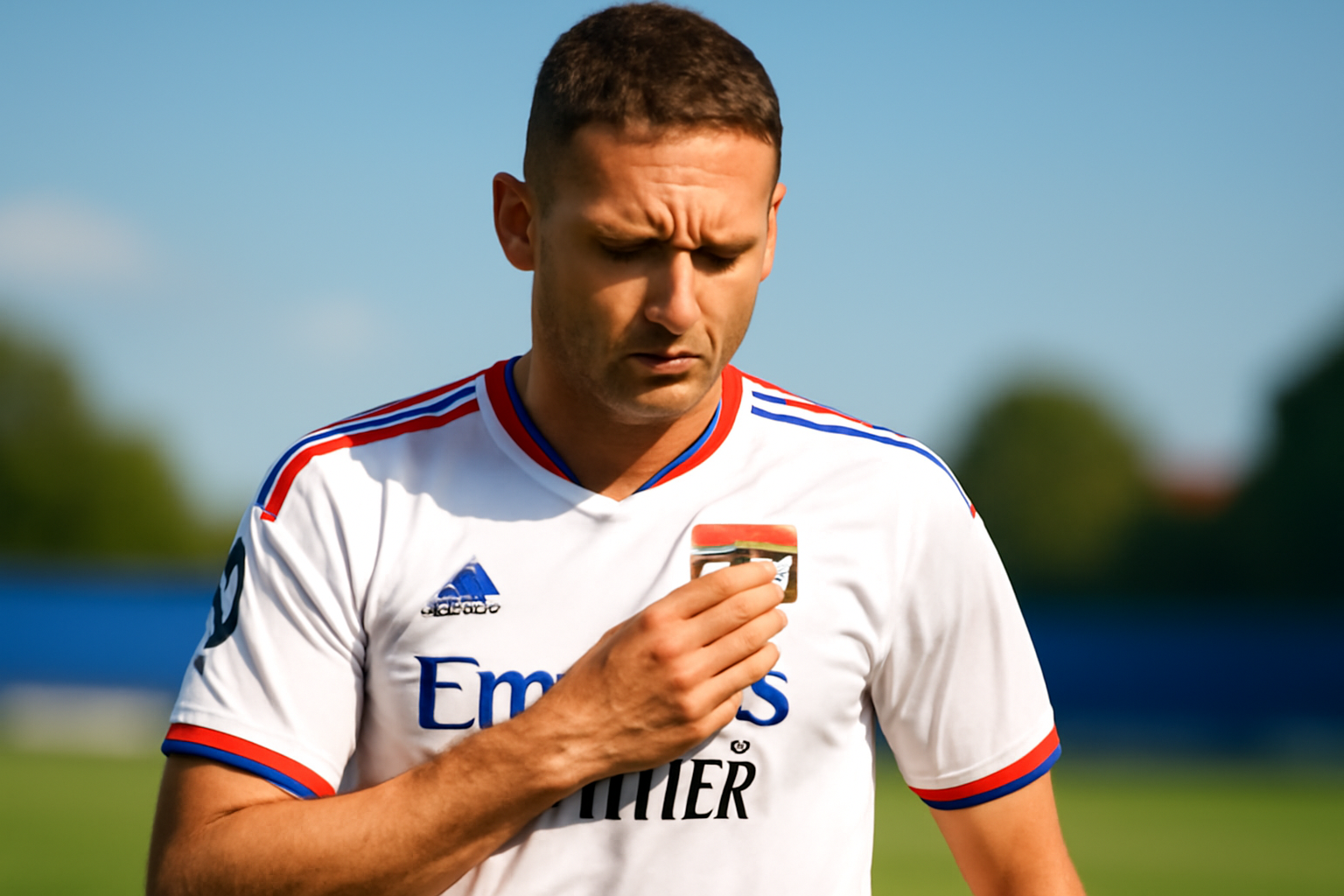
Footballer could face suspension after covering pride logo
Nemanja Matic, once a star midfielder at Chelsea and Manchester United and now with Lyon, finds himself in hot water after deciding not just once, but twice, with a rainbow logo on his kit. This logo was part and parcel in a campaign on International Day Against Homophobia, Biphobia, and Transphobia (IDAHOBIT), aimed at stamping out homophobia in football and supporting LGBTQ+ folks.
A league-wide show and a player with a different view
Every year, May 17th rolls around, and with it comes IDAHOBIT, when football clubs all over France don rainbow logos, shouting their support loud and clear: LGBTQ+ rights matter. But Matic, who's originally from Serbia, opted out. During Lyon's 2-0 win over Angers, he covered up that rainbow with white tape. And boy, did people notice.
It didn't take long before fans and onlookers spotted Matic's taped-up shirt, visible during play and plastered across social media. The backlash was swift, with calls piling up left and right demanding some kind action. We've seen similar uproar before with other players, and it's picking up steam again.
Past protests and what they mean
This isn't new territory. Remember last season, when Mohamed Camara, playing with Monaco at that time, did something similar? He covered up a symbol and got himself a four-match suspension, raising eyebrows with his refusal alongside campaigns tackling homophobia.
There's more. Take Nantes forward Mostafa Mohamed, who skipped out entirely on a game against Montpellier on that day. He cited personal and cultural reasons, explaining he respects others' beliefs but finds these initiatives tough due his own background.
"Everyone carries their own story, culture, and sensitivity," Mohamed once said in an interview. "Living together means recognizing diversity can be expressed differently depending on each person. Mutual respect matters, both toward others and our own beliefs."
The international scene and a player's predicament
Across in England, Marc Guehi from Crystal Palace took a different route. Rather than donning a rainbow-themed captain's armband like others partaking in Rainbow Laces, he modified his gear showing off religious messages like "I Love Jesus," blending his strong Christian beliefs with his public role.
These choices throw light on a recurring tension: personal beliefs versus public support initiatives in sports. While campaigns like IDAHOBIT aim at fostering inclusivity, they also pose challenges individuals whose personal or religious beliefs don't align with that message.
Looking ahead: inclusivity in football
The Ligue de Football Professionnel (LFP) has its hands full reviewing Matic's choice, wondering if it goes against their push toward inclusivity. Their decision could carve out a path on how similar situations are handled in future, finding a middle ground between individual beliefs and creating a welcoming space LGBTQ+ individuals.
As this scenario unfolds, it sparks conversations about sports, social advocacy, and how far players should go in line with these initiatives. Matic's choice stirs broader debates on diversity, inclusion, and how personal beliefs play out on public stage.
Tags: football, LGBTQ+ rights, homophobia in sports, social awareness, diversity and inclusion
Related Posts
Supreme Court to Address State Bans on Trans Women in Female Sports
The upcoming U.S. Supreme Court term promises to be a pivotal moment for transgender rights, as the nation's highest court has agreed to evaluate whether states have the authority to prohibit transgender women from participating in female sports competitions. This case, scheduled to be argued in the next term beginning October, is expected to have a significant impact on the future of sports inclu [...]
Megan Rapinoe and Sue Bird Announce Amicable Separation After Ten Years Together
In a heartfelt announcement that resonated deeply within the sports and LGBTQ+ communities, soccer star Megan Rapinoe and basketball legend Sue Bird have revealed their decision to part ways after nearly a decade together. The couple, who have been icons both on and off the field, shared the news with their fans through a joint statement on social media, expressing that the choice was made with mu [...]
Groundbreaking Ruling Ends Sodomy Ban for Police and Military in the Dominican Republic
The Constitutional Court of the Dominican Republic recently delivered a landmark decision on November 18th, ruling that the nation’s police and armed forces are not permitted to criminalize consensual same-sex relations among their personnel. This pivotal ruling is a significant stride towards equality and the protection of LGBTQ+ rights within these institutions. A Resounding Victory for Equal [...]