
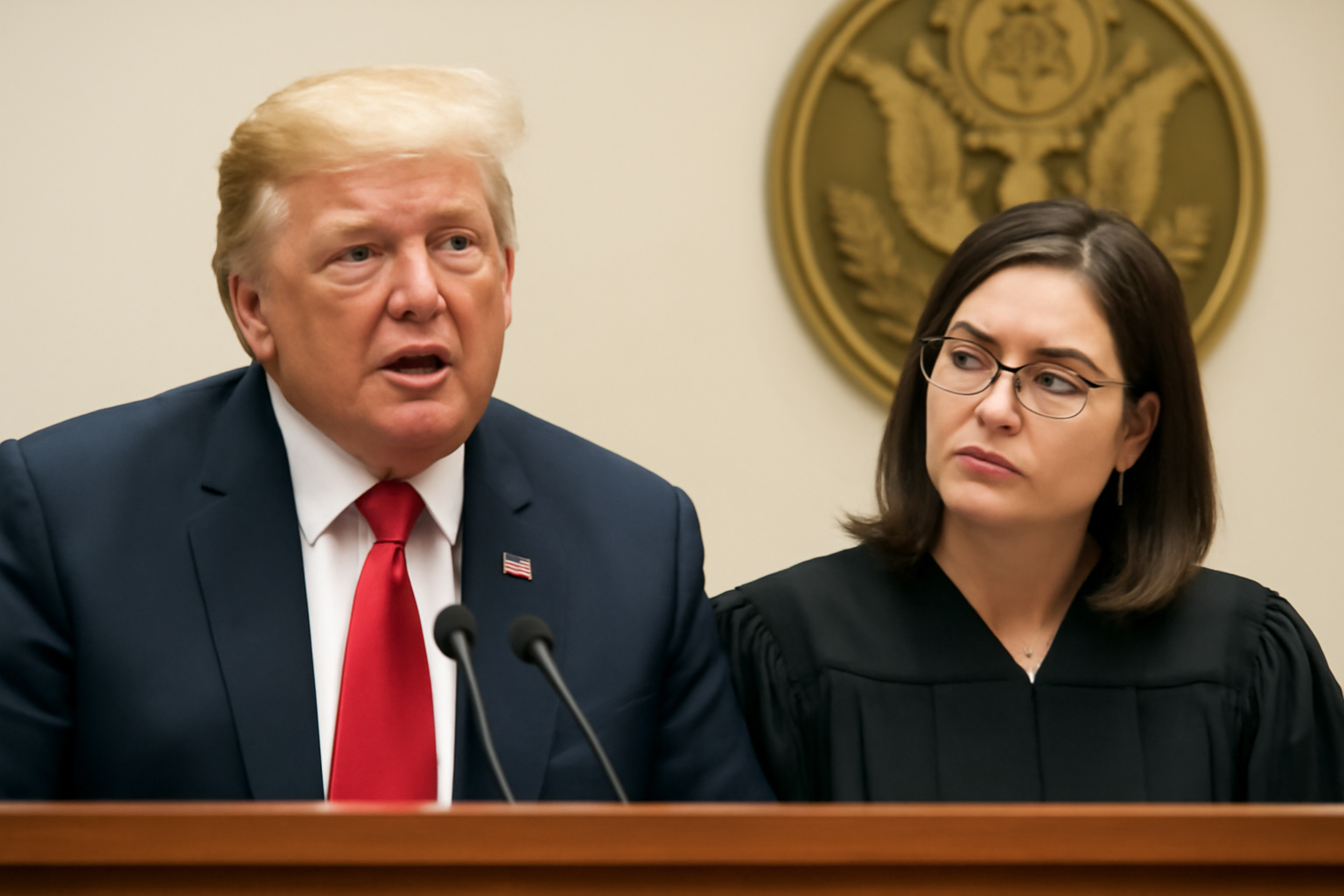
A federal judge has blocked former President Donald Trump's attempt to withdraw federal funding from medical institutions that provide gender-affirming care. This decision marks the second time a federal judge has found that Trump did not have the executive authority to enforce such a ban.
U.S. District Court Judge Lauren J. King, appointed by President Joe Biden, initially paused Trump's directive for 14 days. The directive aimed to halt federal research and educational grants to medical schools and hospitals offering gender-affirming care to individuals under 19. This move was temporarily blocked in response to legal action taken by the attorneys general of Washington, Oregon, and Minnesota, who argued that Trump's order infringed upon states' rights. Colorado later joined the lawsuit, increasing the number of plaintiff states to four.
Legal Battle and Implications
The judge's pause, set to expire on February 28, prompted an injunction hearing where arguments were heard to determine whether to extend the block. Judge King decided to approve a preliminary injunction, preventing the enforcement of Trump's order in the plaintiff states.
The states argued that Trump's attempt to control the medical care available to state residents violated constitutional rights, including the Fifth Amendment's Due Process Clause and the Tenth Amendment's states' rights guarantees. The plaintiffs also claimed that withholding funding approved by Congress was unconstitutional under the separation of powers principle.
The Department of Justice (DOJ) defended the order, arguing that it was consistent with applicable law and did not violate constitutional protections. They claimed the Equal Protection Clause was not applicable, as the order aimed to "safeguard children from potentially dangerous, ineffective, and unproven treatments."
Medical Consensus
Gender-affirming care has long been recognized as safe and effective by major medical associations. These treatments, used for decades among transgender individuals and cisgender children, are deemed essential for the well-being of trans people.
During the hearing, Judge King questioned DOJ attorney Vinita Andrapalliyal about the language used in Trump's order, particularly its definition of gender dysphoria. Following a detailed exchange, Andrapalliyal acknowledged gender dysphoria as a legitimate medical condition. King confirmed there was no scientific dispute over its validity.
Washington Assistant Attorney General William McGinty emphasized the urgency of the issue, asserting that "the president's disregard for the Constitution is obvious and intentional. However, states and the courts have reaffirmed the rule of law and the values that unite us as a nation."
Constitutional Concerns
Judge King highlighted that the language in Trump's order, using terms like "maiming," "sterilizing," and "mutilation," is not typical of gender-affirming care practices in the U.S. The judge also noted that the order was not limited to children or irreversible treatments, nor did it address interventions on cisgender children.
"In fact, its inadequate 'means-end fit' would prevent federally funded medical providers from offering necessary medical treatments to transgender youth unrelated to gender identity," King wrote. "For example, a cisgender teen could receive puberty blockers as part of cancer treatment, but a transgender teen following the same care plan could not."
King concluded that Trump's order was a mechanism to limit rights and protections for transgender individuals and thus issued the injunction. The only part of the order not blocked pertained to female genital mutilation, already illegal in the plaintiff states with no evidence of planned procedures.
Future of the Legal Case
King's ruling is the second time that federal judges have issued injunctions against Trump's order on gender-affirming care. Previously, U.S. District Judge Brendan Hurson, also appointed by President Biden, declared that Trump's ban lacked legal authority and constituted unconstitutional discrimination. Hurson's ruling applied nationwide.
The injunction by Judge King will remain in effect until the case is resolved. To have the injunction lifted, the DOJ would need to appeal to the 9th U.S. Circuit Court of Appeals, which has a majority of Democrat-appointed judges, making an appeal unlikely in the immediate future.
Stay informed on the latest developments affecting the LGBTQ+ community by subscribing to our newsletter.
Related Posts
Supreme Court to Address State Bans on Trans Women in Female Sports
The upcoming U.S. Supreme Court term promises to be a pivotal moment for transgender rights, as the nation's highest court has agreed to evaluate whether states have the authority to prohibit transgender women from participating in female sports competitions. This case, scheduled to be argued in the next term beginning October, is expected to have a significant impact on the future of sports inclu [...]
Megan Rapinoe and Sue Bird Announce Amicable Separation After Ten Years Together
In a heartfelt announcement that resonated deeply within the sports and LGBTQ+ communities, soccer star Megan Rapinoe and basketball legend Sue Bird have revealed their decision to part ways after nearly a decade together. The couple, who have been icons both on and off the field, shared the news with their fans through a joint statement on social media, expressing that the choice was made with mu [...]
Groundbreaking Ruling Ends Sodomy Ban for Police and Military in the Dominican Republic
The Constitutional Court of the Dominican Republic recently delivered a landmark decision on November 18th, ruling that the nation’s police and armed forces are not permitted to criminalize consensual same-sex relations among their personnel. This pivotal ruling is a significant stride towards equality and the protection of LGBTQ+ rights within these institutions. A Resounding Victory for Equal [...]