
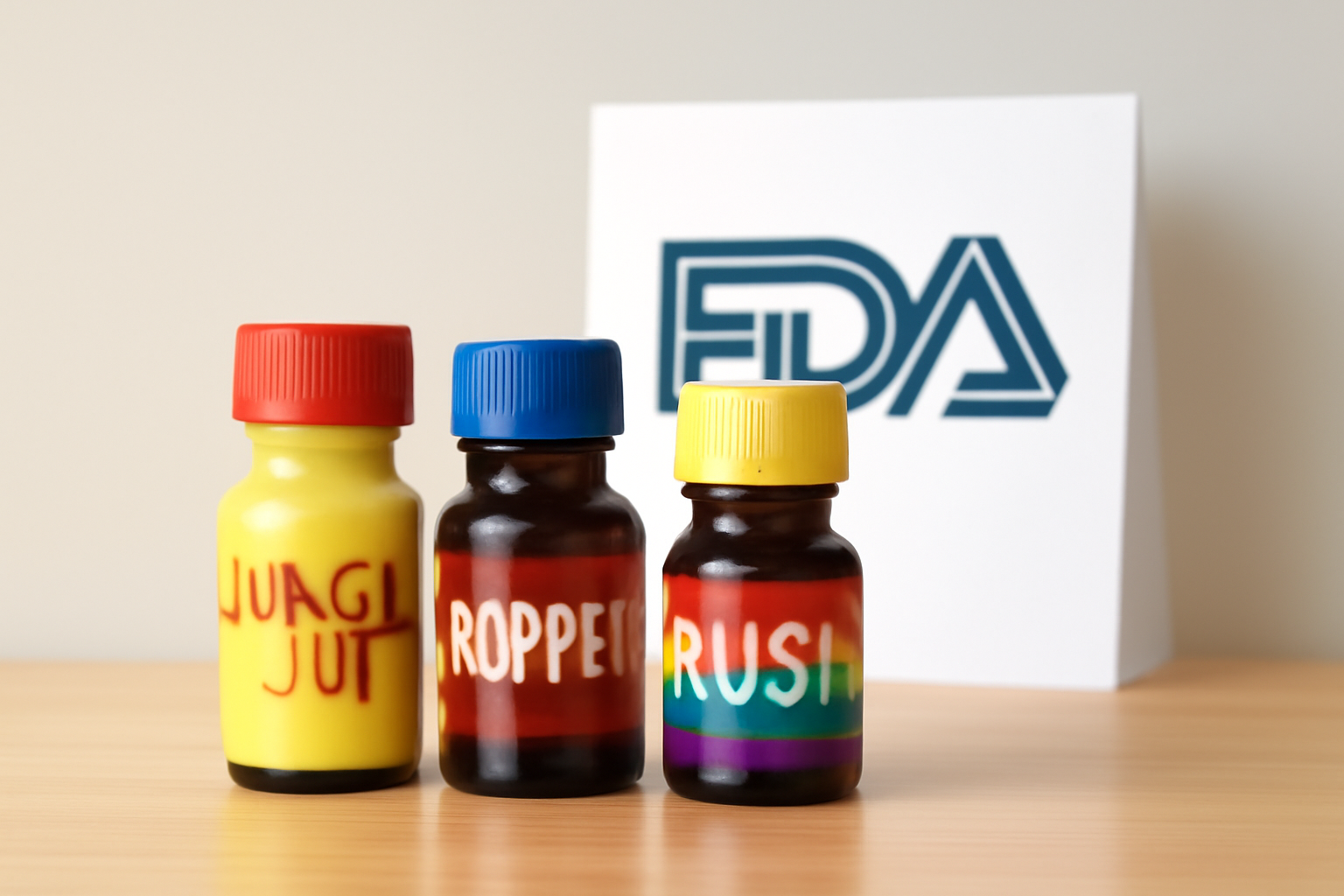
In a recent move, the Food and Drug Administration (FDA) has taken action against certain inhalant products, commonly known as "poppers," that are well-known and frequently used within the LGBTQ+ community. These products have traditionally been used as recreational aids and are said to enhance experiences such as dancing or sexual activities. However, the FDA has raised concerns about the safety and legality of these products, prompting a new wave of regulatory scrutiny.
Understanding "Poppers"
"Poppers" refer to a class of chemicals known as alkyl nitrites, which are often sold in small bottles and used as inhalants. They gained popularity in the 1970s and are often associated with the LGBTQ+ community as a means to relax muscles and enhance pleasure during certain activities. Despite their cultural prevalence, poppers are not without health risks. Short-term effects include a sudden drop in blood pressure, dizziness, and increased heart rate. Long-term use can lead to more severe health issues, including potential damage to the heart and other organs.
FDA's Rationale for Regulation
The FDA's recent actions are rooted in both health and legal concerns. The agency has deemed these products to be unapproved drugs, and as such, they are illegal to sell in the United States. The primary concern is the potential for serious health risks, especially when poppers are used frequently or in combination with other substances such as alcohol or erectile dysfunction medications. The FDA has issued warnings to several companies believed to be selling poppers illegally, emphasizing the need to remove them from the market to protect public health.
Impact on the LGBTQ+ Community
The crackdown on poppers has sparked significant discussion within the LGBTQ+ community. Some members view the FDA's actions as a necessary step to safeguard health, while others see it as an intrusion into personal freedoms and an oversight of the community's unique needs. Many within the community have expressed concerns that the crackdown could drive the sale of poppers underground, leading to unregulated and potentially more dangerous products reaching consumers.
Responses and Reactions
LGBTQ+ advocacy groups have been vocal about the need for the FDA to provide clearer guidance and education about the risks associated with poppers, rather than outright bans. They argue for a balanced approach that both protects public health and respects the autonomy of individuals to make informed choices about their bodies and health.
Furthermore, some health professionals have suggested exploring harm reduction strategies, which could include safer formulations and better consumer education. Such strategies have been deployed in other areas of public health, such as needle exchange programs for drug users, and could potentially offer a more constructive approach to managing the risks associated with poppers.
The Path Forward
The debate surrounding the FDA's crackdown on poppers highlights the ongoing tension between regulatory bodies and community autonomy. As the situation develops, it will be crucial for all stakeholders, including health professionals, advocacy groups, and regulatory agencies, to engage in open dialogue. The goal should be to find a solution that respects the unique cultural contexts of the LGBTQ+ community while ensuring that health risks are minimized.
In the meantime, individuals who choose to use poppers are advised to stay informed about the potential risks and to take precautions to minimize harm. This includes avoiding mixing poppers with other substances, understanding the legal status of these products, and seeking medical advice if they have concerns about health issues related to use.
The FDA's actions serve as a reminder of the delicate balance between regulation and individual choice, highlighting the need for ongoing conversations about health, safety, and personal freedom within marginalized communities.
Related Posts
Supreme Court to Address State Bans on Trans Women in Female Sports
The upcoming U.S. Supreme Court term promises to be a pivotal moment for transgender rights, as the nation's highest court has agreed to evaluate whether states have the authority to prohibit transgender women from participating in female sports competitions. This case, scheduled to be argued in the next term beginning October, is expected to have a significant impact on the future of sports inclu [...]
Megan Rapinoe and Sue Bird Announce Amicable Separation After Ten Years Together
In a heartfelt announcement that resonated deeply within the sports and LGBTQ+ communities, soccer star Megan Rapinoe and basketball legend Sue Bird have revealed their decision to part ways after nearly a decade together. The couple, who have been icons both on and off the field, shared the news with their fans through a joint statement on social media, expressing that the choice was made with mu [...]
Groundbreaking Ruling Ends Sodomy Ban for Police and Military in the Dominican Republic
The Constitutional Court of the Dominican Republic recently delivered a landmark decision on November 18th, ruling that the nation’s police and armed forces are not permitted to criminalize consensual same-sex relations among their personnel. This pivotal ruling is a significant stride towards equality and the protection of LGBTQ+ rights within these institutions. A Resounding Victory for Equal [...]