
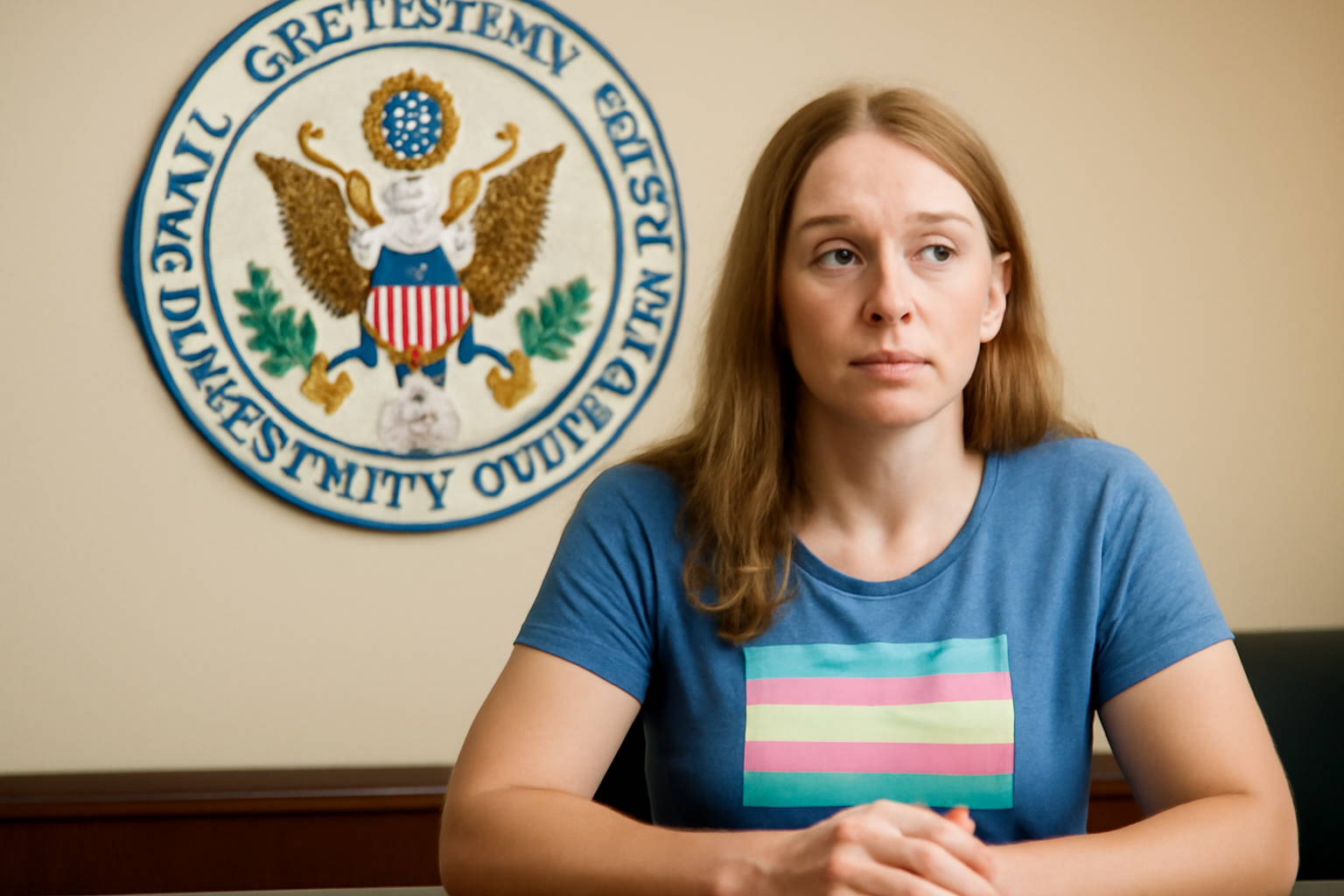
The Equal Employment Opportunity Commission (EEOC), the federal agency tasked with upholding laws against workplace discrimination in the United States, has recently announced the withdrawal of certain cases it initially filed to support transgender and nonbinary individuals. This decision has sparked significant concern and backlash from LGBTQ+ rights advocates and legal professionals.
Changes in EEOC's Direction
The EEOC's acting head has pointed to an executive order from former President Donald Trump, which prohibits what is termed "gender ideology" within the federal system. The acting chairperson signaled a shift in the agency's focus, emphasizing adherence to Trump's directive, which denies recognition of gender identities beyond the traditional binary framework.
EEOC Acting Chairperson Andrea Lucas stated, "Biology is not bigotry. Biological sex is real, and it matters." This statement underscores the agency’s realigned priorities towards what it describes as "defending the biological and binary reality of sex and related rights."
LGBTQ+ Community Response
The response from LGBTQ+ advocates has been swift and critical. Many argue that the EEOC's decision to drop these cases represents a direct contradiction to its mandate. Noreen Farrell, Executive Director of Equal Rights Advocates, highlighted that the Supreme Court's Bostock v. Clayton County decision clearly established that discrimination on the basis of sexual orientation or gender identity falls under the prohibition of sex discrimination as per Title VII of the Civil Rights Act of 1964. "This is not a matter of policy preference or political ideology; it’s settled law that the EEOC has a legal duty to enforce," Farrell asserted.
Rep. Mark Takano (D-CA), Chair of the Congressional Equality Caucus, has called for the resignation of Lucas and acting general counsel Andrew Rogers, stating that they are "willfully ignoring the duties of their offices" by not upholding protections for transgender and nonbinary workers.
Implications of the Decision
The EEOC's recent actions have profound implications. The agency was established to protect workers against discrimination following the enactment of the Civil Rights Act of 1964. Yet the agency received over 3,000 complaints of discrimination based on sexual orientation or gender identity in 2023 alone—a significant increase from the previous year. Despite this, resources and information related to such discrimination are reportedly being removed from the agency's website.
Former EEOC general counsel David Lopez criticized the decision, stating, "For the country’s anti-discrimination agency to discriminate against a group, and say: ‘We’re not going to enforce the law on their behalf’ itself is discrimination, in my view. It’s like a complete abdication of responsibility."
Specific Cases and Their Withdrawal
Among the cases withdrawn are several high-profile incidents:
- An Alabama case involved allegations against a Hilton Hotels hospitality group, accused of firing an employee identifying as gay, nonbinary, and male after learning of his gender identity.
- In New York, a transgender housekeeper reportedly faced harassment and misgendering from her supervisor, leading to her dismissal.
- In Illinois, a hog farm case described a man who allegedly exposed himself to a transgender coworker and engaged in inappropriate physical conduct.
- A California Lush store manager was accused of sexually harassing gender-non-conforming staff through offensive behaviors.
- Another case in Illinois involved transgender employees at a Wendy's franchise who were subjected to ongoing sexual harassment.
- A transgender cashier at Chicago O’Hare airport was reportedly "outed" by her manager, faced derogatory slurs, and was terminated after raising complaints.
Conclusion
The EEOC's reorientation has led to a critical juncture for the enforcement of anti-discrimination laws in the workforce, particularly concerning protections for LGBTQ+ individuals. The withdrawal of these cases not only raises questions about future enforcement but also about the broader commitment of federal agencies to uphold rights affirmed by landmark legal decisions.
Stay informed and support the fight for equality by subscribing to our newsletter, offering the latest insights and developments affecting the LGBTQ+ community.
Related Posts
Supreme Court to Address State Bans on Trans Women in Female Sports
The upcoming U.S. Supreme Court term promises to be a pivotal moment for transgender rights, as the nation's highest court has agreed to evaluate whether states have the authority to prohibit transgender women from participating in female sports competitions. This case, scheduled to be argued in the next term beginning October, is expected to have a significant impact on the future of sports inclu [...]
Megan Rapinoe and Sue Bird Announce Amicable Separation After Ten Years Together
In a heartfelt announcement that resonated deeply within the sports and LGBTQ+ communities, soccer star Megan Rapinoe and basketball legend Sue Bird have revealed their decision to part ways after nearly a decade together. The couple, who have been icons both on and off the field, shared the news with their fans through a joint statement on social media, expressing that the choice was made with mu [...]
Groundbreaking Ruling Ends Sodomy Ban for Police and Military in the Dominican Republic
The Constitutional Court of the Dominican Republic recently delivered a landmark decision on November 18th, ruling that the nation’s police and armed forces are not permitted to criminalize consensual same-sex relations among their personnel. This pivotal ruling is a significant stride towards equality and the protection of LGBTQ+ rights within these institutions. A Resounding Victory for Equal [...]