
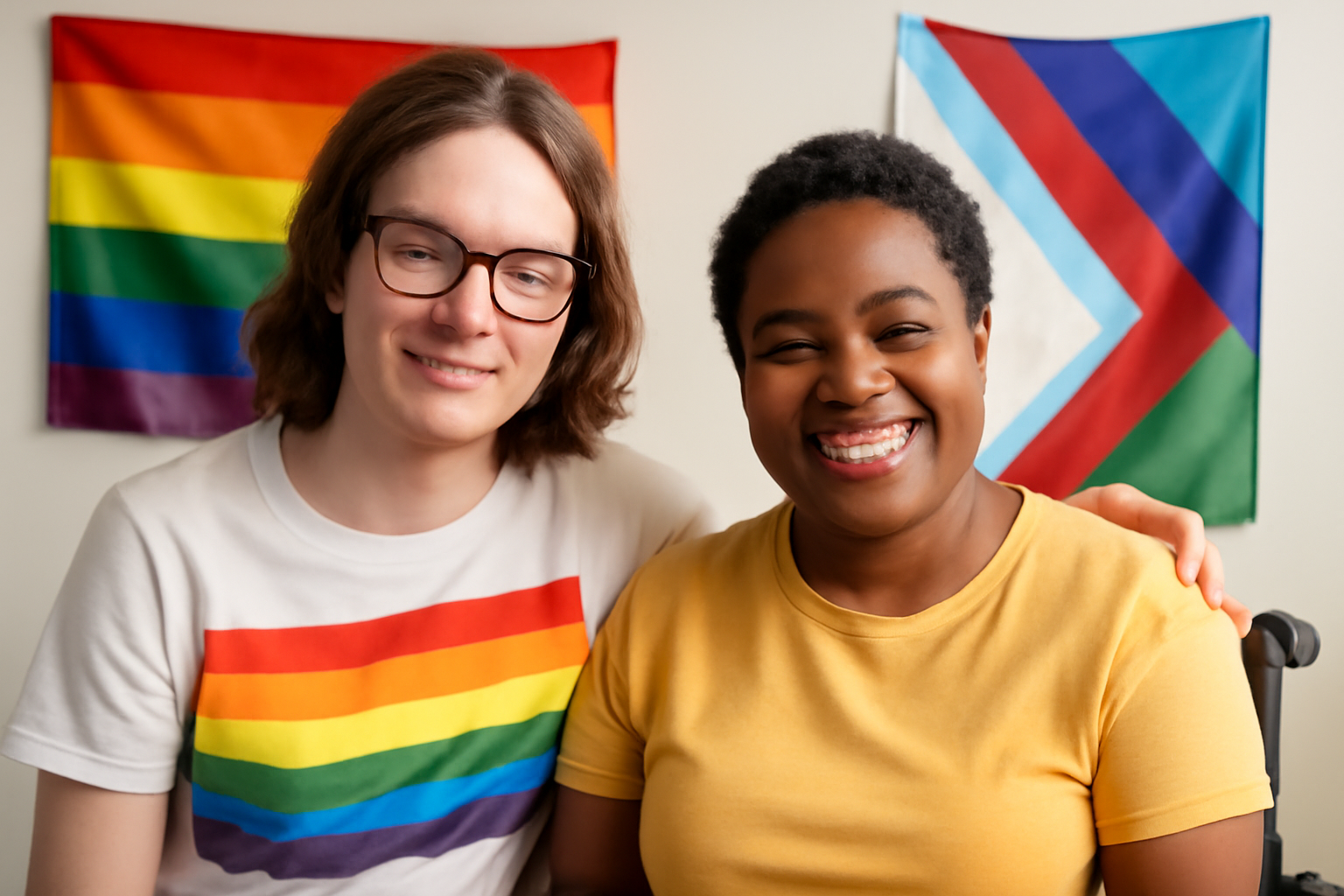
Exploring LGBTQ+ and Disability Pride: Celebrating Identity and Advocacy
Thinking back on my teenage years, I realize how little I understood LGBTQ+ and Disability Pride. Growing up, I was surrounded by people who condemned LGBTQ+ folks and treated disabilities like secrets. If you'd told me then that I'd become an openly autistic transgender advocate, traveling from Ukraine and Russia all over Europe and even down under in Australia, I'd have been shocked. But here I am, honored and eager in my work with various LGBTQ+ and disability rights organizations worldwide. Still, I can't shake off some memories. Like that time a comedian I loved made an awful joke, calling gay people "sick folks with hormonal problems." It was hurtful and made me question what there even was in Pride. Back then, I didn't feel able or ready, I guess, but seeing disabled kids get bullied? That stirred something in me—a fierce urge not just fight back but actually celebrate their grit and survival.What Pride Truly Means: Being Your Real Self
For me, Pride isn't just about accepting who you are—it's about really embracing it, celebrating your true self even when things get tough. This idea runs deep in both LGBTQ+ and Disability Pride. Both are about resilience, empowerment, and just living your truth, no matter what life throws your direction. July marks Disability Pride Month, a time rooted back in 1990 when Congress passed The Americans with Disabilities Act in America. Inspired by LGBTQ+ Pride, Disability Pride even has its own flag developed by Ann Magill in 2019. You'll see it proudly flying at different events, even online, alongside LGBTQ+ flags on platforms like Finch, a self-care app. Disability Pride has spread beyond U.S. borders, catching on in places like U.K. since 2015. My first brush with Disability Pride was at a queer community event in Russia.Moments That Matter: From Stonewall's Streets To The Capitol Crawl
One turning point in disability history, often likened Stonewall, was Capitol Crawl. In 1990, there was an unforgettable moment when over a thousand disabled folks converged on Capitol Hill. About 60 activists, including a brave young girl named Jennifer Keelan-Chaffins, left their mobility aids behind and crawled up those imposing steps. Their defiant act shed light on everyday barriers they faced and pushed through The ADA, marking disability rights history. Around globe, disability and LGBTQ+ rights activists find strength from each other. Unique pride events like Autistic Pride Day on June 18 are rising. I first took part in organizing these in Russia, thanks in no small part some amazing American activists and local LGBTQ+ groups who helped us out.Overcoming Obstacles: Crafting Truly Inclusive Pride Events
You'd think there's a natural alliance here, right? But big LGBTQ+ groups often miss fully inclusive mark. From Ukraine and Russia, Israel and Europe, and over in U.K., Australia, and America, I've seen that disability-inclusive Pride events are hard find. LGBTQ+ Pride culture typically centers around abled, neurotypical individuals, ignoring that about 16% in LGBTQ+ circles live with disabilities. This number may be even lower than reality considering autism and mental health issues prevalent in our community. Making inclusive Pride events isn't just possible; it's essential. It takes deliberate steps: - Check routes and venues—make them wheelchair friendly. - Support animals? Absolutely. - Quiet spaces soothe sensory overload. - Avoid flashing lights that trigger epilepsy. - Share clear, simple details about events. - Use image descriptions and communication badges. Most importantly, listen. “Nothing about us without us” resonates deeply. Disabled LGBTQ+ activists must be involved at every stage—planning, outreach, leadership. They're not tokens—they're vital voices and contributors.Creating a New Global Benchmark in Inclusion
The American LGBTQ+ movement wields significant global influence; imagine spotlighting accessibility at U.S. Pride events, setting a transformative worldwide standard. It sends a powerful message, especially now when political forces threaten LGBTQ+ and disability rights. Accessible and inclusive Pride marches aren't just nice-to-haves—they're necessities. By coming together in our shared history, tearing down barriers, and standing against bigotry, we ensure no one's left out in cold.Related Posts
Supreme Court to Address State Bans on Trans Women in Female Sports
The upcoming U.S. Supreme Court term promises to be a pivotal moment for transgender rights, as the nation's highest court has agreed to evaluate whether states have the authority to prohibit transgender women from participating in female sports competitions. This case, scheduled to be argued in the next term beginning October, is expected to have a significant impact on the future of sports inclu [...]
Megan Rapinoe and Sue Bird Announce Amicable Separation After Ten Years Together
In a heartfelt announcement that resonated deeply within the sports and LGBTQ+ communities, soccer star Megan Rapinoe and basketball legend Sue Bird have revealed their decision to part ways after nearly a decade together. The couple, who have been icons both on and off the field, shared the news with their fans through a joint statement on social media, expressing that the choice was made with mu [...]
Groundbreaking Ruling Ends Sodomy Ban for Police and Military in the Dominican Republic
The Constitutional Court of the Dominican Republic recently delivered a landmark decision on November 18th, ruling that the nation’s police and armed forces are not permitted to criminalize consensual same-sex relations among their personnel. This pivotal ruling is a significant stride towards equality and the protection of LGBTQ+ rights within these institutions. A Resounding Victory for Equal [...]