
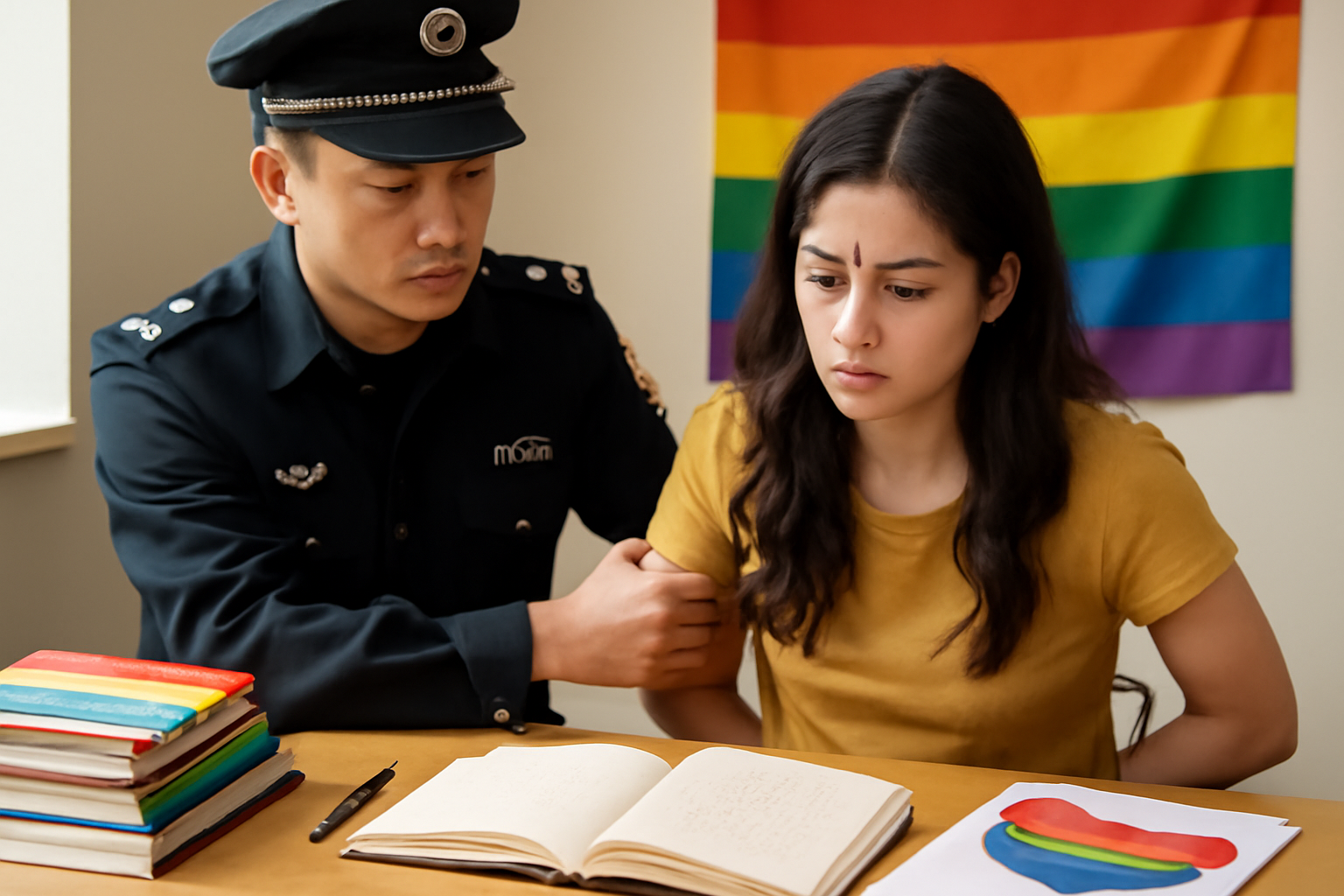
In a series of alarming developments, Chinese authorities have escalated efforts to clamp down on authors of LGBTQ+ themed erotic literature, resulting in a wave of arrests and a chilling impact on the creative community. According to recent reports, numerous writers have been detained, with many facing the prospect of severe prison sentences.
The crackdown appears to be part of broader governmental measures to control and censor content deemed contrary to "social morals." Most notably targeted are authors specializing in danmei, a genre akin to Japanese manga that focuses on romantic and sexual relationships between male characters.
Intense Legal Measures
In the province of Anhui, west of Shanghai, more than 50 writers have reportedly been apprehended since mid-year, with sentences imposed extending up to four and a half years. These developments have been documented by news outlets and through social media, although coverage remains sparse in China's state-operated media.
Legal documents from the Jixi County People’s Court reveal that at least ten individuals have been sentenced for disseminating gay-themed erotica via online channels. The police operations were executed by a "special task force" targeting contributors to the Taiwan-based Haitang Literature site, a popular platform for adult fiction, as reported by regional newspapers.
Anxiety and Uncertainty Among Writers
Unsurprisingly, the arrests have sparked significant anxiety among the writing community. One author recounted receiving a warning from a colleague who had been temporarily released on bail. An urgent message posted on a gaming bulletin board warned fellow writers to prepare for potential legal repercussions, highlighting the nationwide scope of the crackdown.
"We verified the details with other writers, and it became clear that this campaign is being enforced countrywide," the anonymous poster elaborated. "It has become impossible to reach distributors in China, as they are facing similar crackdowns."
Legal Framework and Sentencing
Under current Chinese law, disseminating "obscene electronic messages" is prohibited, with the definition encompassing a wide range of media, including literature. A pivotal 1997 law outlines prohibitions against content containing sexual acts, and the legal framework has since expanded to address online publications.
The severity of punishment is often correlated with financial gain from the literary works in question. Writers whose income exceeds 250,000 yuan (approximately US$34,500) from selling such material can face life sentences. However, some have seen their penalties reduced by demonstrating the return of profits through crowdfunding or personal means.
Broader Implications and Historical Context
The targeting of erotic literature reflects ongoing censorship practices in China, which critics argue infringe on freedom of expression and disproportionately affect marginalized groups. The crackdown also underscores challenges faced by LGBTQ+ communities in an environment where state narratives heavily influence social policy.
Prominent cases like that of Tianyi, a writer imprisoned in 2018 for producing a novel with explicit content, highlight the intense scrutiny such works face. Her case, involving the sale of 7,000 copies, received international attention, prompting discussions about human rights and censorship.
Despite the obstacles, advocates continue to work towards greater acceptance and understanding. Legal professionals like Guangdong-based lawyer Chen Zhaonan criticize the government’s reliance on inflated sales figures to justify harsh sentences, calling for more balanced approaches that consider the lack of direct harm in such cases.
The ongoing situation serves as a reminder of the vulnerabilities faced by creatives in restrictive environments. As global awareness of these issues increases, the hope remains for positive change and greater protection for those advocating through art and literature.
Related Posts
Supreme Court to Address State Bans on Trans Women in Female Sports
The upcoming U.S. Supreme Court term promises to be a pivotal moment for transgender rights, as the nation's highest court has agreed to evaluate whether states have the authority to prohibit transgender women from participating in female sports competitions. This case, scheduled to be argued in the next term beginning October, is expected to have a significant impact on the future of sports inclu [...]
Megan Rapinoe and Sue Bird Announce Amicable Separation After Ten Years Together
In a heartfelt announcement that resonated deeply within the sports and LGBTQ+ communities, soccer star Megan Rapinoe and basketball legend Sue Bird have revealed their decision to part ways after nearly a decade together. The couple, who have been icons both on and off the field, shared the news with their fans through a joint statement on social media, expressing that the choice was made with mu [...]
Groundbreaking Ruling Ends Sodomy Ban for Police and Military in the Dominican Republic
The Constitutional Court of the Dominican Republic recently delivered a landmark decision on November 18th, ruling that the nation’s police and armed forces are not permitted to criminalize consensual same-sex relations among their personnel. This pivotal ruling is a significant stride towards equality and the protection of LGBTQ+ rights within these institutions. A Resounding Victory for Equal [...]