
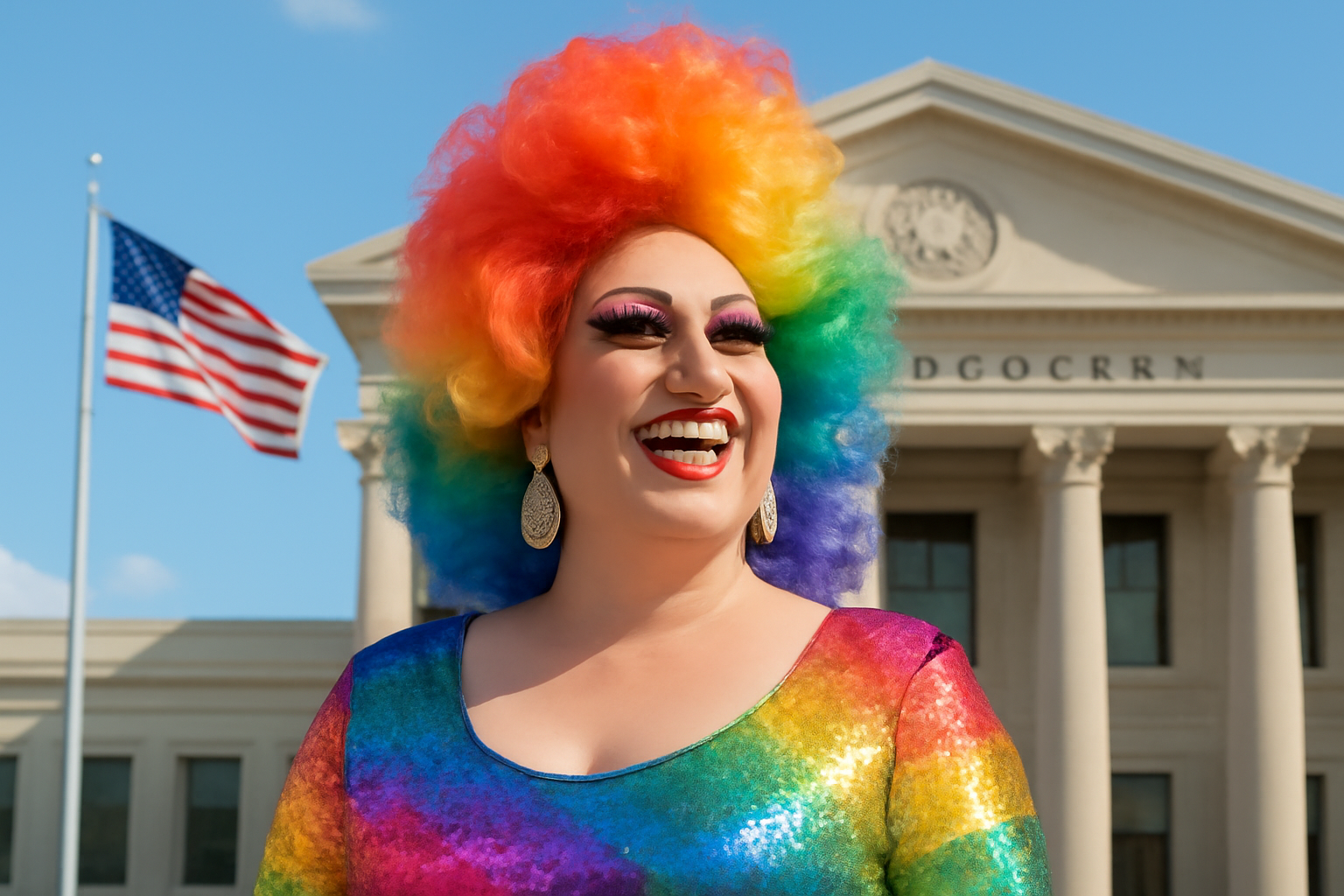
In a landmark ruling that has set a significant precedent for LGBTQ+ rights, a federal judge has declared that Texas A&M University's ban on drag performances is unconstitutional. This decision marks a pivotal moment in the ongoing struggle for free expression and the rights of LGBTQ+ individuals within educational institutions.
The case arose when Texas A&M University, under pressure from certain political groups, implemented a policy that restricted drag performances on campus. The university's administration argued that these events were disruptive and not in line with the values they wished to promote. However, many students and faculty members saw this as a direct attack on the LGBTQ+ community, which has long used drag as a form of self-expression and cultural commentary.
The Legal Challenge
Shortly after the ban was announced, a group of students, supported by civil rights organizations, filed a lawsuit claiming that the university's actions violated their First Amendment rights. They argued that drag performances are a form of protected speech and that banning them was an act of censorship.
The plaintiffs included members of the university’s LGBTQ+ club, as well as several drag performers who had previously participated in events on campus. These individuals testified that drag was not only a form of entertainment but also a powerful medium for political and social commentary. They contended that the ban was an attempt to silence marginalized voices.
The Court's Decision
In his ruling, the judge emphasized the importance of free speech, especially in an academic setting. He stated that the university's policy was overly broad and not narrowly tailored to achieve any legitimate educational goals. “The essence of higher education is to foster an environment where diverse ideas can be expressed and debated," the judge wrote in his opinion. "By imposing a ban on drag performances, the university stifles creativity and suppresses the voices of a significant segment of the student body.”
The ruling pointed out that while the university has the authority to regulate events on campus, any such regulations must not infringe upon the constitutional rights of students and faculty. The court found that no substantial evidence was provided to support the claim that drag performances were inherently disruptive or harmful to the university community.
Reactions and Implications
The decision was met with widespread approval from LGBTQ+ advocacy groups and free speech advocates. "This is a victory not just for the LGBTQ+ community but for everyone who values the freedom of expression," said a spokesperson for one of the organizations that supported the lawsuit. "It is a reminder that even in challenging times, the constitution remains a powerful protector of our rights."
On the other hand, some conservative groups expressed disappointment with the ruling, arguing that the university should have more autonomy in deciding what types of events are appropriate on its campus. Despite this, the court's decision is unlikely to be overturned, given the strong constitutional arguments presented.
For Texas A&M University, the ruling means reviewing and potentially revising their policies to ensure they comply with constitutional standards. University officials have stated they are considering their options, including whether to appeal the decision or to work with students to find a mutually agreeable solution.
Looking Forward
This case has broader implications for universities across the country. Many institutions are watching closely, as this ruling could influence how they handle similar issues. The balance between maintaining a respectful campus environment and upholding the principles of free speech is a delicate one, and this ruling provides valuable guidance.
As the conversation around LGBTQ+ rights and free expression continues to evolve, this ruling affirms the fundamental principle that universities should be places where diverse and sometimes challenging ideas can be explored and discussed without fear of censorship.
The victory is a reminder of the power of activism and the legal system in protecting civil rights, and it serves as an inspiration for future generations of students advocating for social justice and equality.
Related Posts
Supreme Court to Address State Bans on Trans Women in Female Sports
The upcoming U.S. Supreme Court term promises to be a pivotal moment for transgender rights, as the nation's highest court has agreed to evaluate whether states have the authority to prohibit transgender women from participating in female sports competitions. This case, scheduled to be argued in the next term beginning October, is expected to have a significant impact on the future of sports inclu [...]
Megan Rapinoe and Sue Bird Announce Amicable Separation After Ten Years Together
In a heartfelt announcement that resonated deeply within the sports and LGBTQ+ communities, soccer star Megan Rapinoe and basketball legend Sue Bird have revealed their decision to part ways after nearly a decade together. The couple, who have been icons both on and off the field, shared the news with their fans through a joint statement on social media, expressing that the choice was made with mu [...]
Groundbreaking Ruling Ends Sodomy Ban for Police and Military in the Dominican Republic
The Constitutional Court of the Dominican Republic recently delivered a landmark decision on November 18th, ruling that the nation’s police and armed forces are not permitted to criminalize consensual same-sex relations among their personnel. This pivotal ruling is a significant stride towards equality and the protection of LGBTQ+ rights within these institutions. A Resounding Victory for Equal [...]