
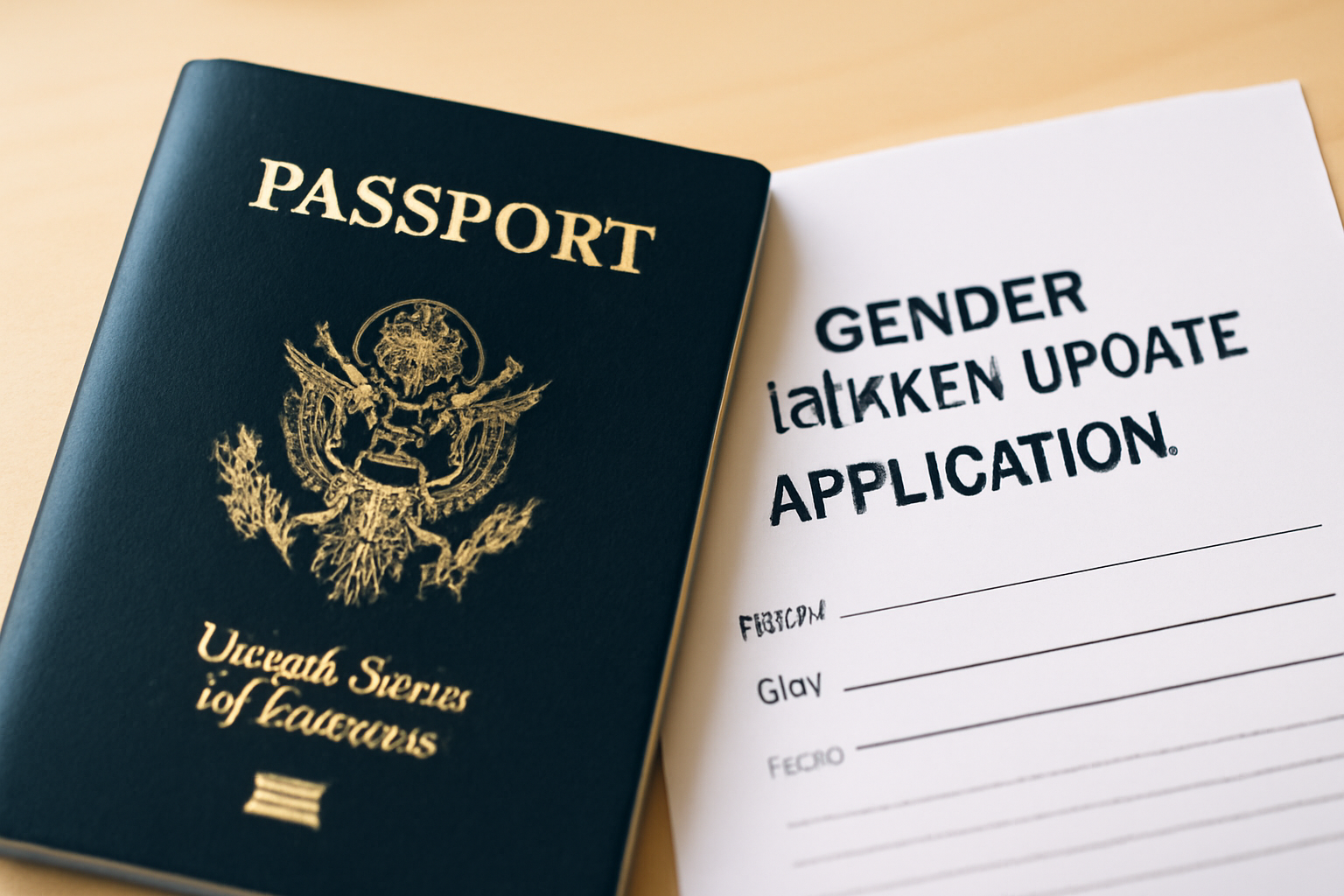
In a significant move, Secretary of State Marco Rubio has put a halt on all applications for U.S. passports with an 'X' gender marker. This option, which allows individuals who do not identify strictly as male or female to have their passports reflect their gender identity, was introduced during the Biden administration. Additionally, Rubio has instructed the suspension of applications seeking to update existing gender markers on passports.
This decision was conveyed through an internal State Department memo, where Rubio emphasized a policy standpoint that asserts "an individual’s sex is not subject to change." This stance aligns with broader policy directives aimed at revisiting how the federal government approaches gender and sex on official documents.
Policy Changes and Their Implications
According to sources familiar with the memo, it dictates that "sex, not gender, shall be utilized" in all official documentation processes, including passports. Consequently, any application requesting an 'X' sex marker or a change to the existing sex marker will be suspended until further notice.
These changes come in the wake of an executive order signed by former President Donald Trump earlier this week. The order, titled "Defending Women from Gender Ideology Extremism and Restoring Biological Truth to the Federal Government," asserts the existence of only two sexes, as defined by biological characteristics such as reproductive cells.
The order mandates that all federal entities "purge any communications, policies, or documents that promote gender ideology." It further decrees that federal funds should not support such ideologies, impacting a range of federal operations, from documentation to prison policies.
Community Backlash and Historical Context
The introduction of the 'X' gender marker was a landmark decision under the Biden administration, setting a precedent for inclusivity and recognition of non-binary and gender non-conforming individuals. "When a person obtains identity documents that reflect their true identity, they live with greater dignity and respect," noted Jessica Stern, a Special Diplomatic Envoy for LGBTQ Rights at the time of its introduction.
The ability to update gender markers without medical certification was another forward-thinking change announced by then-Secretary of State Anthony Blinken, aimed at making the process easier for transgender Americans.
"By offering a third gender marker, we ensure our systems are inclusive of diverse gender identities," Stern explained during the policy’s rollout. This change was lauded as a significant step towards acknowledging the complexities of gender beyond the traditional binary framework.
With the reversal of these policies, the LGBTQ+ community faces significant challenges. The freezing of applications represents a rollback of rights they had fought hard to secure. Critics argue that such measures undermine the dignity and safety of individuals whose identities do not fit traditional classifications.
Future of LGBTQ+ Rights
In response to the policy change, the White House has clarified that existing passports will remain valid. However, upon renewal, passports will need to reflect an individual's "God-given sex, as determined at birth," aligning with the newly reinstated policy.
This development has sparked widespread concern and debate. LGBTQ+ rights organizations are mobilizing to challenge these changes, seeking to restore and protect the advances made in gender identity recognition.
As the situation unfolds, the LGBTQ+ community and its allies continue to advocate for policies that reflect the diversity and complexity of gender identity. The struggle for recognition and equality in legal documentation is a reflection of the broader fight for LGBTQ+ rights globally.
Stay informed and engaged by subscribing to newsletters dedicated to LGBTQ+ news. These resources provide critical insights into how political developments impact the community at large.
Related Posts
Supreme Court to Address State Bans on Trans Women in Female Sports
The upcoming U.S. Supreme Court term promises to be a pivotal moment for transgender rights, as the nation's highest court has agreed to evaluate whether states have the authority to prohibit transgender women from participating in female sports competitions. This case, scheduled to be argued in the next term beginning October, is expected to have a significant impact on the future of sports inclu [...]
Megan Rapinoe and Sue Bird Announce Amicable Separation After Ten Years Together
In a heartfelt announcement that resonated deeply within the sports and LGBTQ+ communities, soccer star Megan Rapinoe and basketball legend Sue Bird have revealed their decision to part ways after nearly a decade together. The couple, who have been icons both on and off the field, shared the news with their fans through a joint statement on social media, expressing that the choice was made with mu [...]
Groundbreaking Ruling Ends Sodomy Ban for Police and Military in the Dominican Republic
The Constitutional Court of the Dominican Republic recently delivered a landmark decision on November 18th, ruling that the nation’s police and armed forces are not permitted to criminalize consensual same-sex relations among their personnel. This pivotal ruling is a significant stride towards equality and the protection of LGBTQ+ rights within these institutions. A Resounding Victory for Equal [...]