
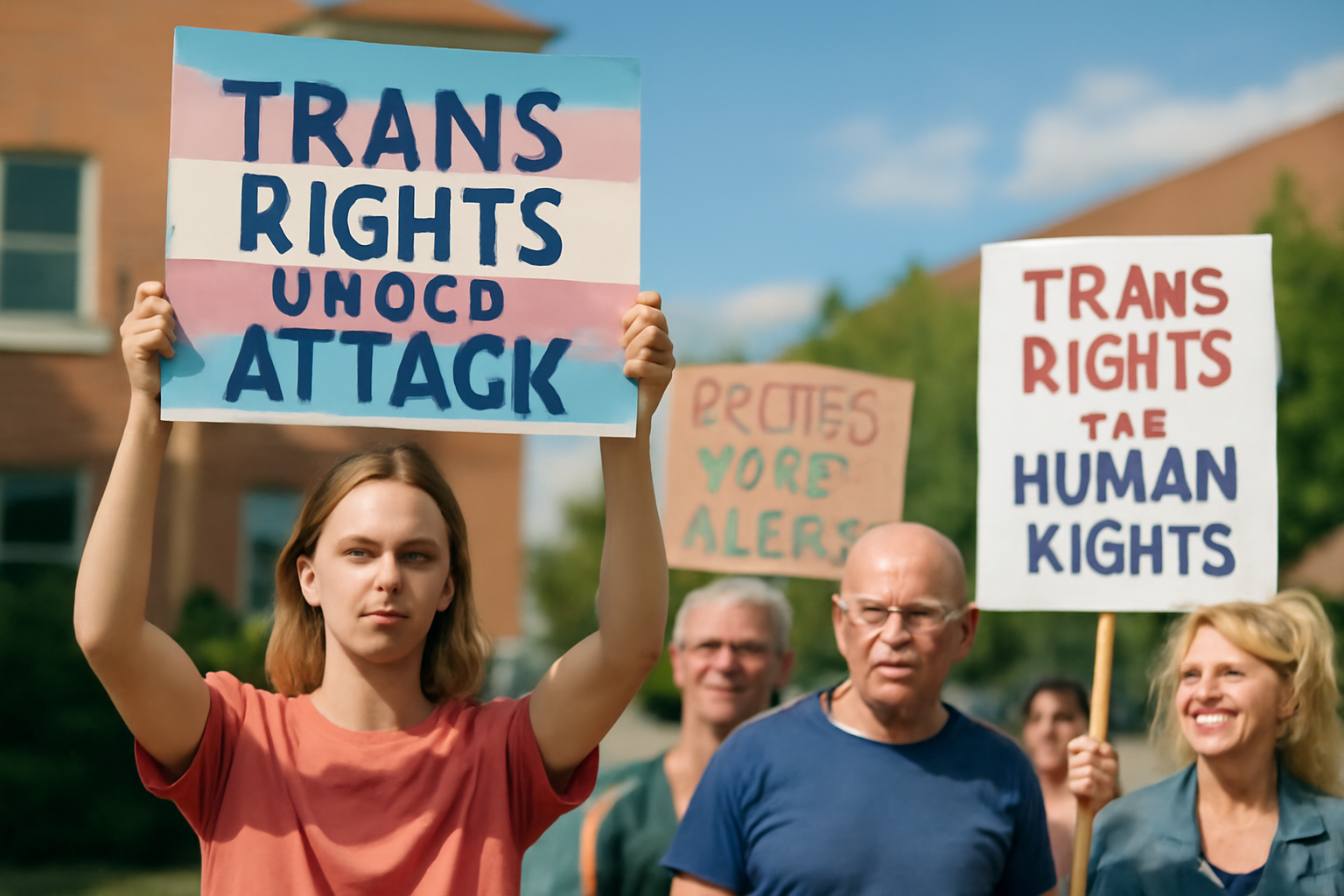
Transgender rights under attack in Iowa
Iowa has found itself in a whirlwind after Governor Kim Reynolds signed a contentious law that strips away civil rights protections from transgender people. This move positions Iowa as a pioneer—but not in a good sense—as it's now leading in rolling back these essential protections, echoing former President Donald Trump's push in a similar direction.
Protests and political friction
The law has sparked a wave of protests throughout Iowa, drawing thousands who vehemently oppose it. Supporters, mostly on the conservative side, argue they're protecting women and children in spaces like locker rooms and sports teams. However, studies suggest other issues, like lackluster athletic funding and certain behaviors by cisgender males, actually pose bigger threats than letting trans athletes compete. Despite this evidence, Iowa's Republican-dominated legislature hurriedly passed it, highlighting deep political and social rifts both at home and across America.
Governor's stance and opponents' rebuttals
Governor Reynolds has stood by her decision, claiming it's just "common sense" when considering biological differences between men and women. Critics see her words as spreading misconceptions about gender identity and ignoring scientific understanding. Reynolds also pointed fingers at taxpayer dollars being used on gender reassignment surgeries under previous laws—an assertion experts have called misleading.
Medical professionals and psychologists stress that gender-affirming care isn't just important—it's critical. The courts have even pointed out that denying such care could fall foul under protections against cruel and unusual punishment.
Transgender rights at a crossroads in America
The political debate on transgender rights in America has been on a rollercoaster, especially during Trump's tenure, where there was a noticeable attempt to wind back federal support. This erosion has set off alarms among LGBTQ+ advocates up and down the country.
Those opposing Iowa's fresh legislation, primarily LGBTQ+ advocacy groups and Democratic lawmakers, argue it effectively ushers in discrimination related to housing, jobs, and education. Attempts to edit the bill to safeguard these rights were quashed by Republicans, leaving the bill's stated aim—to protect women and children—looking rather dubious.
Community voices speak out
Max Mowitz, at the helm of One Iowa, voiced his frustration, saying, "Governor Reynolds has positioned Iowa on the wrong side of history. This law sends a chilling message: that transgender Iowans don't deserve the same rights, dignity, and protections as everyone else."
State Representative Aime Wichtendahl, Iowa's lone transgender legislator, has been upfront with her criticism, stating that the law seems intended to "erase us from public life." She pointed to how damaging it could be to the safety, stability, and opportunities available to transgender people in Iowa.
Looking ahead: national and future implications
With the debate far from over, many worry about how these developments in Iowa might ripple out, affecting transgender rights nationwide. It opens up a complex conversation, with advocacy groups and legal battles likely shaping what comes down the pike.
This situation in Iowa reflects a broader, troubling pattern of attempts to curtail transgender rights, spurring a push for more inclusive policies at both state and federal levels.
Related Posts
Supreme Court to Address State Bans on Trans Women in Female Sports
The upcoming U.S. Supreme Court term promises to be a pivotal moment for transgender rights, as the nation's highest court has agreed to evaluate whether states have the authority to prohibit transgender women from participating in female sports competitions. This case, scheduled to be argued in the next term beginning October, is expected to have a significant impact on the future of sports inclu [...]
Megan Rapinoe and Sue Bird Announce Amicable Separation After Ten Years Together
In a heartfelt announcement that resonated deeply within the sports and LGBTQ+ communities, soccer star Megan Rapinoe and basketball legend Sue Bird have revealed their decision to part ways after nearly a decade together. The couple, who have been icons both on and off the field, shared the news with their fans through a joint statement on social media, expressing that the choice was made with mu [...]
Groundbreaking Ruling Ends Sodomy Ban for Police and Military in the Dominican Republic
The Constitutional Court of the Dominican Republic recently delivered a landmark decision on November 18th, ruling that the nation’s police and armed forces are not permitted to criminalize consensual same-sex relations among their personnel. This pivotal ruling is a significant stride towards equality and the protection of LGBTQ+ rights within these institutions. A Resounding Victory for Equal [...]