
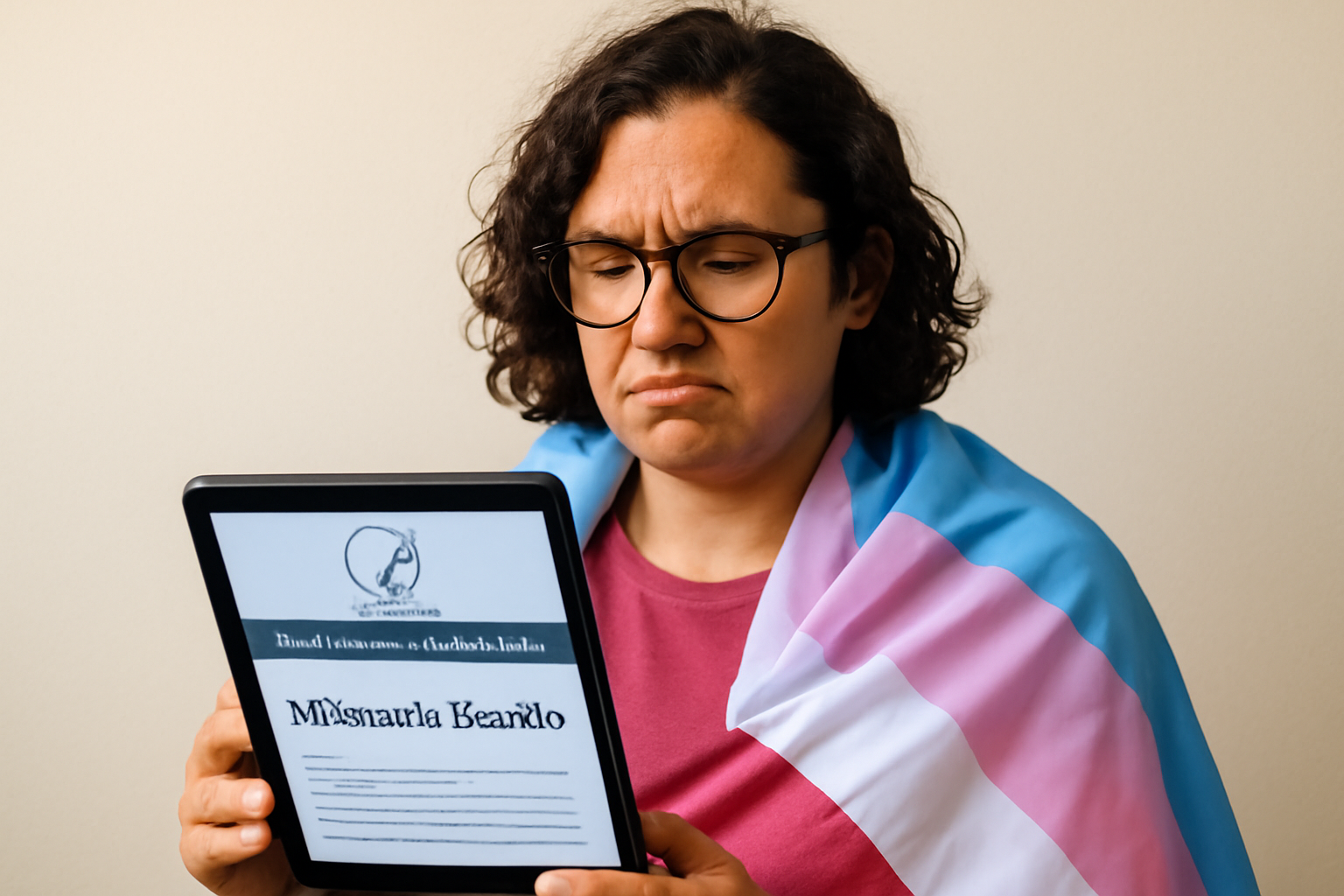
The Department of Health and Human Services (HHS) has recently unveiled a new piece of guidance and a corresponding "women's health" webpage that has sparked significant controversy among LGBTQ+ advocates and civil rights organizations. The language used in these new resources is reminiscent of former President Donald Trump's executive orders, which were widely criticized for their transphobic nature. This latest move has been described as "mean-spirited," "unscientific," and "ignorant of the complexity of human experience" by various advocacy groups.
The webpage in question prominently features a video with Riley Gaines, an activist known for her efforts to ban transgender women from participating in women's sports. Gaines became an activist on this issue after tying for fifth place with a transgender woman at a swim meet three years ago. In the video, Gaines praises Trump for his executive order that prohibits trans women from competing in women's sports, claiming it "protects female athletes." However, critics argue that such orders fail to address genuine issues in women's sports, including unequal funding, access to resources, and the pervasive problems of abuse and wage inequality.
A Return to "Biological Truth"?
The guidance introduced by HHS Secretary Robert F. Kennedy, Jr. emphasizes a return to what he calls "biological truth," dismissing the previous administration's policies that sought to include gender identity as a factor in public life. Kennedy's guidance, which aligns closely with Trump's orders, defines sex as strictly male or female, ignoring the existence and needs of intersex and transgender individuals.
The guidance advises the application of a binary understanding of sex to medical diagnosis and treatment, a stance that aligns with the broader effort to erase trans individuals from federal health considerations. This approach has been called out by civil rights groups as ignoring medical consensus and the lived experiences of transgender and non-binary individuals.
The webpage associated with this guidance provides links to several of Trump's executive orders that seek to ban what they term "gender ideology," prohibit trans women from participating in women's sports, and restrict access to gender-affirming healthcare. These orders and the webpage have been criticized for perpetuating harmful stereotypes and misinformation about transgender people.
Criticism from Advocates and Experts
Riley Gaines, featured on the webpage, supports these initiatives, arguing that recognizing biological differences is essential for safeguarding women's sports. She claims Trump's policies ensure fair competition and protect the privacy and safety of female athletes. However, prominent voices in the LGBTQ+ community, such as Rodrigo Heng-Lehtinen of Advocates for Trans Equality, have criticized these policies for failing to tackle real issues in athletics, like funding inequities and gender pay gaps.
Cait Smith, director of LGBTQ+ policy at the Center for American Progress (CAP), strongly condemned the new HHS guidance, labeling it "mean-spirited" and "unscientific." Smith pointed out that the language used is a "copy-paste" job from anti-trans bills that CAP has consistently opposed. He views this guidance as a public relations stunt rather than a genuine effort to address health issues.
Omar Gonzalez from Lambda Legal echoed these concerns, stating that the guidance "ignores the complexity of human experience," particularly regarding gender identity and expression. Matthew Rose from the Human Rights Campaign voiced his disappointment, highlighting that the guidance comes at a time when the country faces multiple health crises and federal health workers face layoffs. He criticized the use of resources on what he called "anti-science, anti-health PR campaigns."
Community Response
In response to these developments, civil rights organizations and advocacy groups are mobilizing to support schools and medical institutions in navigating these new policies. They are also initiating legal challenges to prevent the enforcement of Trump's orders, which they argue threaten persecution for promoting inclusive policies and providing gender-affirming care.
As the debate continues, it underscores the ongoing struggle for transgender rights and recognition in the United States. The focus on divisive policies rather than inclusive and scientifically backed health practices raises concerns about the future direction of health policy. Advocacy groups remain committed to fighting against these orders, emphasizing the need for policies that respect and protect the rights and dignity of all individuals, regardless of gender identity.
Stay informed about issues that impact the LGBTQ+ community by subscribing to our newsletter.
Related Posts
Supreme Court to Address State Bans on Trans Women in Female Sports
The upcoming U.S. Supreme Court term promises to be a pivotal moment for transgender rights, as the nation's highest court has agreed to evaluate whether states have the authority to prohibit transgender women from participating in female sports competitions. This case, scheduled to be argued in the next term beginning October, is expected to have a significant impact on the future of sports inclu [...]
Megan Rapinoe and Sue Bird Announce Amicable Separation After Ten Years Together
In a heartfelt announcement that resonated deeply within the sports and LGBTQ+ communities, soccer star Megan Rapinoe and basketball legend Sue Bird have revealed their decision to part ways after nearly a decade together. The couple, who have been icons both on and off the field, shared the news with their fans through a joint statement on social media, expressing that the choice was made with mu [...]
Groundbreaking Ruling Ends Sodomy Ban for Police and Military in the Dominican Republic
The Constitutional Court of the Dominican Republic recently delivered a landmark decision on November 18th, ruling that the nation’s police and armed forces are not permitted to criminalize consensual same-sex relations among their personnel. This pivotal ruling is a significant stride towards equality and the protection of LGBTQ+ rights within these institutions. A Resounding Victory for Equal [...]