
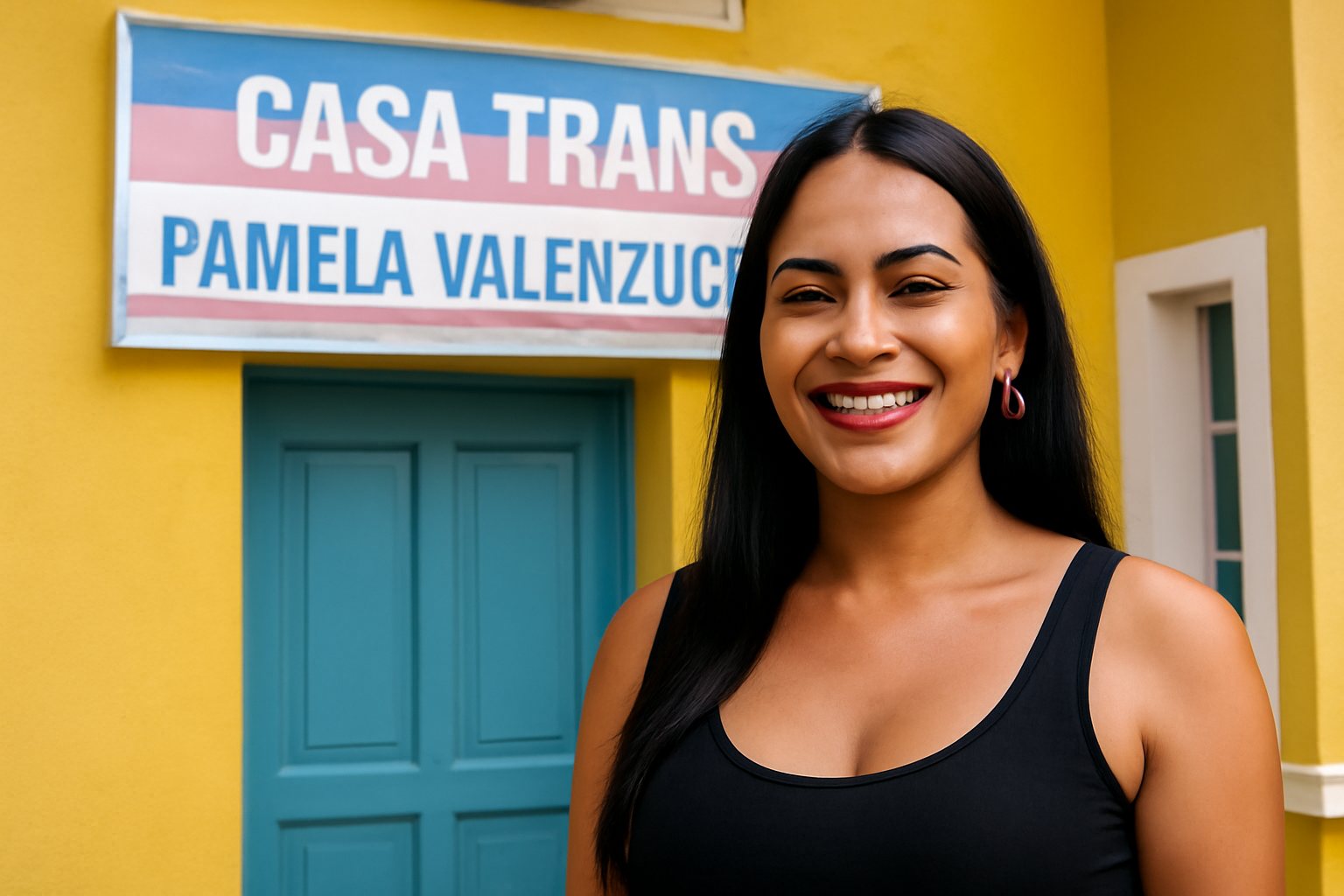
In Bolivia, where discrimination and exclusion remain significant barriers for the LGBTQ community, Casa Trans Pamela Valenzuela shines as a vital refuge and support center for transgender individuals. Since its inception in 2022, Casa Trans has been more than just a shelter; it has been a beacon of hope, providing essential services including legal, medical, psychological, and nutritional support.
Comprehensive Support for Transgender Individuals
Located in La Paz's San Pedro neighborhood, Casa Trans operates daily, offering a welcoming environment with a soup kitchen that allows visitors to prepare their meals. While anyone in need can receive a meal, Casa Trans primarily focuses its efforts on supporting transgender men and women.
The driving force behind Casa Trans is Luna Humérez, president of the Organización de Travestis, Transgéneros y Transexuales Femeninas (Otraf) in Bolivia. Humérez explained that the project was launched in response to the increased needs that emerged during the COVID-19 pandemic, when many trans individuals lost their livelihoods and homes due to the collapse of informal work and sex work.
"What inspired the creation of the Casa Trans was post-COVID," Humérez shared. "During the pandemic, many in the trans community, especially the Latino trans community, struggled with housing and food insecurity, as they were unable to work due to lockdowns and the nature of their employment."
Thanks to support from the Global Fund, Humérez and fellow activists established a space offering free meals and shelter from Monday through Friday. The services provided by Casa Trans have continuously expanded over time. "We have broadened the spaces available and developed a multidisciplinary care team," Humérez noted, listing professionals such as social workers, psychologists, endocrinologists, general practitioners, legal advisors, and lawyers who offer their support on-site.
The space at Casa Trans has evolved significantly, now accommodating and assisting more individuals than ever before, including not only LGBTQ individuals but also those in other vulnerable situations. Despite some progress in legal and social arenas, LGBTQ people in Bolivia still face substantial hurdles in accessing adequate healthcare, education, employment, and housing.
Addressing Discrimination and Health Care Gaps
A recent survey involving Bolivia's LGBTQ community revealed that over 60 percent of participants had experienced some form of discrimination, ranging from verbal and physical abuse to exclusion within workplaces and educational institutions. A worrying 33 percent reported having no access to health care, with sexual minorities and transgender women being the most affected. Additionally, a staggering 65 percent of respondents stated they were unaware of how to access Bolivia's Unified Health System.
While Bolivia's legislation regarding LGBTQ rights has seen some improvements, significant gaps remain. "Although we have achieved some progress with laws like the Gender Identity Law and the Anti-discrimination Law, they are insufficient," Humérez explained. "The trans population in Bolivia still lacks the same rights as their cisgender counterparts, which makes our continued fight for full recognition and equal rights crucial."
Humérez also emphasized the importance of political engagement, urging LGBTQ activists to participate actively in the upcoming elections. "It is vital for us to be political actors in these elections," she stated.
Challenges and Future Prospects
Despite the indispensable work it does, Casa Trans faces ongoing challenges, particularly in securing funding. Humérez highlighted the difficulty in obtaining direct financial support, mentioning that the dedicated individuals working at Casa Trans do so on a volunteer basis. "The challenges are complicated due to our lack of direct funding," she said.
International developments also play a role in the financial uncertainties faced by Casa Trans. Humérez expressed concerns about the impact of policy changes from abroad, such as those from the United States. "Changes in foreign policy, like those initiated by previous U.S. administrations, can complicate our efforts to secure enough funding," Humérez explained. "It is imperative that we receive financial support to continue our important work, as it directly impacts the lives and well-being of our community."
The existence and operations of Casa Trans Pamela Valenzuela exemplify the pressing need to address inequalities and combat discrimination faced by Bolivia's LGBTQ community. As an essential resource, Casa Trans not only provides immediate aid but also paves the way for a more inclusive and equitable future for transgender and LGBTQ individuals in Bolivia.
Related Posts
Supreme Court to Address State Bans on Trans Women in Female Sports
The upcoming U.S. Supreme Court term promises to be a pivotal moment for transgender rights, as the nation's highest court has agreed to evaluate whether states have the authority to prohibit transgender women from participating in female sports competitions. This case, scheduled to be argued in the next term beginning October, is expected to have a significant impact on the future of sports inclu [...]
Megan Rapinoe and Sue Bird Announce Amicable Separation After Ten Years Together
In a heartfelt announcement that resonated deeply within the sports and LGBTQ+ communities, soccer star Megan Rapinoe and basketball legend Sue Bird have revealed their decision to part ways after nearly a decade together. The couple, who have been icons both on and off the field, shared the news with their fans through a joint statement on social media, expressing that the choice was made with mu [...]
Groundbreaking Ruling Ends Sodomy Ban for Police and Military in the Dominican Republic
The Constitutional Court of the Dominican Republic recently delivered a landmark decision on November 18th, ruling that the nation’s police and armed forces are not permitted to criminalize consensual same-sex relations among their personnel. This pivotal ruling is a significant stride towards equality and the protection of LGBTQ+ rights within these institutions. A Resounding Victory for Equal [...]