
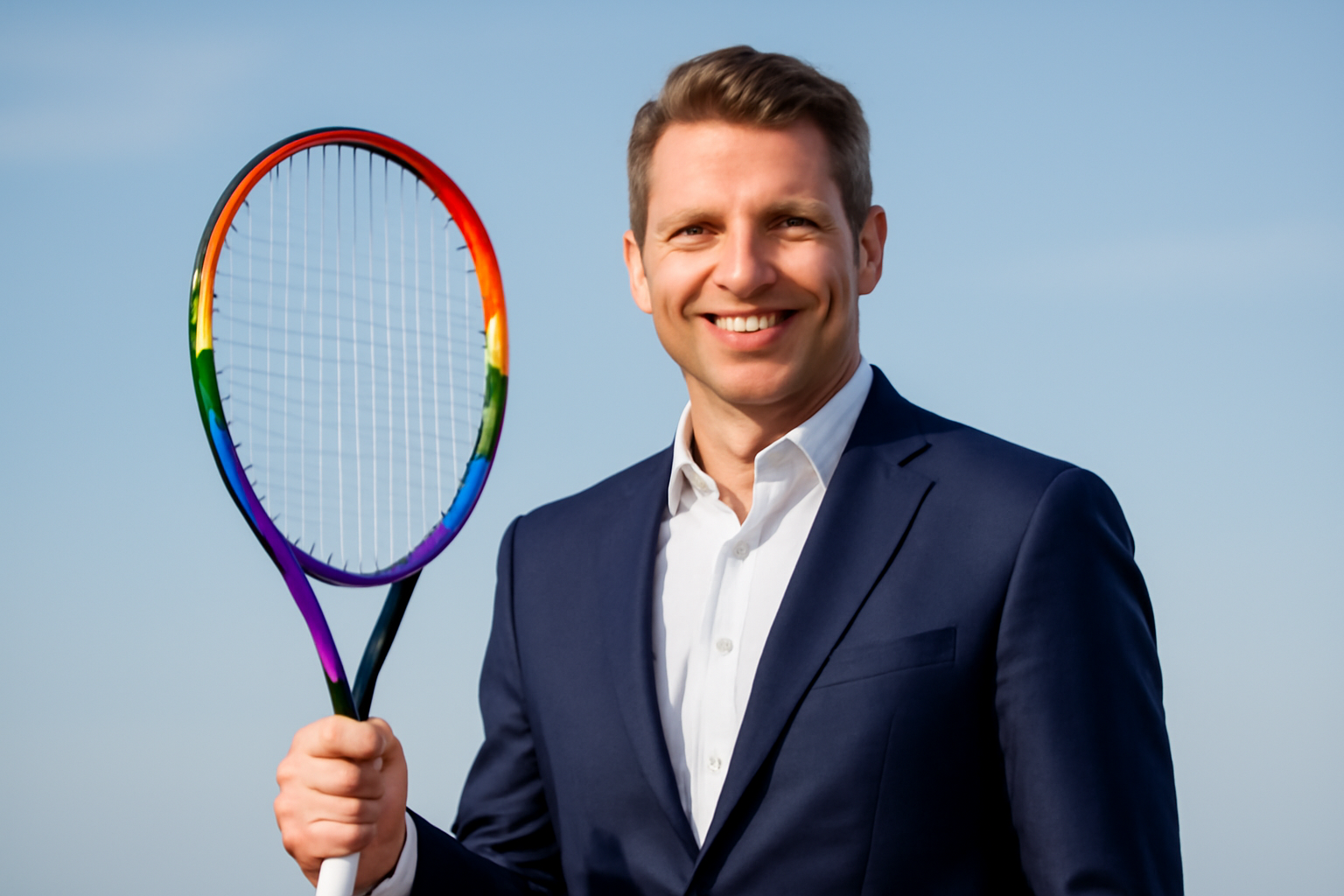
Professional tennis has a storied past, yet it's still rare on tours like ATP, especially in America, where male players openly identify as LGBTQ+. That's why Brian Vahaly's story stands out. A former pro who once climbed up as high as No. 57 in global rankings, Vahaly participated in every Grand Slam tournament. What's notable? He came out as gay only after he hung up his racket.
Now, Vahaly's making waves at a higher playing field: as President and Chairman at U.S. Tennis Association (USTA). He's on a mission—ensuring LGBTQ+ folks are heard and represented, pushing hard on diversity and inclusion within tennis.
Creating an inclusive tennis community
Vahaly's all about integrating LGBTQ+ perspectives right where it counts—in decision-making. He sees diversity as a key ingredient in driving smart, inclusive decisions that benefit everyone. "I've been really passionate about getting LGBTQ+ leaders in those rooms," Vahaly said at a talk at Stonewall National Monument Visitor Center. "When you're represented, better decisions get made—especially those affecting our community."
This isn't just business; it's personal. Vahaly's mission links back not only with his challenges as a young athlete but also with what he wants his kids—and everyone else's kids—to see and be proud. It goes beyond him; it aims at changing tennis culture, making it more accepting and open.
Why representation matters
Sports, especially at leadership levels, need diverse voices. When LGBTQ+ folks are encouraged and visible in groups like USTA, it breaks down those invisible walls, encouraging athletes everywhere just as they are.
Looking back, tennis hasn't been rich with openly LGBTQ+ icons. Take Bill Tilden from back in 1920s and 30s—an incredible talent, but his story was tainted by scandal, not choice. The times didn't let his greatness shine fully.
Fast forward, things are better—awareness and support grow daily, but sports? They're still catching up. Vahaly steps in at a critical time; his leadership could be what nudges tennis, and perhaps all sports, towards meaningful representation.
Looking ahead: Let your voice be heard
Imagine a tennis scene welcoming all, with LGBTQ+ people at its core. That's Vahaly's vision. "We need seats at those tables where decisions happen," he insists. It's about reflecting society's values and creating role models athletes can look up and aspire.
This kind representation? It's pivotal. Vahaly drives home this point: "For LGBTQ acceptance as a norm, gay, lesbian, bi, and trans people must be in those talks." His role as USTA President goes beyond personal achievements; it raises a new flag in tennis and hopefully sets a precedent across sports.
Under Vahaly, there's hope tennis will evolve further—into a sport cherishing diversity and allowing all athletes, no matter how they identify, a platform, a voice, and visibility.
In short, Brian Vahaly's work in amplifying LGBTQ+ voices in tennis isn't just changing a sport; it's inspiring momentum. He's clearing a path towards greater inclusion, encouraging athletes and fans alike, on and off court, that diversity should be celebrated.
Related Posts
Supreme Court to Address State Bans on Trans Women in Female Sports
The upcoming U.S. Supreme Court term promises to be a pivotal moment for transgender rights, as the nation's highest court has agreed to evaluate whether states have the authority to prohibit transgender women from participating in female sports competitions. This case, scheduled to be argued in the next term beginning October, is expected to have a significant impact on the future of sports inclu [...]
Megan Rapinoe and Sue Bird Announce Amicable Separation After Ten Years Together
In a heartfelt announcement that resonated deeply within the sports and LGBTQ+ communities, soccer star Megan Rapinoe and basketball legend Sue Bird have revealed their decision to part ways after nearly a decade together. The couple, who have been icons both on and off the field, shared the news with their fans through a joint statement on social media, expressing that the choice was made with mu [...]
Groundbreaking Ruling Ends Sodomy Ban for Police and Military in the Dominican Republic
The Constitutional Court of the Dominican Republic recently delivered a landmark decision on November 18th, ruling that the nation’s police and armed forces are not permitted to criminalize consensual same-sex relations among their personnel. This pivotal ruling is a significant stride towards equality and the protection of LGBTQ+ rights within these institutions. A Resounding Victory for Equal [...]