
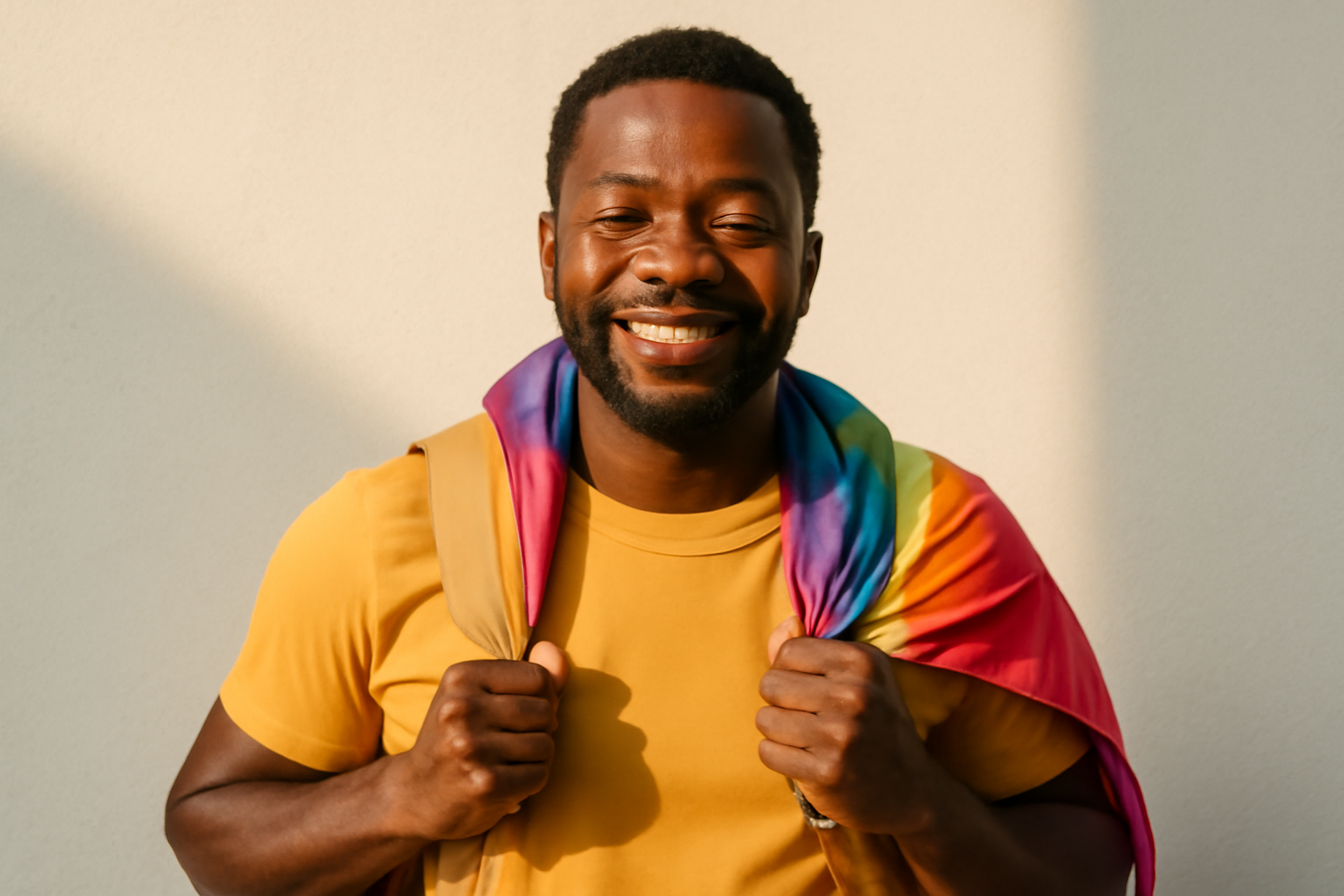
Audu Kadiri's inspiring journey
Audu Kadiri played a key role as a health advocate championing LGBTQ+ rights in Nigeria. But everything changed dramatically in 2014 when Nigeria enacted a harsh law known as The Same-Sex Marriage Prohibition Act (SSMPA). This law made same-sex relationships illegal and hit supporters with severe penalties, including up 14 years in jail. Because he stood up against these injustices, Kadiri and his fellow activists were increasingly threatened and attacked.
"In Nigeria, there's something known as ‘jungle justice,'" Kadiri shared. "It's when people bypass legal channels and take matters, often violently, into their own hands. The government often ignores these actions, and if victims try reporting them, they're met with hostility and blame instead."
Challenges faced by Black LGBTQ+ migrants in America
Keen on finding safety, Kadiri moved across borders and joined roughly 5 million Black immigrants and refugees in America, alongside nearly 639,000 who identify as LGBTQ+. For these asylum seekers, it's no smooth ride. Many don't have legal representation and face endless detention. When they're finally free, work permits are often denied, leaving them stranded financially. Oluchi Omeoga, co-founder at BLMP—the Black LGBTQIA+ Migrant Project, which Kadiri helped organize—shines a light on these struggles.
"Most asylum seekers land here with nothing, and securing a stable place live becomes a major hurdle," says Omeoga. "The systemic biases in both immigration and criminal law make daily life an uphill battle."
Healthcare access also poses a massive challenge, particularly when trans and gender-expansive immigrants face growing obstacles in getting gender-affirming care. On top, keeping asylum applications active—sometimes costing $1,000 a year—can be a huge financial weight on people already fighting just survive.
The ongoing shadow colonialism
Omeoga also points out that colonialism's long reach still affects Black communities globally. During its reign, Britain spread racist and homophobic laws throughout its colonies. These laws linger, continuing cycles discrimination and inequality.
Here in America, Black immigrants contend with constant scrutiny, racial profiling, and discrimination both on criminal and immigration fronts. Often, they find themselves competing "for scraps" alongside African-Americans who are also battling systemic injustices.
Building community and support networks
Launched in December 2017, BLMP was established create a supportive haven Black queer immigrants. With around 300 members spanning across 10 regions like New York City, D.C., and Minneapolis, BLMP provides critical services such as legal aid community events, and leadership development.
"We strive offer a place where Black queer immigrants are truly seen and safeguarded," shares a BLMP member. In collaboration with organizations like Transgender Law Center and Refugee Health Alliance, BLMP strengthens its impact.
Tackling systemic exclusion
In U.S. immigration conversations, focus has predominantly been on non-Black Latinx communities due proximity and media narratives. This leaves out unique challenges Black immigrants—especially those who are queer. To address this oversight, BLMP's founders carved out dedicated spaces recognizing intersectional identities, often overlooked in broader activist movements.
Envisioning a brighter future
As BLMP grows, its core mission remains: ensuring Black queer immigrants are seen as essential contributors society, worthy dignity and respect. "Here, there's no need justify your worth," says Jonathan Jayes-Green, co-founder UndocuBlack Network. "We're committed building a reality where all Black queer immigrants can live freely and securely."
Related Posts
Supreme Court to Address State Bans on Trans Women in Female Sports
The upcoming U.S. Supreme Court term promises to be a pivotal moment for transgender rights, as the nation's highest court has agreed to evaluate whether states have the authority to prohibit transgender women from participating in female sports competitions. This case, scheduled to be argued in the next term beginning October, is expected to have a significant impact on the future of sports inclu [...]
Megan Rapinoe and Sue Bird Announce Amicable Separation After Ten Years Together
In a heartfelt announcement that resonated deeply within the sports and LGBTQ+ communities, soccer star Megan Rapinoe and basketball legend Sue Bird have revealed their decision to part ways after nearly a decade together. The couple, who have been icons both on and off the field, shared the news with their fans through a joint statement on social media, expressing that the choice was made with mu [...]
Groundbreaking Ruling Ends Sodomy Ban for Police and Military in the Dominican Republic
The Constitutional Court of the Dominican Republic recently delivered a landmark decision on November 18th, ruling that the nation’s police and armed forces are not permitted to criminalize consensual same-sex relations among their personnel. This pivotal ruling is a significant stride towards equality and the protection of LGBTQ+ rights within these institutions. A Resounding Victory for Equal [...]