
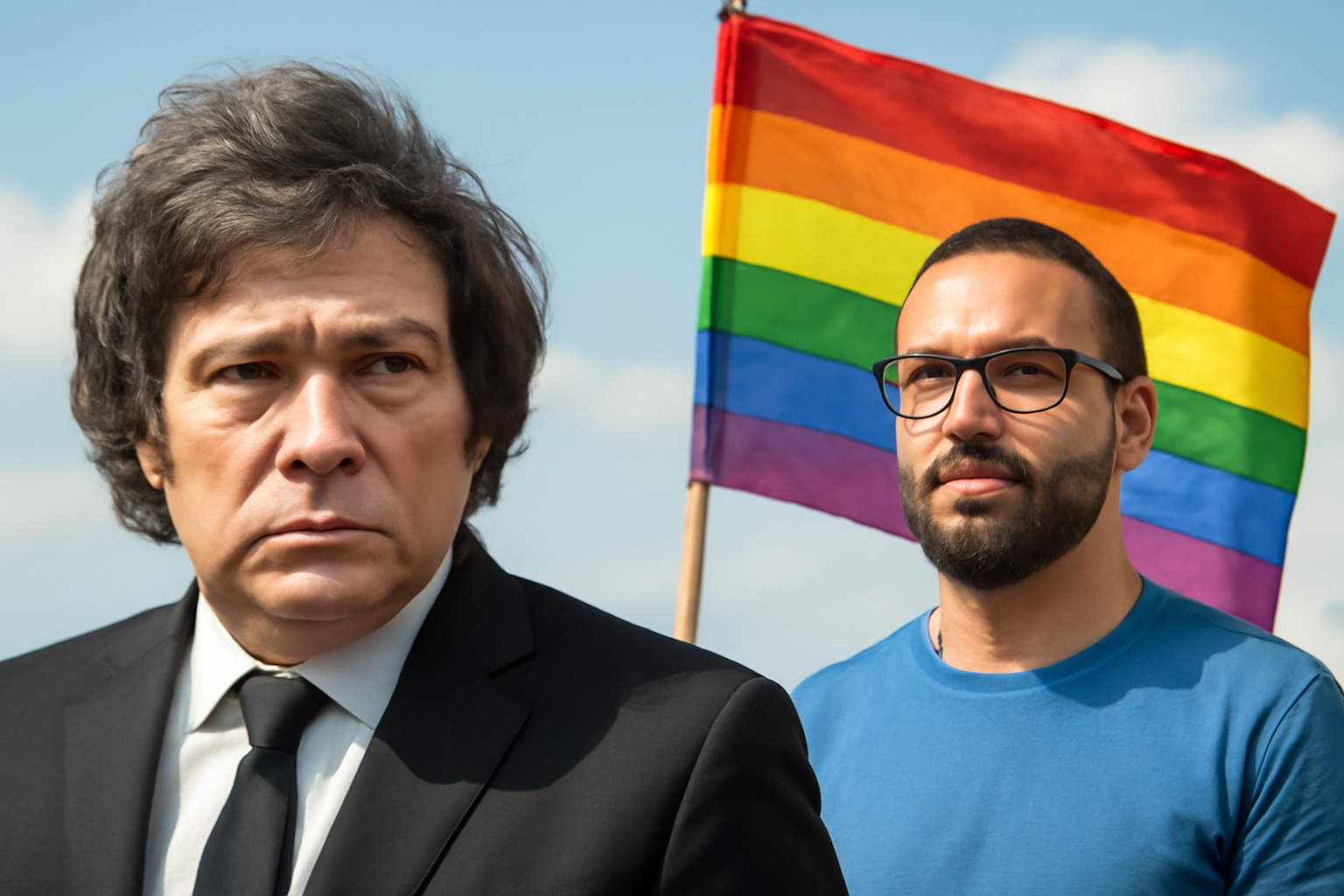
What Milei's rhetoric and policy mean For LGBTQ rights
Esteban Paulón, a well-known LGBTQ activist and congressman, explains Milei's dual strategy. "On one hand, you have blatant anti-LGBTQ rhetoric. On another, there's real-world impact—like shutting down critical bodies such as Argentina's Ministry Of Women, Gender, And Diversity, and INADI, which stands against discrimination, xenophobia, and racism," says Paulón.
These closures mark a big shift in government priorities, sidelining diversity policies. For LGBTQ Argentines, this means losing vital support and advocacy at a national scale.
Some provinces try filling these gaps, but many align with federal views, increasing LGBTQ community's vulnerabilities, as Paulón and other activists point out.
"We're not just talking about policy rollbacks; it's a direct attack on countless individuals' dignity, who recently had state support," Paulón asserts.
The fallout from dismantling human rights institutions
One Milei's first moves was dismantling key institutions like Ministry Of Women, Gender, And Diversity and INADI. Justified as cutting "wasteful spending," these closures erased agencies vital in promoting human rights and fighting discrimination.
"Without these, LGBTQ folks become more vulnerable," warns Paulón. "Cases once handled by INADI now go unresolved. The message from government? Our lives aren't a priority."
Adding fuel, a new policy allows employers more leeway in firing workers without legal consequence. "Now, losing a job over sexual orientation or gender identity has no real backlash," Paulón notes.
This particularly hurts transgender citizens, who already face employment obstacles. With a suspended trans-specific job quota, job opportunities dwindle further.
Rhetoric's power in shaping societal attitudes
Paulón highlights government's rhetoric and its broad societal echo. "People feel more free now than ever before in expressing discrimination without consequences," he says, noting that ultraconservative and religious groups see Milei as an ally.
While rhetoric hasn't sparked widespread violence yet, Paulón warns it could. "We're not seeing systematic violence like some places, but it's a risk. Every hateful word from those in power could justify violent acts," he remarks.
Fighting back through congress and civil society
In response, resistance emerges in multiple forms. Paulón and other lawmakers are crafting bills that defend LGBTQ rights and counter regressive policies. "We're not just sitting back. We're proposing tangible solutions—healthcare access, inclusive education, labor protections," states Paulón.
Activists are also building connections with allies in neighboring countries like Brazil, Chile, and Mexico, as well as international organizations mindful about Argentina's path.
Despite a bleak scene, Paulón stays hopeful. "Milei's term, like all terms, will end," he says.
He emphasizes that marriage equality and transgender rights law are deeply ingrained in society, providing a buffer against further regress. The task now? Sustain resistance, mobilize communities, and strengthen international ties.
"We've got a well-organized movement, self-defense tools, and a mostly open, diverse society. This phase will pass," Paulón asserts. "Our struggle's a reminder: social progress demands continuous vigilance and resilience."
Rhetoric's power in shaping societal attitudes
Paulón highlights government's rhetoric and its broad societal echo. "People feel more free now than ever before in expressing discrimination without consequences," he says, noting that ultraconservative and religious groups see Milei as an ally.
While rhetoric hasn't sparked widespread violence yet, Paulón warns it could. "We're not seeing systematic violence like some places, but it's a risk. Every hateful word from those in power could justify violent acts," he remarks.
Fighting back through congress and civil society
In response, resistance emerges in multiple forms. Paulón and other lawmakers are crafting bills that defend LGBTQ rights and counter regressive policies. "We're not just sitting back. We're proposing tangible solutions—healthcare access, inclusive education, labor protections," states Paulón.
Activists are also building connections with allies in neighboring countries like Brazil, Chile, and Mexico, as well as international organizations mindful about Argentina's path.
Despite a bleak scene, Paulón stays hopeful. "Milei's term, like all terms, will end," he says.
He emphasizes that marriage equality and transgender rights law are deeply ingrained in society, providing a buffer against further regress. The task now? Sustain resistance, mobilize communities, and strengthen international ties.
"We've got a well-organized movement, self-defense tools, and a mostly open, diverse society. This phase will pass," Paulón asserts. "Our struggle's a reminder: social progress demands continuous vigilance and resilience."
Related Posts
Supreme Court to Address State Bans on Trans Women in Female Sports
The upcoming U.S. Supreme Court term promises to be a pivotal moment for transgender rights, as the nation's highest court has agreed to evaluate whether states have the authority to prohibit transgender women from participating in female sports competitions. This case, scheduled to be argued in the next term beginning October, is expected to have a significant impact on the future of sports inclu [...]
Megan Rapinoe and Sue Bird Announce Amicable Separation After Ten Years Together
In a heartfelt announcement that resonated deeply within the sports and LGBTQ+ communities, soccer star Megan Rapinoe and basketball legend Sue Bird have revealed their decision to part ways after nearly a decade together. The couple, who have been icons both on and off the field, shared the news with their fans through a joint statement on social media, expressing that the choice was made with mu [...]
Groundbreaking Ruling Ends Sodomy Ban for Police and Military in the Dominican Republic
The Constitutional Court of the Dominican Republic recently delivered a landmark decision on November 18th, ruling that the nation’s police and armed forces are not permitted to criminalize consensual same-sex relations among their personnel. This pivotal ruling is a significant stride towards equality and the protection of LGBTQ+ rights within these institutions. A Resounding Victory for Equal [...]