
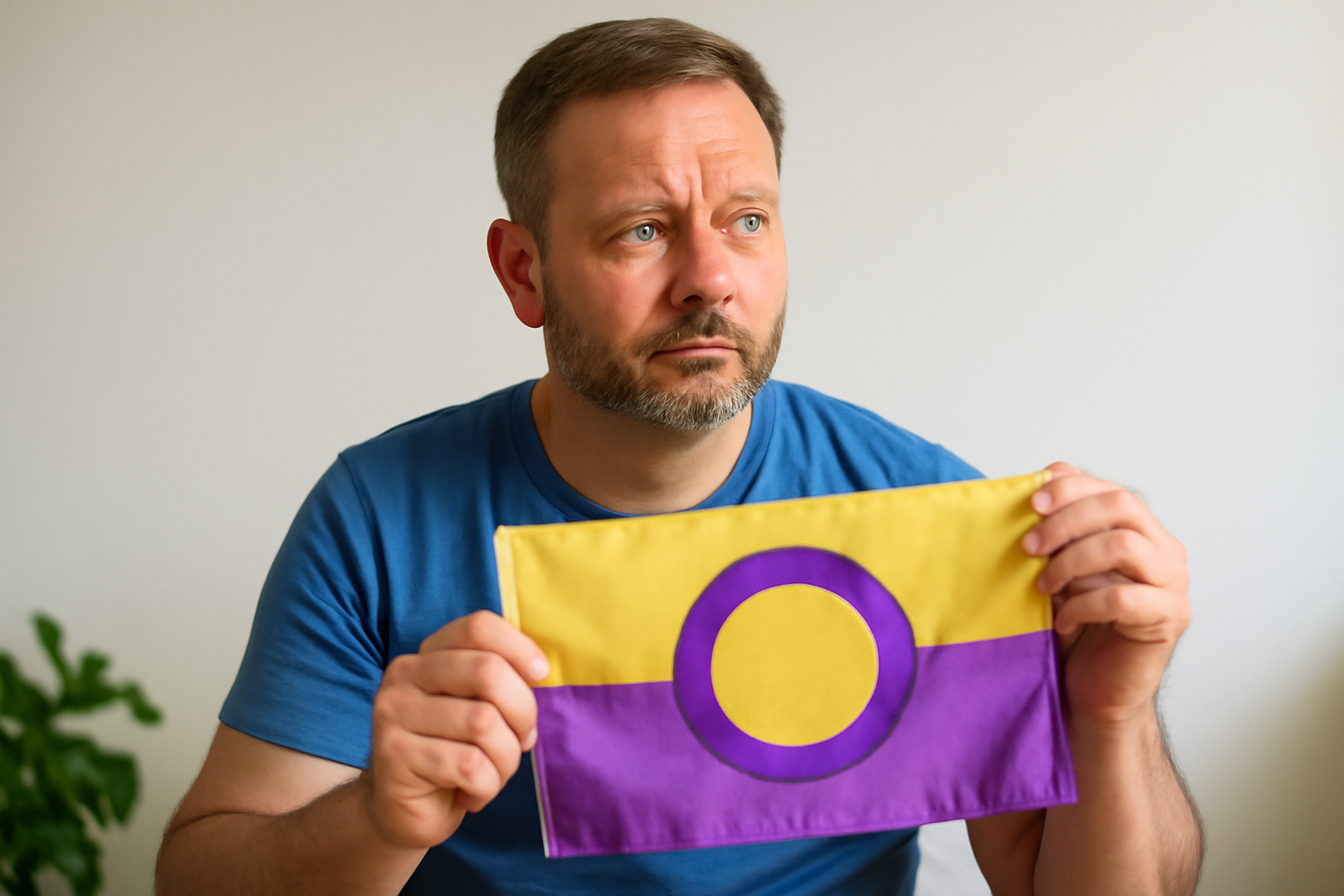
Discovering his intersex identity amid political tensions
For J. Ben Morton, realizing a profound truth about his own biology happened amidst a tumultuous political climate that was fiercely debating sex and gender definitions. When then-President Donald Trump issued an executive order stating there were only two legal sexes, male and female, Morton was left in shock. "It felt like someone came up behind me and smacked me with a phone book," Morton shared. While many found this declaration challenging, it was especially personal and impactful on him.Uncovering his intersex status
Eight years before these events, Morton, a writer from Tennessee, stumbled upon a life-altering discovery. After sending in a saliva sample as part an ancestry service, he was taken aback when he received an unexpected request: they wanted a phone call. Having expected only a confirmation about his "northwestern European heritage," Morton found this out-of-the-blue communication quite peculiar. "I picked up on that first ring," Morton recalled. During that call, a representative informed him there was a "mismatch" in his DNA profile. Though he had identified himself as "male," his DNA painted a different picture, one that was "female." Morton was confused, and rightly so. “Holding that phone in my hand, I laughed nervously, giving myself a moment while my mind scrambled through any bits and pieces I knew about DNA,” he explained. Like many people, he understood sex determination in basic terms: XY meant male, XX female. But his understanding was about get a whole lot deeper. It took several months before Morton fully comprehended his DNA results. Eventually, he sought out a geneticist at New York's Mount Sinai, where he was introduced him a new term: "intersex."Understanding intersex: a spectrum from nature
The geneticist explained that "intersex" acts as a catch-all term, covering a spectrum natural variations in genitals, hormones, or chromosomes. These variations might appear at birth, during puberty, or sometimes stay hidden. Experts estimate that around 5.6 million people in America have intersex traits, making them about as common as people with red hair worldwide. Morton was diagnosed with XX testicular DSD, a "disorder sexual development." This meant that although he had developed some male sex organs, his internal functions were ambiguous, causing hormone irregularities and likely infertility. “Before these tests, dealing with my health, I often felt something was off,” Morton admitted. "I couldn't build muscle as fast, felt tired often, and my brain seemed wired differently. Now I had an explanation as why I didn't fit that typical mold." Armed with this diagnosis, Morton started treatments that significantly improved his life. More than that, it shifted his political views and grew his empathy toward others challenging societal norms.Championing advocacy and empathy
Morton reflected on how his personal journey intersects broader challenges faced by intersex and transgender communities. "I'm on a part spectrum that's easy overlook, but many others have more urgent needs," he pointed out. These folks grapple daily with access healthcare and societal acceptance. "Even if you're not intersex or transgender, you should be worried about this executive order because it allows government invasion personal matters," Morton argued, calling it "plain cruel." He expressed concerns about rigid legal definitions sex. "If sex gets set in stone at birth, with no chance adjustments, people like me could run up against legal recognition issues," he said. Such definitions could lead discrimination, both from public policies and private entities.Envisioning a future where intersex people are recognized
Morton firmly believes that whether or not there's DNA proof, intersex and transgender individuals are real and deserve recognition. "An executive order saying we don't exist won't make us disappear," he asserted. "It just puts us in danger." His story highlights understanding and empathy's importance in discussions about sex and gender. As societies keep tackling these complicated issues, stories like Morton are vital in pushing forward acceptance and change. Stay updated about developments influencing LGBTQ+ communities by signing up our newsletter. Be at front lines learning about major conversations shaping these global issues.Related Posts
Supreme Court to Address State Bans on Trans Women in Female Sports
The upcoming U.S. Supreme Court term promises to be a pivotal moment for transgender rights, as the nation's highest court has agreed to evaluate whether states have the authority to prohibit transgender women from participating in female sports competitions. This case, scheduled to be argued in the next term beginning October, is expected to have a significant impact on the future of sports inclu [...]
Megan Rapinoe and Sue Bird Announce Amicable Separation After Ten Years Together
In a heartfelt announcement that resonated deeply within the sports and LGBTQ+ communities, soccer star Megan Rapinoe and basketball legend Sue Bird have revealed their decision to part ways after nearly a decade together. The couple, who have been icons both on and off the field, shared the news with their fans through a joint statement on social media, expressing that the choice was made with mu [...]
Groundbreaking Ruling Ends Sodomy Ban for Police and Military in the Dominican Republic
The Constitutional Court of the Dominican Republic recently delivered a landmark decision on November 18th, ruling that the nation’s police and armed forces are not permitted to criminalize consensual same-sex relations among their personnel. This pivotal ruling is a significant stride towards equality and the protection of LGBTQ+ rights within these institutions. A Resounding Victory for Equal [...]